
Image Credit: Xavi Torrent/Getty Images
China, the world’s second most populous nation, never truly dominated the traditional internal combustion engine vehicle market. However, the surge in electric vehicle (EV) adoption provided a unique chance for China to redefine its automotive industry landscape-and it capitalized on this opportunity with remarkable success. Even Elon Musk has acknowledged China’s lead over the U.S. in realizing his vision for electric mobility. Yet, the Chinese EV sector is characterized not only by rapid expansion but also by fierce rivalry among players.
Many of China’s top EV manufacturers have roots that extend well beyond automobile production. These companies leverage their expertise in battery technology, electronics, software, and energy solutions to maintain a competitive edge. For instance, BYD, the country’s largest EV producer, also manufactures components for smartphones and laptops, power semiconductors, energy storage units, monorail systems, industrial machinery, and even operates a fleet of electric buses in London.
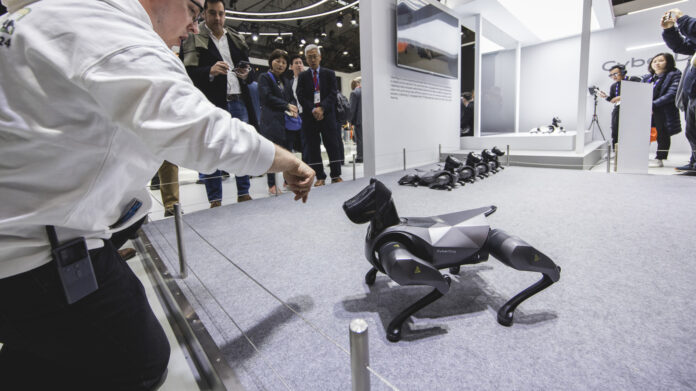
Similarly, Xiaomi, widely recognized for its smartphones and wireless earbuds, has diversified into producing household appliances like air fryers and vacuum cleaners, as well as advanced robotics such as the CyberOne humanoid and Cyberdog robot. Geely, which began as a refrigerator parts supplier, now spans multiple industries including satellite technology, autonomous ride-hailing services with CaoCao robotaxis, and innovative ventures like Aerofugia flying cars.
Automation and “Dark Factories”: Accelerating China’s EV Production
Image Credit: Gorodenkoff/Shutterstock
The concept of a “dark factory” refers to manufacturing facilities that operate with minimal human intervention, relying heavily on robotic automation. These factories function around the clock without the need for human presence. According to the International Federation of Robotics’ 2025 report, China installed approximately 295,000 industrial robots in 2024 alone, representing about 54% of the global total. In contrast, the United States installed just 34,200 robots, roughly one-ninth of China’s figure.
This extensive automation enables Chinese EV manufacturers to achieve astonishing production speeds. For example, Xiaomi’s factory in Beijing reportedly assembles a new vehicle every 76 seconds, utilizing over 700 robots to maintain full automation. Robotic precision ensures consistent quality by virtually eliminating human error. Compared to traditional human-operated plants, these automated factories can boost output by 30% to 70%, reduce downtime by 30% to 60%, and cut labor expenses by 25% to 60%.
While the U.S. EV market faces challenges-evidenced by General Motors’ Factory ZERO temporarily halting operations-China’s industry is not without its hurdles. The country’s vast manufacturing capacity, coupled with regulatory constraints and fluctuating demand, has led to the closure of nearly 400 EV companies between 2018 and 2025. This consolidation has strengthened the dominance of a select group of manufacturers who continue to innovate beyond just electric vehicles.
Vertical Integration: The Key to China’s EV Manufacturing Efficiency
Image Credit: Roman Nurutdinov/Getty Images
One critical factor behind the success of Chinese EV brands is their vertically integrated supply chains, which reduce dependence on external suppliers and foster close collaboration across production stages. BYD, for example, produces its own batteries, power semiconductors, electric motors, and energy storage solutions. Xiaomi similarly manufactures smartphones, sensors, battery management systems, and Internet of Things (IoT) devices in-house.
This comprehensive control over component manufacturing shortens lead times, lowers costs, and supports rapid scaling of production. Combined with advanced automation and dark factory operations, this integration enhances flexibility and resilience. In 2024, China accounted for nearly 85% of the world’s battery cell manufacturing capacity, while the U.S. and European Union each held less than 10%. However, battery production in the U.S. is gradually increasing as investments grow.
Many Chinese EV and battery firms benefit from state ownership or government backing, enabling them to cross-subsidize vehicle production with battery sales. Additionally, companies like Xiaomi are at the forefront of developing EV-related software, further streamlining economies of scale and reinforcing China’s manufacturing dominance. As one industry analyst noted, China remains “the world’s factory,” and the same technologies powering everyday consumer products like Xiaomi’s smart home devices are fueling the country’s electric vehicle revolution.