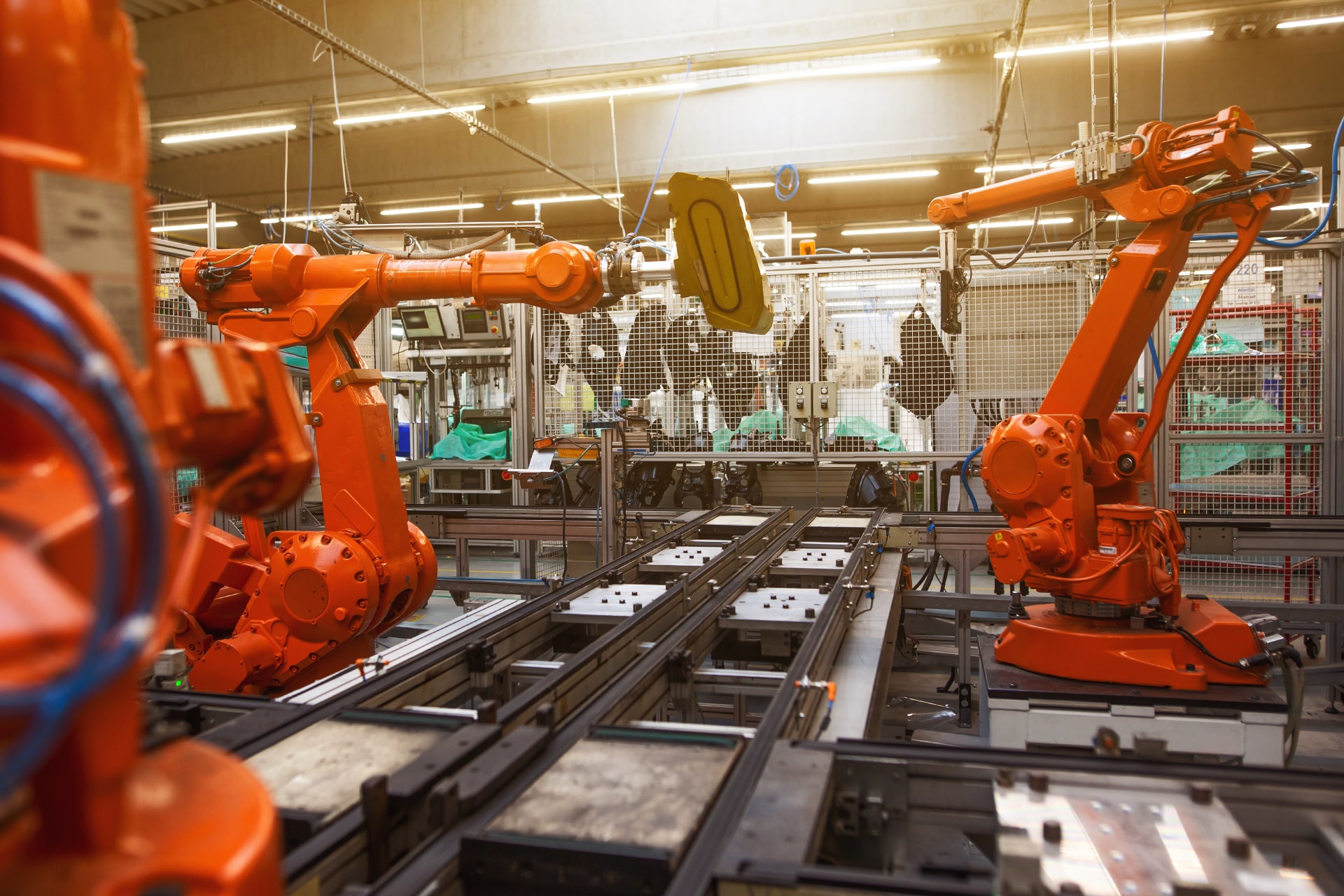
China’s Industrial Robotics Export Surge and Market Evolution in 2025
In the first half of 2025, China exported approximately 94,200 industrial robots, generating revenues of around USD 746 million-a remarkable year-over-year increase of nearly 60%. This robust growth follows a strong 2024 performance, where exports reached USD 1.13 billion, marking a 43% rise that propelled China to the world’s second-largest market share in industrial robotics.
Advancing Manufacturing Capabilities and Domestic Leadership
This export momentum mirrors China’s ongoing transformation and modernization of its manufacturing sector. Since surpassing Japan in 2013 to become the largest industrial robotics market globally, China’s domestic manufacturers have gradually expanded their footprint, currently holding about 25% of the market. Estun Automation is poised to become the first Chinese firm to dominate the domestic industrial robotics solutions market by early 2025, signaling a shift toward homegrown leadership.
Expanding Horizons: Chinese Robotics on the Global Stage
Beyond domestic success, Chinese robotics companies are aggressively entering international markets where industrial robots are integral to sectors such as electronics, automotive, and consumer goods manufacturing. Their competitive edge lies in delivering precision, reliability, and cost-effectiveness.
Three prominent Chinese robotics firms-Estun Automation, Zhaowei Machinery & Electronics, and RobotPhoenix-are preparing for public listings in Hong Kong. These companies are pursuing global expansion through innovation, strategic acquisitions, localized production, and broadening distribution networks.
Estun Automation: Pioneering China’s Industrial Robotics Innovation
Founded in 1993, Estun Automation is recognized as a frontrunner in China’s industrial robotics sector. According to industry analysts, Estun became the first domestic company to outpace foreign competitors in local shipments by early 2025.
Estun’s portfolio includes a wide range of robots-from general-purpose units to specialized models designed for arc welding, harsh environments, cleaning, bending, stamping, and palletizing. The company also develops proprietary motion control systems and automation components, integrating these into intelligent manufacturing solutions tailored to diverse industries.
Financially, Estun reported revenues of RMB 3.88 billion (USD 543 million) in 2022, rising to RMB 4.65 billion (USD 651 million) in 2023, before a slight dip to RMB 4.5 billion (USD 560 million) in 2024, primarily due to reduced demand in photovoltaics and heavy industry sectors. Over 70% of its revenue in 2024 stemmed from industrial robots and smart systems, with direct sales accounting for 92.7% of income.
Net profits fluctuated from RMB 180 million (USD 25.2 million) in 2022 to RMB 130 million (USD 18.2 million) in 2023, culminating in a loss of RMB 810 million (USD 113.4 million) in 2024, largely attributed to a RMB 360 million (USD 50.4 million) impairment on intangible assets linked to underperformance in heavy industries. The top five clients contributed 25% of 2024 revenues.
Estun’s international expansion strategy combines organic growth with acquisitions, including the 2017 purchase of UK-based Trio Motion Technologies and the 2020 acquisition of Germany’s Cloos, enhancing its capabilities in high-end arc welding. Overseas markets contributed 34.2% of revenue in 2024, with a gross margin of 32.4%, surpassing the domestic margin of 26.2%.
As of the end of 2024, Estun operated 75 service centers worldwide, with manufacturing facilities in Germany and a new plant under construction in Poland. Its R&D hub is located in Nanjing, supported by centers in Germany, the UK, and the US, employing 1,032 R&D professionals and dedicating 12.5% of revenues to research and development.
Funds raised from Estun’s upcoming IPO will be allocated to expanding production capacity, strengthening upstream and downstream partnerships, advancing R&D, and enhancing global service networks.
The global industrial robotics market expanded at a compound annual growth rate (CAGR) of 14.6% from 2020 to 2024, growing from USD 14.7 billion to USD 25.4 billion. Projections estimate the market will reach USD 51.8 billion by 2029, driven by sectors such as electronics, automotive, and battery manufacturing, with China playing a pivotal role.
Zhaowei Machinery & Electronics: Innovating Miniature Precision Systems
Established in 2001, Zhaowei Machinery & Electronics is a leading Chinese manufacturer of transmission and drive systems, ranking fourth globally. The company focuses on smart vehicles, embodied robotics, consumer electronics, healthcare, and advanced manufacturing technologies.
Zhaowei’s product lineup includes dexterous robotic hands, servo motors, and drum motors, catering to diverse applications. Revenue grew from RMB 1.15 billion (USD 161 million) in 2020 to RMB 1.52 billion (USD 213 million) in 2024, with gross margins consistently between 28.9% and 31.2%. Net profits reached RMB 230 million (USD 32.2 million) in 2024, reflecting a 14.8% profit margin.
Smart vehicles accounted for 58.7% of revenue in 2024, while consumer and healthcare technologies contributed 32%. The company’s top five clients represented 46.6% of revenue, with partnerships averaging over eight years.
International sales made up 13.9% of 2024 revenue, supplying drive systems to robotics, extended reality (XR), and automotive companies worldwide. To support global growth, Zhaowei plans to establish new manufacturing facilities in Southeast Asia, Europe, and North America, aiming to reduce delivery times, optimize logistics, and better serve electric vehicle manufacturers and XR product rollouts.
R&D investment remains robust, exceeding 10% of revenue, with 513 R&D staff (21.5% of total employees) and 382 patents as of March 2025.
Proceeds from Zhaowei’s IPO will fund research and development, capacity expansion, global partnerships, marketing initiatives, and working capital needs.
The global market for miniature transmission and drive systems expanded from RMB 78.1 billion (USD 10.9 billion) in 2020 to RMB 111.3 billion (USD 15.6 billion) in 2024, with forecasts projecting RMB 204.9 billion (USD 28.7 billion) by 2029. China’s domestic market is expected to grow at a CAGR of 17.3%, reaching RMB 72.6 billion (USD 10.2 billion) by 2029.
RobotPhoenix: Emerging Leader in Light Industry Robotics
Founded in 2012, RobotPhoenix is ranked fifth among Chinese suppliers of industrial robots for light industry applications. It is one of the few Chinese companies offering comprehensive solutions across the robotics value chain.
The company’s product range includes parallel robots, SCARA arms, autonomous mobile robots (AMRs), automated guided vehicles (AGVs), controllers, and wafer handling systems. These products serve sectors such as consumer electronics, automotive parts, healthcare, and semiconductors, supporting tasks like sorting, inspection, pick-and-place, and packaging.
RobotPhoenix expanded its client base from 69 in 2022 to 275 in 2024, with consumer electronics accounting for 45.8% of revenue that year. Revenues increased from RMB 160 million (USD 22.4 million) in 2022 to RMB 270 million (USD 37.8 million) in 2024. Gross margins rebounded to 26.5% in 2024 after a dip to 18.3% the previous year, while net losses narrowed to RMB 70 million (USD 9.8 million).
The top five clients’ share of revenue decreased from 83.3% in 2023 to 50.1% in 2024, indicating a diversification of the customer base.
RobotPhoenix maintains a presence in seven countries and exports to over 20 regions, with international sales comprising 9.5% of total revenue. The company is establishing a Hong Kong branch and expanding its R&D team to boost global innovation capabilities. Additionally, a new subsidiary in Vietnam aims to enhance service for Southeast Asian customers.
IPO proceeds will support R&D, capacity growth, overseas expansion, supply chain investments, and working capital. RobotPhoenix holds 271 authorized patents, with R&D personnel constituting 38% of its workforce.
The Chinese light industry robotics market grew from RMB 12.3 billion (USD 1.7 billion) in 2020 to RMB 20.9 billion (USD 2.9 billion) in 2024, with projections estimating growth to RMB 44.8 billion (USD 6.1 billion) by 2029.