
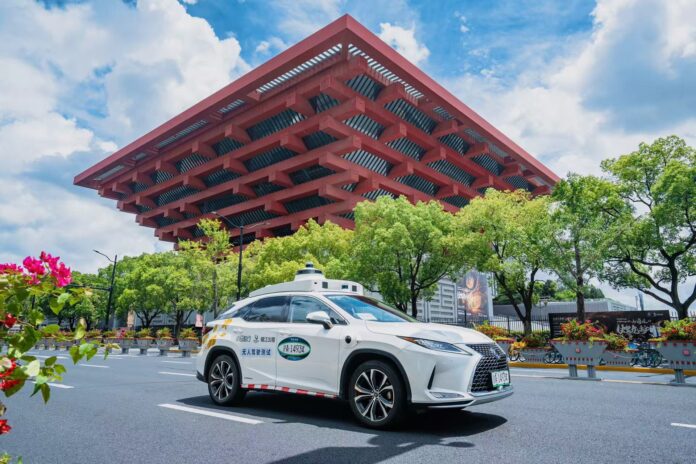

China-US Robotaxi Competition Intensifies Amid AI Breakthroughs
The race to dominate the robotaxi industry between China and the United States is accelerating as new players enter the market. Chinese automotive technology companies Horizon Robotics and Deeproute.ai have recently announced ambitious plans to develop advanced robotaxi systems. Their confidence stems from significant advancements in computational power and generative artificial intelligence, which they believe have reached a pivotal moment for autonomous driving innovation.
Strategic Partnerships and Technological Innovations
At a recent earnings call, Horizon Robotics CEO Yu Kai revealed that the company will unveil partnerships with multiple robotaxi fleet operators before the end of the year. Horizon Robotics is targeting fully hands-free driving capabilities within the next three years. Meanwhile, Deeproute.ai, backed by investors such as Alibaba and Great Wall Motor, is leveraging its Vision Language Action (VLA) model-already integrated into production vehicles-to build its robotaxi fleet. Founded in 2019 in Shenzhen, Deeproute.ai initially focused on futuristic robotaxi concepts but pivoted in 2022 toward developing practical Advanced Driver Assistance Systems (ADAS).
AI-Driven Transition to Full Autonomy
Both Horizon Robotics and Deeproute.ai, along with other Chinese firms, are banking on cutting-edge AI technologies-including end-to-end neural networks and large language models (LLMs)-to evolve from semi-autonomous assistance to fully autonomous driving solutions. Yu Kai emphasized that the industry is on track to achieve driverless mobility across all scenarios within the next five to ten years, signaling a transformative shift in urban transportation.
Expanding Robotaxi Ecosystem in China
The Chinese robotaxi landscape is becoming increasingly competitive. New entrants like CATL have joined forces with Alibaba’s fintech arm Ant Financial and bike-sharing giant Hellobike to explore robotaxi ventures. Additionally, Momenta, a prominent ADAS developer, secured a partnership with Uber in May to deploy robotaxi services. Xpeng Motors, often dubbed China’s Tesla rival, aims to launch robotaxi trials by 2026. Leading the pack is Baidu, which operates a fleet exceeding 1,000 autonomous vehicles across more than a dozen cities, followed closely by Pony.ai and WeRide, both headquartered in Guangzhou.
Market Outlook and Regulatory Challenges
Industry experts forecast a robust future for robotaxis as technology matures and operational costs decline. UBS projects that by the early 2030s, robotaxi fleets could surpass 300,000 vehicles within a 3,000-square-kilometer area covering China’s four major cities, eventually expanding to four million units nationwide by 2030. This growth trajectory could generate a market valued at approximately $8 billion initially, scaling up to $183 billion by decade’s end.
Despite this optimism, local governments remain cautious about widespread deployment of highly autonomous vehicles due to safety concerns and potential impacts on employment. Morgan Stanley recently predicted that China will issue a new wave of government licenses as robotaxi technology proves its reliability. However, analysts suggest that global robotaxi development may outpace China’s rollout, driven in part by Tesla’s aggressive expansion plans.
Global Competition and Future Prospects
According to Morgan Stanley analyst Tim Hsiao, Tesla’s progress in robotaxi deployment is expected to accelerate the pace for global ride-hailing companies. Industry reports indicate Tesla is poised to surpass Waymo as the worldwide leader in autonomous taxi services. UBS analyst Paul Gong estimates the global robotaxi market-excluding the U.S.-could reach $394 billion by the late 2030s, with growth likely to be steady rather than exponential.
As the autonomous vehicle sector evolves, the interplay between technological innovation, regulatory frameworks, and market dynamics will shape the future of urban mobility worldwide.