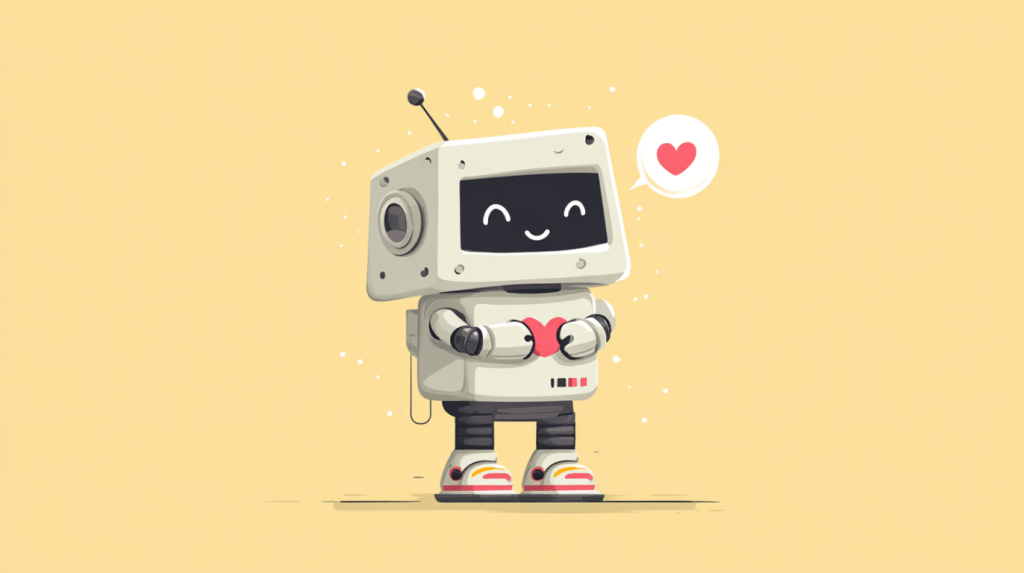

Credit: VentureBeat created with Midjourney
Subscribe to our weekly newsletter to receive only the most important information for enterprise AI, data, security, and leaders. Subscribe Now
Hugging Facethe $4.5 billion artificial-intelligence platform that has become GitHub for machine learning, announced the launch of its new website on Tuesday.
Reachy Miniis a $299 desktop robotics robot that will bring AI-powered robotics within reach of millions of developers around the world. The 11-inch robot is the company’s most daring move to democratize robotics and challenge the traditional closed-source high-cost model.
The Hugging Face platform has been used by 10 million AI builders. In an exclusive interview, CEO Clement Delangue revealed that “more and a more of them build in relation to robotics.” This compact robot can sit on any desktop next to a computer, addressing what Delangue describes as a fundamental barrier to robotics development.
One of the challenges in robotics is you can’t build on a laptop. You will need a robotics partner for your building and most people can’t afford $70,000 robots,” Delangue explained. He was referring to industrial robotics systems, as well as newer humanoid robotics such as Tesla’s Optimus which is expected cost between $20,000 and $30,000.
Reachy Mini is the result of Hugging Face’s acquisition in April of French robotics startup
Pollen Robotics,marks the company’s largest hardware expansion since its foundation. The robot is the first consumer product that integrates natively with the
Hugging Face Huballows developers to access thousands AI models that are already built and share robotics apps through the platform’s ”
Spaces” feature.
It appears that the timing is deliberate, as the AI industry grapples to the next frontier of physical AI. Industry leaders are increasingly convinced that, while large language models have dominated in the past two decades, artificial intelligence will require physical embodiment to reach human-level capabilities.
Goldman Sachs estimates that the humanoid robots market could reach $38 billion by 2035.
World Economic Forum has identified robotics as an important frontier technology for industrial operations.
Delangue said, “We are seeing more and more people move to robotics which is extremely exciting.” “The idea is that we will become the desktop open-source robot for AI developers.”
Reachy Mini is a compact robot that packs sophisticated capabilities. The robot has six degrees of freedom for its moving head. It also features a wide-angle video camera, multiple microphones and a 5-watt loudspeaker. The wireless version includes:
Raspberry Pi 5 computer, battery and makes it fully autonomous.
This robot is available as a DIY kit. It can be programmed using Python. JavaScript and Scratch are also planned. Demonstration applications pre-installed include face and hand trackers, smart companion features and dancing moves. Developers can create new applications and share them through Hugging Face’s Spaces platform. This could lead to what Delangue envisions “thousands, thousands, millions” of apps. Delangue said, “We want a model whereby we release tons of stuff.” “Maybe we will release 100 prototypes per year.” “Maybe we’ll release 100 prototypes a year.”
This launch is a fascinating test to see if open-source principles are able to translate successfully into hardware businesses.
Hugging Face will release all hardware designs and software as open source. This will allow anyone to build their version. The company makes money by selling pre-assembled products to developers who would rather pay than build their own. Delangue said, “You share as much as you can to empower the community.” “There are some people who would rather pay 300 dollars, 500 dollars, and have it ready-made, or easy to put together at home, even if all the recipes were open source. Manufacturing costs, supply-chain complexity, and physical distribution are constraints that do not exist in pure software businesses. Delangue says this creates valuable feedback: “You can learn from the open-source community about what they are trying to build and how they are doing it, and then you can integrate that into what you sell.”
The shift to robotics raises questions about data security and privacy that are not present with purely digital AI. Robots with cameras, microphones and the ability to perform physical actions in workplaces and homes create unprecedented privacy concerns.
Delangue argues that open source is the solution to these privacy concerns. “One of my motivations for doing open source robotics was that I believe it will fight the concentration of power…the natural tendency to create black box robots which users don’t understand or control,” he said. “The idea that a few companies will control millions of robots in people’s houses, able to act in real life is quite frightening.”
Open-source allows users to inspect the code, understand data flow, and possibly run AI models locally instead of relying on cloud service. Hugging Face’s enterprise platform may offer private deployment options for robotics apps to enterprise customers.
Hugging Face is facing significant manufacturing and scale challenges as it transitions to a hardware firm from a software company. The company plans to start shipping Reachy Mini units next month. It will begin with DIY-oriented versions, where customers do the final assembly.
Delangue explained that the first versions and first orders will be DIY in the sense that the assembly burden will be shared with the customer. “We will do some of it ourselves, and the user will also be doing some of it themselves.”
The company’s goal is to engage the AI builder community while managing manufacturing complexity. The strategy reflects the uncertainty of the market for this new product category.
has a different approach from its competitors. The company is creating an ecosystem of open-source, modular, affordable robotics components, rather than a single highly capable robot. Previous releases include the
SO-101 robotic arms starting at $100 and plans for the
HopeJR humanoid robotic ($3,000).
This strategy reflects the broader trends in AI, where open-source models by companies like Meta and smaller competitors have challenged closed source leaders like OpenAI. In January, Chinese startup DeepSeek stunned the industry with a powerful AI system developed at a significantly lower cost than competitors systems. This demonstrated the potential of open-source approaches for disrupting established players.
A recent release of
SmolVLA, a 450-million parameter vision-language-action model, demonstrates the technical foundation underlying Reachy Mini. The model was designed to be efficient enough for it to run on consumer hardware including MacBooks. This makes sophisticated AI capabilities available to individual developers without requiring expensive cloud infrastructure.
Physical Intelligence– a startup founded by UC Berkeley Professor Sergey Levine – has made its debut.
Hugging Face offers the Pi0 robot foundation which allows for cross-pollination of robotics approaches. Levine stated in previous statements that open-source robots increased the speed of technology advancement.
Reachy Mini is Hugging Face’s latest AI platform. It signals Hugging Face’s ambition to be the leading platform for AI development in all modalities. According to estimates, robotics could represent a $38 billion global market by 2035.
Goldman Sachs: Early platform positioning could be strategically valuable.
Delangue sees a future in which hardware is an integral part of AI workflows. He explained that hardware is part of AI builder’s building blocks. “Always keeping our openness, being community-driven, integrating everything as many community members and other organizations as possible.” As a company with significant funding and a profit,
Hugging Face is able to prioritize market development above immediate revenue optimization. Delangue referred to possible subscription models in which Hugging Face platform access might include hardware components. This is similar to the way some software companies bundle their services.
beyond commercial applications
Reachy Mini has the potential to have a significant impact on robotics education and research. The robot is less expensive than many smartphones at $299 and offers full programmability as well as AI integration. The platform can be used by universities, coding bootcamps and individual learners to explore robotics without the need for expensive laboratory equipment.
Open-source software and hardware can be modified by educational institutions to fit specific curricula. Students could progress from simple programming exercises to sophisticated AI apps using the same platform. This could accelerate robotics education and workforce training.
Delangue revealed how community feedback has already affected product development. The wireless version was developed after a colleague’s daughter, aged five, wanted to carry her robot around the house. “She wanted to carry the Reachy Mini everywhere. He explained that the wires became a problem.
This strategy is a reflection of successful disruptions in other tech sectors. Linux challenged proprietary operating system, Android democratized the mobile development, and TensorFlow increased machine learning adoption. Hugging Face’s robots platform, if successful, could follow a similar path. Hardware presents unique challenges in comparison to software. Manufacturing quality control, supply-chain management, and physical security requirements create complexity in digital products that does not exist. The platform’s success will be determined by the company’s ability, while maintaining an open-source philosophy, to manage these challenges.
Reachy Mini’s launch, whether it succeeds or not, marks a pivotal point in robotics development. For the first time a major AI platform bets that the future of robots does not belong in corporate research laboratories, but in the millions of developers who are armed with affordable open-source tools. This is a revolutionary idea in an industry that has been dominated by secrecy, and expensive tools costing six figures.
Daily insights into business use cases from VB Daily
Impress your boss with VB Daily. We provide you with the inside scoop on what companies do with generative AI. From regulatory shifts to practical implementations, we give you the insights you need to maximize ROI.
Read our privacy policy
Thank you for subscribing. Click here to view more VB Newsletters.
An error occured.