Origins of the Humanoid Robot Craze
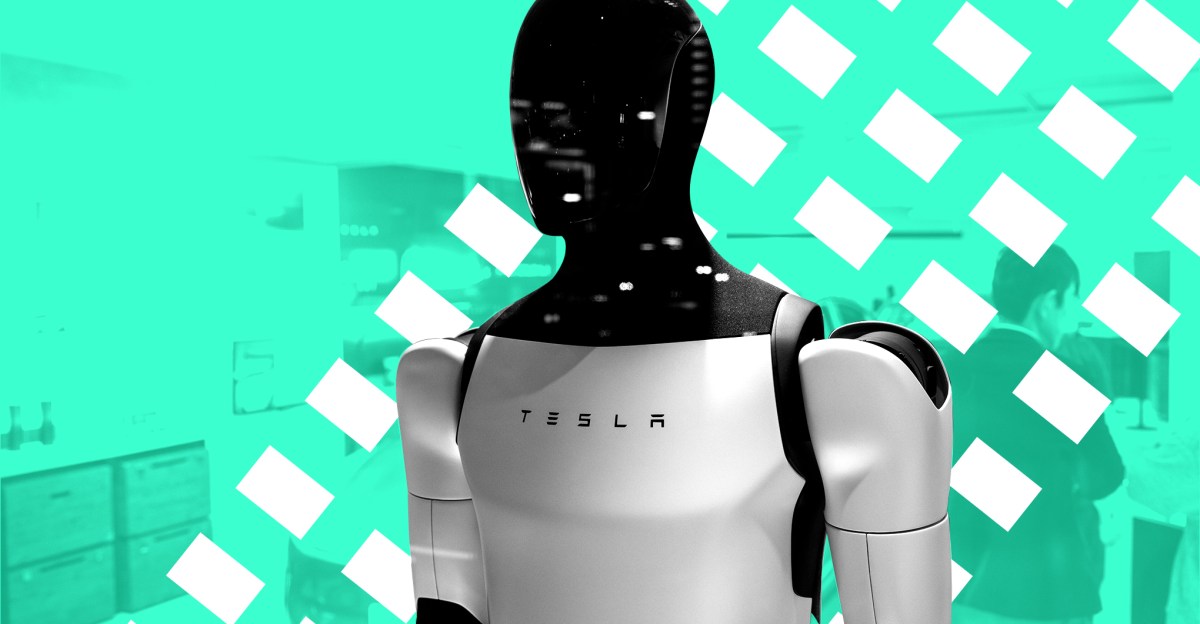
Robot malfunction clips have become a personal favorite pastime of mine-watching them repeatedly brings a mix of amusement and relief. Recently, I found myself captivated by a video from Tesla’s Autonomy Visualized event in Miami, where their humanoid robot, Optimus, dramatically toppled over while attempting to hand out bottles. The robot’s collapse was strikingly lifelike, complete with a splash of water as it crushed a bottle mid-fall and a motion reminiscent of someone removing a VR headset.
This incident isn’t Tesla’s first brush with controversy over the authenticity of its robot demonstrations. Elon Musk’s vision for the Tesla Bot has often involved staged performances, including dancers in bodysuits mimicking robot movements and operators controlling robots remotely via VR-like devices. While Musk has ambitiously pledged to create a “robot army” of one million humanoids, skepticism remains warranted given the historical gap between robotics hype and actual technological capability.
Humanoid robots have fascinated humanity for centuries, from ancient myths of animated statues to modern sci-fi visions of autonomous machines. The first remotely controlled robot dates back to the 1960s, and since then, the dream of bringing lifelike robots into everyday life has persisted. Musk’s high-profile promises have reignited public interest, but the question remains: is 2025 the year humanoid robots truly become viable?
Current Landscape: The Race to Build Humanoids
Today, humanoid robots are at the forefront of innovation for many leading technology companies. Giants like Nvidia, Meta, Google, Amazon, Microsoft, Intel, and Tesla are investing heavily in this space, viewing humanoids as the next technological revolution. Alongside these titans, emerging players such as Apptronik, Figure AI, and 1X are also vying for a share of the market.
China has positioned itself as a global leader in robotics, with government-backed initiatives and substantial investments from companies like Ant Group, Baidu, Unitree, and AgiBot. The country’s commitment to embodied AI-which includes humanoid robots, drones, and quadrupeds-is seen as a strategic driver for future economic growth.
Public showcases have become increasingly common, with humanoid robots participating in events like the 2025 World Humanoid Robot Games in China and the International Humanoid Olympiad in Greece. These competitions feature robots engaging in activities such as dancing, combat, and athletics, highlighting both the progress and the current limitations of the technology.
Companies are eager to transition humanoids from industrial settings into homes, promoting robots capable of performing household chores. For instance, Figure AI’s Figure 03 robot has demonstrated folding clothes and washing dishes, while 1X’s Neo robot, priced around $20,000, is marketed as the first consumer-ready humanoid capable of basic domestic tasks. However, many of these robots still rely on remote human operators to function effectively, underscoring the gap between demonstration and autonomy.
Challenges and Realities of Humanoid Robotics
Despite impressive demos, practical applications remain scarce. Many humanoid robots operate under teleoperation or scripted scenarios rather than true autonomy. For example, Ant Group’s “R1” robot cooked at a trade show but did so at a pace too slow for practical use. Similarly, 1X’s Neo requires remote human control to perform household chores, raising questions about the technology’s readiness for everyday consumers.
The excitement surrounding humanoids often outpaces the current state of the technology. While AI advancements, particularly in large language models (LLMs) developed by companies like OpenAI and Google, have revolutionized natural language processing and image generation, applying these breakthroughs to robotics presents unique challenges. Robots must interpret and interact with the physical world, requiring vast amounts of detailed, real-world data that is difficult to collect at scale.
To address this, companies are employing innovative data-gathering methods. Tesla, for example, uses employees equipped with cameras and sensors to teach Optimus human-like behaviors. Similarly, 1X deploys semi-autonomous robots in homes, allowing remote operators to perform complex tasks and generate valuable training data. This iterative approach aims to gradually improve robot autonomy.
Hardware costs are also declining, especially in China, where entry-level humanoid robots can start as low as $1,400. Mid-range models like the Chinese Bumi robot are priced between $13,500 and $20,000, making them more accessible to consumers. As production scales and data collection improves, the quality and affordability of humanoid robots are expected to rise, potentially creating a positive feedback loop of adoption and innovation.
Looking Ahead: Will Humanoids Fulfill Their Promise?
Despite the momentum, caution is warranted. China’s top economic planners have recently warned of a potential “humanoid robot bubble,” citing the disparity between massive investments and the scarcity of practical use cases. For most consumers, hiring human help remains more cost-effective than purchasing an expensive, semi-autonomous robot that may not yet perform reliably.
The true test will come when companies move beyond flashy promotional videos and teleoperated demonstrations to deliver genuinely autonomous humanoid robots capable of meaningful tasks. Until then, the public may continue to enjoy entertaining robot mishaps as much as they anticipate breakthroughs.
Additional Insights and Industry Highlights
- The robotics boom has spurred a global industry focused on data creation and annotation. In some regions, workers are paid to perform everyday tasks-like folding towels-while wearing cameras to generate training data for robots.
- Innovations in synthetic data are also emerging. Google DeepMind, for example, has developed AI-generated 3D environments to simulate real-world scenarios for robot training, reducing reliance on physical data collection.
- For those who appreciate robot blunders, recent footage of a Russian humanoid robot’s dramatic fall during its debut performance has gone viral, reminding us that the path to reliable humanoids is still fraught with challenges.