Intel is splitting its artificial intelligence-powered robots and biometrics division into a separate business as tech companies increase their investments in automation.
Recommended Reading
RealSense officially launched its company.
was launched Friday along with a $50 million Series-A funding round. MediaTek Innovation Fund led the fundraising, with Intel Capital as a close second. Intel is in the process to spin off Intel Capital, the chipmaker’s venture-capital unit.
Related content
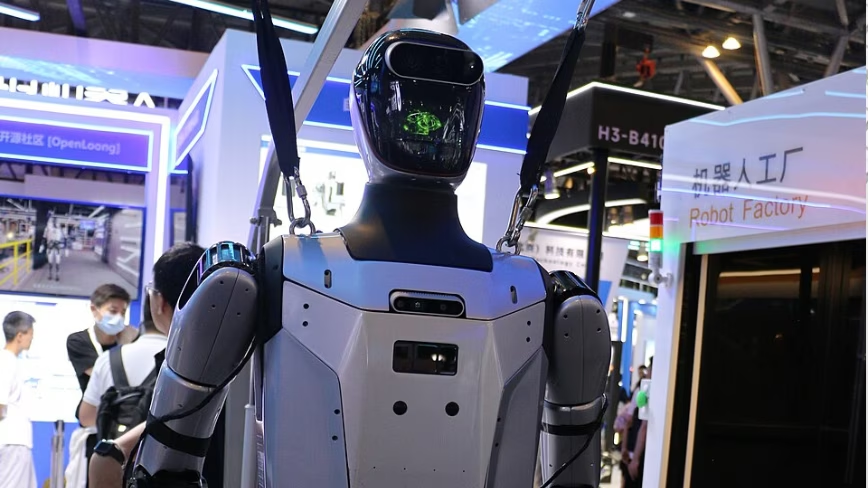
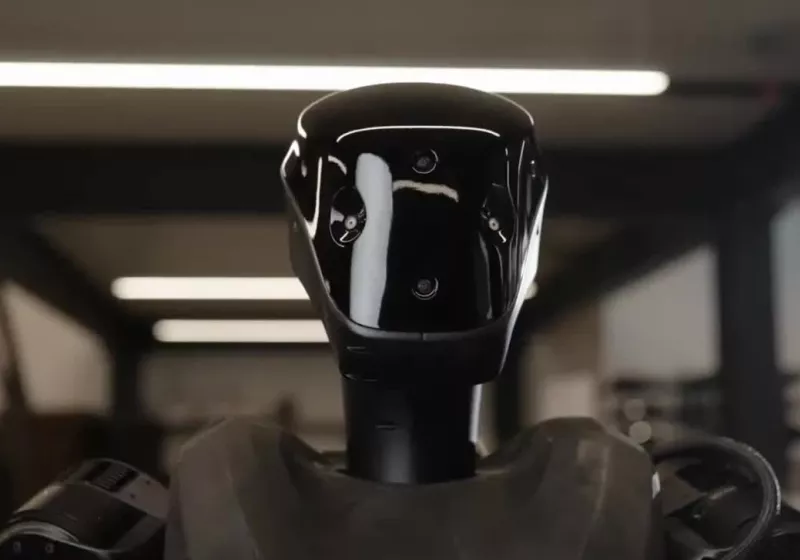
Intel shares were down by 2% in the morning on Friday. RealSense says the capital will allow it to respond to “increased demand” ‘s demand for humanoid robots, that is, robots which resemble human form.
Launching RealSense as an independent company “allows [us] the ability to move faster and innovate bolder to adapt to rapidly evolving market dynamics, as we lead in AI innovation and robotics renaissance,” Nadav orbach, who heads Intel’s innovation unit and is set to transition to CEO of RealSense. Orbach boasted that he would build on the Intel unit’s “leadership position in 3D perception in robotics.”
As robotic capabilities continue to evolve, and AI hype continues, investors and corporations are pouring money into “physical AI” .
According to Fortune Business Insights, the global humanoid robotic market could reach $66 billion in 2032, an increase of 45%,.
Those who are insightful, or who listen closely will understand that Optimus will ultimately be worth more than car business, and worth more even than full self-driving. Elon Musk, Tesla’s CEO, said that he was “firmly convinced” of this. He alsopointed out that training Optimus would require ten-times more computation than electric vehicle AI. He has suggested that Tesla invest $5 billion in his AI startup, xAI.
Nvidia’s CEO Jensen Huang described robotics, the chipmaker’s largest growth opportunity after AI, during the firm’sannual shareholder meeting in June. Intel is in restructuring mode
after one of the toughest years it has ever experienced. Intel’s CEO Pat Gelsinger had to resign last year. Intel plans to cut its workforce by 20% in this year. Cuts have already begun.
RealSense was originally created to explore 3D Vision, and released its first commercial product, in 2015. It employs 130 people in offices located in the U.S.A., Israel and China. RealSense stated that its technology is used to power autonomous machines by companies like Eyesynth, Unitree Robotics and RealSense.