Electric dreams
Recently, Feedback was delighted to peruse the raciest conference invitation we have ever received. You can submit items you believe may amuse readers to Feedback by emailing feedback@newscientist.com
Electric dreams
Recently, Feedback was delighted to peruse the raciest conference invitation we have ever received. We receive a lot conference invitations from organisers who think we’re doing science journalism. They are usually a bit prosaic, such as what’s new with G-protein signalling or more findings on the biology of molluscs. This one is about a upcoming event in Shaoxing.
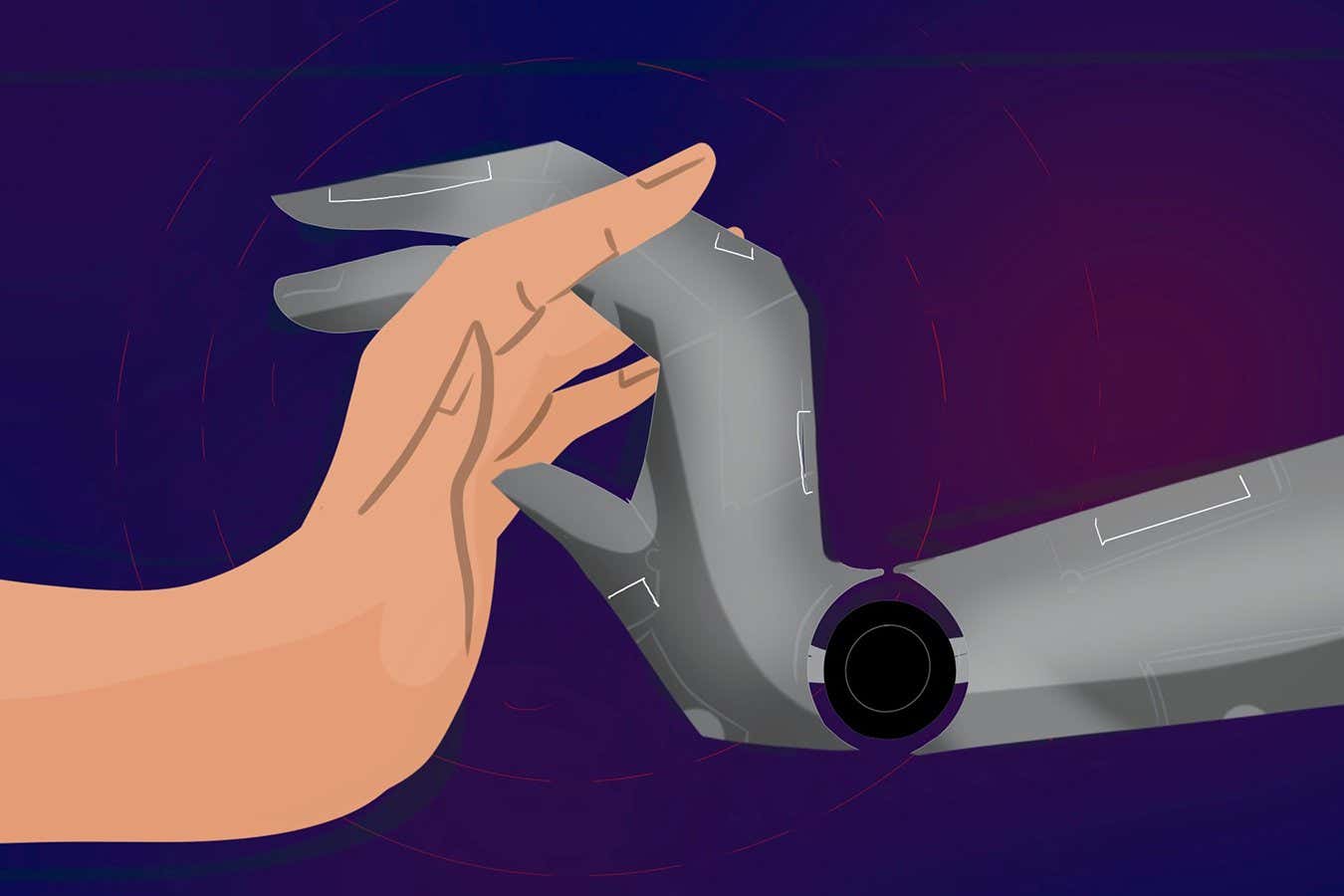
This is the opening line of the article: “From its groundbreaking origin in London to its stunning evolution in the vibrant center of China, the Love and Sex with Robots Conference is gearing up to its most exciting chapters yet: its landmark 12-th International edition, which is scheduled for June 2026.” We are told to prepare for “a dazzling convergence” of visionary researchers, renowned scientists, and revolutionary thinkers redefining human interaction through cutting-edge robots and AI. Attendees can expect “mind-blowing revelations”, “groundbreaking demonstrations”, and “provocative discussions” that explore the futures of love, companionship and technology.
In other places, the invitation describes the conference as “electrifying”: we don’t take this literally. It also encourages “practical demos showcasing innovative interaction concepts, software, or functional robotic technologies“. So who knows? Feedback discovered that the conference has a “Supreme Council”, which “guides the vision and direction of the conference”
. All five members of the council are men. Take that as you will. David Levy is the “Supreme leader” (we promise, we’re not making this up). Long-time New Scientist readers may remember him as the author of Love and Sex With Robotsfrom 2007. Our reviewer said Levy’s “enthusiasm” for the carnal aspect of robotics led him to so many absurdities that it was hard to take his arguments serious.
Yet, the conference organizers know what they are about. The invitation announces “this is the event that the world will be talking” and here is Feedback talking about it.
Defence against drones
David Hambling, in a recent article New Scientistasked: “Can any country protect itself from a Ukraine-style attack on drone-smuggling?” (21 June p. 8). Hambling talked about building physical barriers such as nets or “hardened airplane shelters”, using electronic interference to disrupt drones, and taking “kinetic measures” (such as shooting down drones) – concluding it was all quite difficult.
This is all well and good, but reader Robert Bull points to the fact that the answer was already in the first expert quoted in the article: security and antiterrorism professional Robert Bunker.
Cheesed Off
US News Editor Sophie Bushwick sent Feedback an incredibly chilling press release entitled “Cheese could be giving you nightmares – scientists find“. Please, we thought. For the love of everything dairy, please let this not be true. We have so little joy in life. Don’t delete cheeses.
According to the press release, we were directed to a study in Frontiers in Psychology (19459032) titled “More Dreams of the Rarebit Fiend: Food Sensitivity and Dietary Correlates of Sleep and Dreaming“. If you’re confused by the mention of rarebit, it could be that you are not sufficiently Welsh. Rarebit is, as the authors explain, “a spicy melted-cheese toast”.
They wanted to know if folk myths about certain foods affecting sleep were true. They surveyed 1082 online respondents and found that a fifth of them believed that certain foods affected their sleep. A smaller percentage believed that they affected dreams. Feedback was not impressed at this point because it only showed that some people believed that certain foods affected sleep. This, we can’t stress enough, does not mean that they are true.
The paper goes further – or maybe off the deep end. Researchers found a strong correlation between reports of worse nightmares and lactose intolerance. This led them to suggest that people with lactose intolerant have more nightmares due to the painful symptoms experienced after eating cheese.
Feedback facepalmed so hard that we left a permanent mark. Lactose, the sugar in milk, was only digestible by babies until relatively recently. Some populations have evolved the ability to digest milk as adults in the last few millennia. Those without this trait are lactose intolerant and drinking milk makes their stomachs feel awful.
Most cheeses contain very little lactose. The process of making cheese removes lactose. This may be why the early pastoralists invented it. Cheese was a way for them to consume dairy products without feeling the pain. It is unlikely that a little cheese before bed will cause lactose intolerance.
Wow, what a journey! You thought it was a funny cheese story, but in reality, this is a sneaky launch of a new recurring feature: Feedback’s Pet Peeves. In which we will outline all the trivial hills for which we would be willing to die. You have been warned.
Have a story to send to Feedback?
You can send stories to Feedback by email at feedback@newscientist.com. Please include your home adress. On our website, you can see the feedbacks from this week and previous weeks.