Linkerbot: Pioneering Advanced Dexterous Robotic Hands
Recent Funding Milestones and Strategic Investors
Linkerbot, a leading innovator in dexterous robotic arms for embodied intelligence, has successfully closed a Series A+ funding round, securing a nine-figure RMB investment. This round attracted prominent investors such as Zhejiang Provincial Innovation Investment Group (ZPIIG), Deqing Industrial Investment (DQII), Leju Robotics, CDH Investments, Ginnva Dongfang Precision, Aux Huafu Investment, and Hongyi Fund.
Over the past eight months, Linkerbot has completed four financing rounds, expanding its investor base to include both financial institutions and industrial giants like Ant Group, HongShan, and Wankai New Materials. This influx of capital is fueling the company’s rapid commercialization efforts as the embodied intelligence sector matures globally.
Core Business Focus and Global Clientele
Founded and led by CTO Zhou Yong, Linkerbot specializes in three primary application areas: scientific research, humanoid robotics, and industrial automation. The company boasts a robust international client portfolio, including major corporations such as Samsung and Siemens, which place orders exceeding 1,000 units monthly. Linkerbot’s ambitious vision is to become the first enterprise worldwide to manufacture one million dexterous robotic hands.
Innovative Product Lineup and Technological Foundations
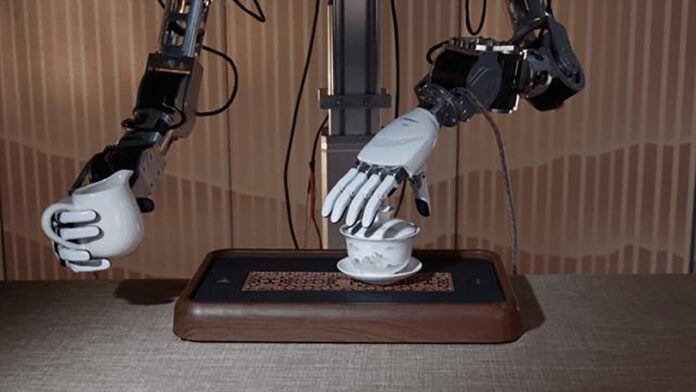
Linkerbot’s product range features three distinct actuation technologies: tendon-driven, direct drive, and linkage-driven mechanisms. Their dexterous hands offer between 11 and 42 degrees of freedom (DoF), catering to diverse operational needs.
The Linker Hand Series stands out as the first high-DoF robotic hand line to achieve mass production, surpassing 1,000 units shipped. Among its flagship models is the L20, which offers 21 DoF and comes in both general-purpose and industrial variants. Priced at RMB 49,900 (approximately USD 6,986), the L20 is capable of manipulating a wide array of human tools.
For more precision-demanding tasks, the L30 model provides 22 DoF, supporting applications such as surgical assistance, flexible gripping, and fine assembly work. It is priced at RMB 99,900 (around USD 13,986). To facilitate broader adoption, Linkerbot also offers lower DoF models designed for easier integration.
Cost-Effective Solutions for Industrial Applications
The L6 model, featuring six DoF and five fingers, targets industrial use cases and is priced at RMB 19,900. It incorporates a motorless brushless drive system combined with a ball screw, which significantly reduces mechanical friction and boosts drive efficiency by approximately 90%. Durability tests indicate the ball screw can endure over one million operational cycles.
At the entry-level, the O6 hand is the world’s lightest dexterous hand with six active DoF, retailing at RMB 666 (USD 933). Linkerbot also offers a subsidized version at RMB 3,999 (USD 559.9), making advanced robotic hands more accessible. The company’s in-house development strategy, including manufacturing core components like gear reducers, motors, and electric cylinders, enables competitive pricing and supply chain control.
Scaling Production and Market Leadership
Despite the challenges inherent in scaling production for a nascent category like dexterous robotic hands, Linkerbot has demonstrated remarkable progress. Founder Zhou Yong highlights common obstacles such as stabilizing new production lines, refining manufacturing processes, and managing large order backlogs. To date, Linkerbot is believed to be the only company mass-producing high-DoF hands at a scale exceeding 1,000 units monthly.
Public data suggests Linkerbot commands over 80% of the global market share for high-DoF dexterous arms. The company has established proprietary production facilities and operates four subsidiaries, collaborating closely with suppliers to ensure timely delivery. Currently, monthly production capacity surpasses 4,000 units, with plans to fulfill between 50,000 and 100,000 units within the next year.
Expanding Beyond Hardware: Software and Ecosystem Development
Recognizing that hardware alone cannot sustain long-term competitive advantage, Linkerbot is investing heavily in software and ecosystem growth. Zhou emphasizes that large tech corporations could match smaller firms on cost once they allocate sufficient resources to this sector, making software innovation critical.
To this end, Linkerbot has introduced Open TeleDex, a modular teleoperation platform compatible with various external devices, robotic arms, and dexterous hands. This system simplifies data collection and reduces integration expenses for customers building teleoperation setups.
Additionally, LinkerSkillNet, a multimodal data collection framework, aims to create the world’s largest repository of human hand skills. Zhou explains that the human hand’s unparalleled versatility-capable of manipulating thousands of objects and tools-motivates the creation of a vast “skill library” from which users can select diverse hand capabilities.
Advanced Training and Reinforcement Learning
Linkerbot employs real-world reinforcement learning techniques to train its robotic hands. The integration of end-effector force sensors enables robotic fingers to detect contact forces, enhancing manipulation precision. The company has extended dexterous training to robotic arms without force control and automated much of the training pipeline.
These efforts have yielded near-perfect success rates in demonstration tasks such as screwdriving and USB port insertion. Furthermore, Linkerbot collaborates with CK Capital to foster innovation across the value chain, supporting component suppliers, algorithm developers, and vertical solution providers.
Real-World Applications and Leadership Team
The L20 hand is actively deployed in production line robots, enabling continuous learning and self-improvement through real-world task execution. Zhou Yong, who leads the company, brings over 15 years of experience in robotics and internet technologies, having previously worked at Lenovo Research Institute since 2007.
Algorithm and model training efforts are spearheaded by Cao Gang, a distinguished researcher involved in major national AI projects and a member of Beijing’s Municipal Talent Program. He manages a team of 100 researchers focused on large-scale model development and has incubated several AI startups, including Z.ai (formerly Zhipu AI), Galbot, ModelBest, DeepLang, LibLibAI, and Xiaoyu.