Revolutionizing Military Defense: The Emergence of the Hanx 3D-Printed Drone
As drone technology rapidly advances, armed forces worldwide are compelled to develop innovative countermeasures against increasingly sophisticated and cost-effective unmanned aerial vehicles. For instance, Ukraine has introduced a compact drone capable of speeds rivaling high-performance sports cars, while repurposing vintage WWII propeller aircraft to neutralize hostile Russian drones. In the United States, a joint military task force released updated drone defense protocols in early 2025, reflecting the growing urgency to address aerial threats. Among these developments, the U.S. Marine Corps has unveiled the Hanx-a groundbreaking 3D-printed drone designed and manufactured entirely by Marines themselves. This marks the first Marine drone approved under the National Defense Authorization Act (NDAA) and cleared by NAVAIR, the Navy’s aviation systems command, for operational deployment.
Though the Marines operate as a distinct branch from the Navy, both services have been closely linked since their congressional unification in 1834 under President Andrew Jackson. The Hanx drone exemplifies this synergy, combining cutting-edge additive manufacturing with tactical versatility to enhance battlefield capabilities.
Innovative Design and Tactical Applications of the Hanx Drone
The Hanx drone is engineered primarily as a “one-way attack” platform, delivering its payload in a manner that results in the drone’s destruction upon impact. This design eliminates the need for a return flight, thereby reducing the risk of enemy tracking and interception. In December 2025, the Marines successfully conducted trials of their first ship-launched Hanx drone, demonstrating its operational readiness in maritime environments.
Beyond its offensive role, the Hanx’s modular architecture allows it to be reconfigured for reconnaissance missions or logistical support when not equipped with explosives. This adaptability significantly broadens its utility across diverse combat scenarios. Additionally, the Marines benefit from rapid maintenance capabilities: damaged Hanx units can be swiftly repaired or rebuilt using digital schematics and onboard 3D printers, bypassing traditional supply chain delays. This approach mirrors the Navy’s recent adoption of 3D-printed components aboard aircraft carriers, underscoring a broader shift toward decentralized, on-demand manufacturing in military logistics.
From Hobbyist to Innovator: The Story Behind the Hanx Drone’s Creation
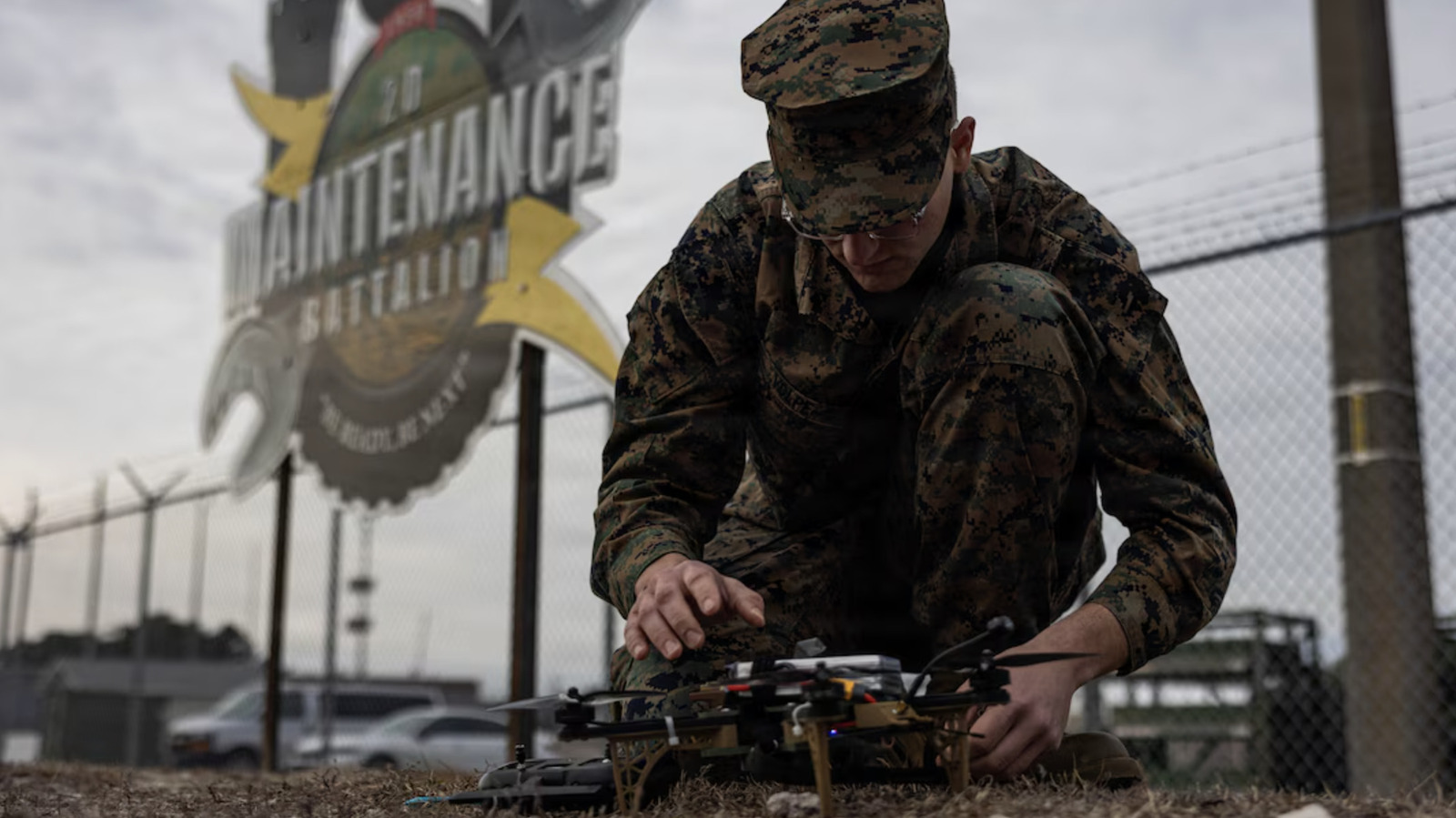
The inception of the Hanx drone is rooted in the passion and ingenuity of Sgt. Henry David Volpe, whose early fascination with robotics began in a middle school Lego club. Raised by engineer parents, Volpe was encouraged to explore and experiment with technology from a young age. Prior to enlisting, he worked as an automotive mechanic while pursuing related studies in college. However, the COVID-19 pandemic disrupted his dual pursuits, prompting him to join the Marines’ 2nd Maintenance Battalion.
At Camp Lejeune’s Expeditionary Force Innovation Campus, which specializes in 3D printing and robotics, Volpe quickly distinguished himself by repairing a malfunctioning 3D printer. His technical aptitude caught the attention of Matthew Pine, the campus officer in charge. Inspired by a visit to an Army drone project at Fort Campbell, Volpe recognized the potential to develop a more cost-effective drone without compromising essential features. Collaborating with Pine and a dedicated team, they transformed Volpe’s concept into a functional prototype within just 90 days.
The drone’s name, “Hanx,” is a nod to Volpe’s nickname, Hank. Despite his central role in its design, Volpe emphasizes the collective effort behind the project: “I designed it, but it was the teamwork around me that made it possible.” This spirit of collaboration highlights the evolving culture of innovation within the Marine Corps, blending individual expertise with shared commitment to advancing military technology.