
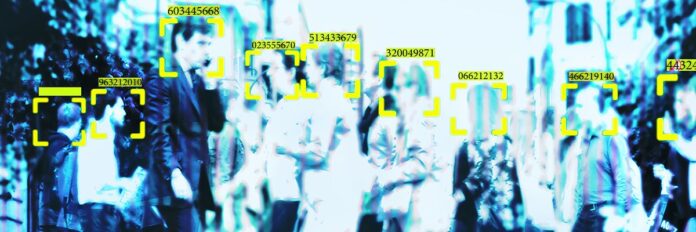
UK’s Largest Police Force to Expand Live Facial Recognition Amidst Major Staff Reductions
Metropolitan Police to Amplify Facial Recognition Use Despite Budget Cuts
Facing a significant reduction of 1,700 personnel-including 1,400 officers and 300 civilian staff-the Metropolitan Police Service (Met) is set to substantially increase its deployment of live facial recognition (LFR) technology. This move aims to mitigate the operational impact of budget constraints while maintaining public safety.
Strategic Redeployment and Enhanced Surveillance in High-Crime Zones
The Met’s restructuring plan involves intensifying patrols and bolstering specialized units focused on public order offenses, particularly protests. LFR usage is projected to rise dramatically, with deployments increasing from four times over two days to up to ten times daily across a five-day span. Additionally, 90 new officers will be assigned to six designated high-crime neighborhoods, including Brixton, Kingston, Ealing, Finsbury Park, Southwark, and Spitalfields. However, it remains uncertain whether these areas will see a proportional increase in facial recognition operations.
Financial Pressures and Official Endorsements of Facial Recognition
In April 2025, the Met disclosed a looming £260 million budget shortfall for the upcoming fiscal year. Commissioner Mark Rowley has publicly defended the expanded use of LFR, emphasizing its role in apprehending serious offenders. He highlighted that the technology has been instrumental in identifying multiple individuals involved in grave crimes, including offenses against women and children, as well as armed robberies.
Rowley underscored the importance of responsible deployment, stating, “This technology is employed with care and is widely supported by the public. However, given its potential to infringe on civil liberties by scanning millions of faces, it must be governed by stringent safeguards and independent oversight.”
Calls for Legislative Framework and Governmental Action
Recognizing the rapid evolution of facial recognition technology, government officials have acknowledged the necessity for clear regulatory measures. In July 2025, Home Secretary Yvette Cooper announced plans to establish a comprehensive governance framework to oversee police use of facial recognition. She noted that police forces have been hesitant to adopt systems lacking robust rules, though she did not confirm whether this framework would be legally binding.
Ongoing Debates and Ethical Concerns Surrounding LFR
Despite official assurances that LFR deployments are intelligence-driven and target serious criminals, internal disclosures reveal a more complex reality. In December 2023, senior Met officers admitted to a House of Lords Committee that watchlist selections are often based on crime categories linked to individuals’ images rather than nuanced threat assessments. This approach includes individuals wanted for minor infractions such as shoplifting and traffic violations.
Legal and ethical experts, including Professor Karen Yeung of Birmingham Law School, have criticized this broad-brush method. Yeung argues that the state’s coercive powers necessitate individualized justification for each watchlist entry, rather than blanket inclusion based on crime type alone.
Concerns have also been raised about the scale of the watchlist and the disproportionate impact on certain communities. Civil rights organization Big Brother Watch has highlighted that the Met’s watchlist frequently exceeds 15,000 faces, suggesting that deployments may lack precise targeting.
For example, during a February 2022 LFR operation in Westminster, the watchlist contained 9,756 images. Silkie Caro, director of Big Brother Watch, described this as a “catch-all” approach rather than a focused, urgent deployment. Demographic data reveals that Black residents, who constitute 13.5% of London’s population, are overrepresented in areas where LFR is heavily used-comprising 36% in Haringey, 34% in Lewisham, and 40% in Croydon, where permanent LFR cameras are planned.
Despite nearly two million facial scans conducted in 2024, only 804 arrests were made, reflecting an arrest rate of approximately 0.04%. However, the Met reported over 1,000 arrests linked to LFR since early 2024, with 773 resulting in charges or warnings, indicating some operational success.
Public opinion on LFR remains divided. While the Met claims majority support, investigations have revealed limited direct community consultation and ongoing skepticism among local councillors. Lewisham Green Party councillor Hau-Yu Tam noted that residents favor safer streets and social cohesion but often feel inadequately informed or misled about LFR deployments.
In response to these concerns, Newham Council unanimously voted in January 2023 to temporarily halt LFR use pending the implementation of biometric safeguards and anti-discrimination measures. The council warned that LFR could exacerbate racial disparities in policing, a concern echoed by both the Met and the Home Office, who have nonetheless committed to continuing deployments.