Shanghai’s Mirror Me: Pioneering Advances in Robotics with Fresh Series-A Funding
Mirror Me, a robotics innovator headquartered in Shanghai, recently secured a substantial Series-A investment round led by Ivy Capital, raising a significant eight-figure sum in RMB. This capital injection is earmarked to accelerate research and development, enhance iterative product upgrades, and scale up mass production and market deployment across both consumer and industrial robotics sectors. Prior funding rounds included backing from Hongrun Times Technology, a subsidiary of Hongrun Construction Group, and Kaierda.
Company Origins and Leadership
Established in May 2024, Mirror Me is dedicated to advancing embodied intelligence technologies with a focus on practical, real-world robotic applications. The company specializes in the design and manufacture of versatile robotics platforms. Wang Hongtao, the founder and CEO, brings a wealth of academic credentials from prestigious institutions including Tsinghua University, Harvard University, and Zhejiang University.
Expertise Driving Innovation
The core team at Mirror Me comprises seasoned professionals drawn from top-tier embodied intelligence startups, leading internet firms, and consumer electronics manufacturers. Collectively, they offer nearly ten years of experience in robotic dynamics, control system design, and seamless hardware-software integration, positioning the company at the forefront of robotics innovation.
Setting New Benchmarks in Quadruped Robotics
Just six months after its inception, Mirror Me made headlines in 2025 with the Black Panther 2.0 quadruped robot, which reportedly achieved a groundbreaking speed of 10.9 meters per second. This feat surpassed the decade-long record held by Boston Dynamics’ WildCat, bringing robotic locomotion speeds closer to those of elite human sprinters.
Expanding the Horizons of Embodied Intelligence
The embodied intelligence sector is witnessing a surge of startups transitioning cutting-edge research into market-ready solutions. Leveraging advancements in algorithms, multimodal sensory integration, and biomimetic design, these companies are developing robots capable of industrial inspection, emergency response, and increasingly, consumer companionship. Mirror Me currently offers three flagship products:
- Baobao: A consumer-focused companion robot with dual-form capabilities.
- Apollo: An industrial-grade quadruped designed for challenging environments.
- Black Panther 2.1: A high-mobility quadruped robot optimized for speed and agility.
Baobao: The World’s First Dual-Form Companion Robot
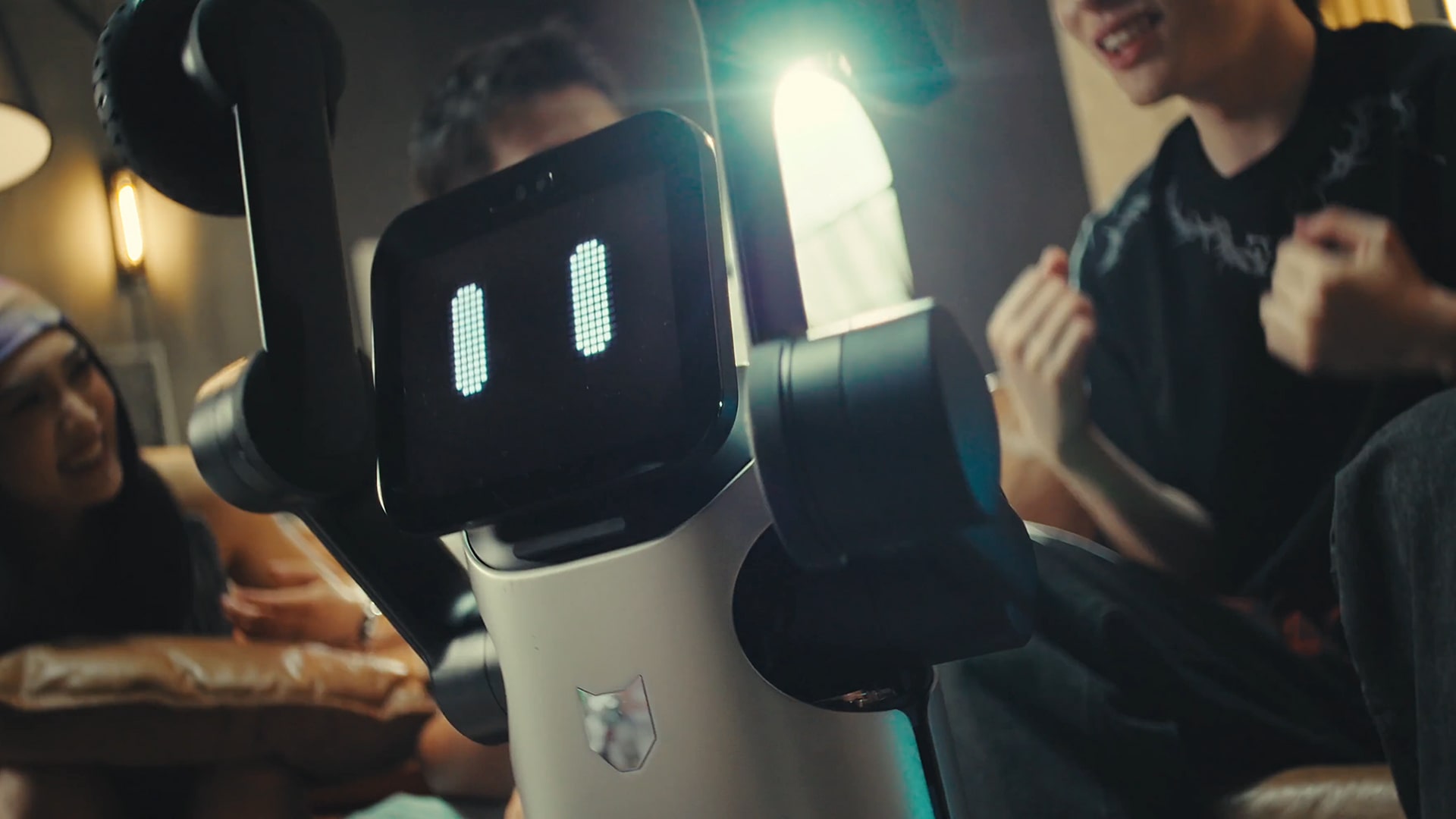
Baobao stands out as the pioneering dual-form robot, seamlessly switching between humanoid and quadruped modes to navigate diverse home settings. In quadruped mode, Baobao can follow users around living spaces, offering mobile companionship. When in humanoid form, it interacts at desk height, maintaining agility and a comfortable interpersonal distance.
Wang emphasizes that consumer robots must integrate multiple sensory inputs-cameras, microphones, and sensors-while blending naturally into daily life with intelligent behavior. “The challenge lies not only in the technology but in designing a form factor and use cases that resonate with users,” he explains.
Baobao’s hardware architecture minimizes sensor interference to enhance gesture recognition accuracy. Its expressive facial animations on the head display provide visual feedback, strengthening emotional bonds between robot and user. This design philosophy results in a versatile companion suitable for activities ranging from casual interaction to serving as a yoga partner.
Apollo: Industrial Robotics Tailored for Tough Terrains
In the industrial robotics arena, adaptability to complex terrains, extended operational endurance, and robust payload handling are critical. Mirror Me’s Apollo quadruped robot addresses these demands, performing tasks such as power line inspection, emergency rescue, and factory automation. Apollo overcomes common industrial challenges like limited terrain navigation, short battery life, and costly maintenance.
Apollo operates continuously for up to five hours, or four hours when carrying a full 20-kilogram payload. It can traverse uneven environments including staircases and debris fields, outperforming wheeled or tracked robots. The robot supports stationary loads exceeding 140 kilograms and dynamic loads over 40 kilograms, functioning reliably even in subzero temperatures. Its modular design facilitates easy maintenance, reducing downtime and operational costs.
Black Panther 2.0: Balancing Velocity and Stability
Achieving a balance between speed and stability has been a persistent challenge in legged robotics. The Black Panther 2.0’s record-breaking performance is now being leveraged for specialized applications, including emergency response and complex operational scenarios.
Mirror Me is ambitiously working toward surpassing human-level motion and manipulation capabilities within the next three years. Initial deployments will focus on hazardous environments, with plans to expand into industrial and residential markets.
Market Dynamics and Commercialization Challenges
While industrial robotics clients often face prolonged procurement processes and stringent certification standards, consumer markets prioritize affordability and clear utility. Globally, many robotics firms remain concentrated on laboratory prototypes and pilot programs. In contrast, Chinese companies like Mirror Me are simultaneously targeting industrial and consumer sectors to expedite commercialization and scale production.
“Rapid development is achievable within months,” Wang notes, “but widespread adoption in factories and homes demands reliable products, cost-effective solutions, and mature supply chains.” He highlights China’s competitive edge in manufacturing infrastructure and engineering talent, while cautioning against overhyping short-term achievements.
Investor Insights: Why Mirror Me Stands Out
Ivy Capital views the embodied intelligence industry as nascent yet ripe with investment opportunities. Drawing parallels to the automotive sector, they anticipate that robot manufacturers will capture substantial value, supported by China’s strong supply chain and engineering expertise.
The firm identified five key factors motivating their investment in Mirror Me:
- Innovative design approach utilizing proprietary differentiable simulation software to optimize configurations under complex constraints.
- In-house production of advanced components, including integrated joints and dexterous robotic hands.
- Ongoing model refinement through imitation and reinforcement learning, leveraging extensive datasets of human and animal movements.
- Automotive-grade reliability standards, evidenced by a growing volume of commercial orders.
- Robust academic foundation at Zhejiang University, complemented by the founder’s decade-long technical expertise.