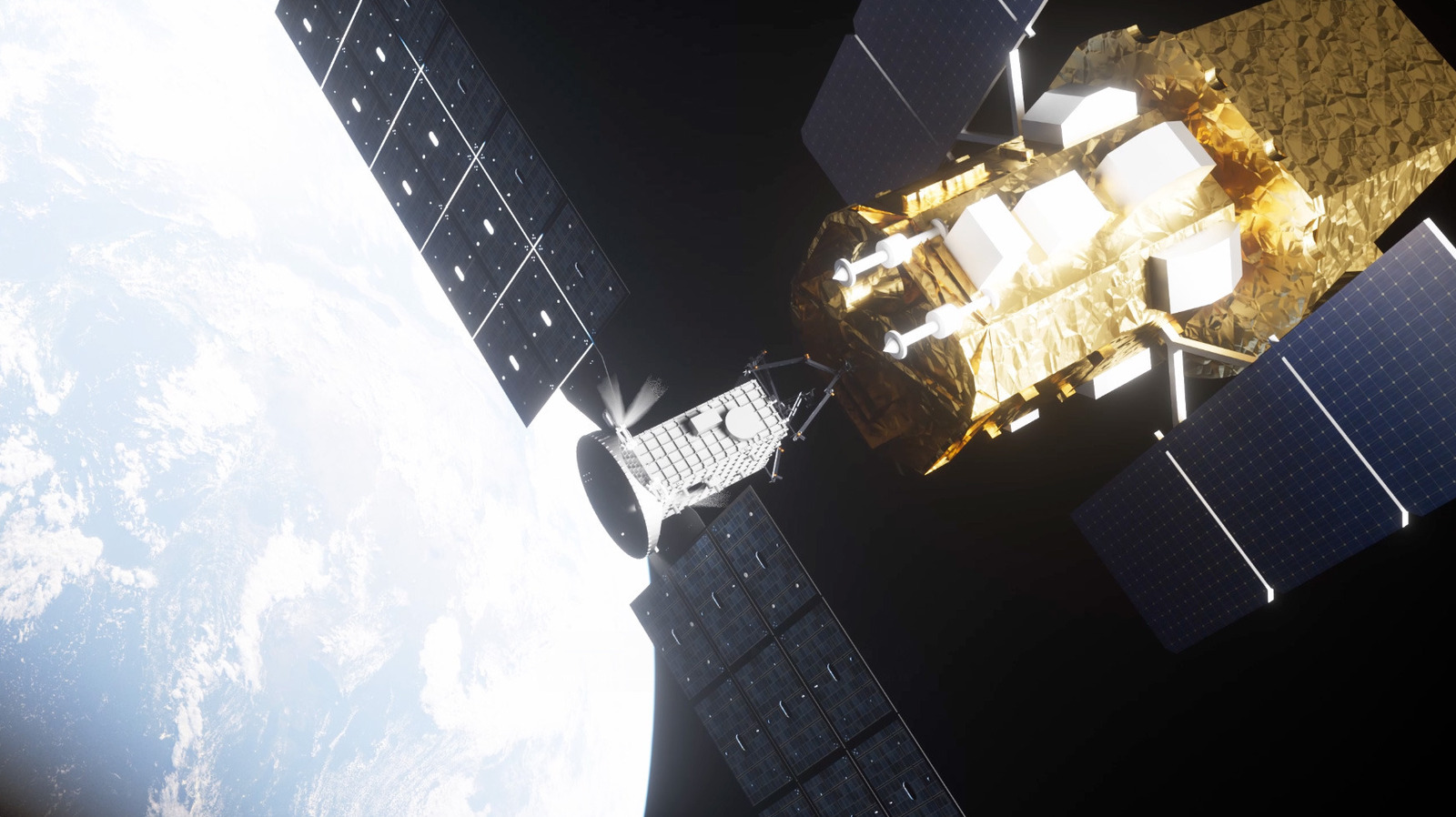
LINK Spacecraft Set to Elevate Swift Observatory’s Orbit
NASA has initiated a groundbreaking mission involving a robotic spacecraft named LINK, designed to boost the Neil Gehrels Swift Observatory into a higher orbit, thereby extending its operational lifespan.
Launch Details and Mission Overview
On July 3 at 4:36 AM Eastern Time, after several postponements, the Swift Boost mission successfully launched from the Marshall Islands. LINK, engineered by Arizona-based Katalyst Space, is tasked with rendezvousing with the Swift Observatory, which has been descending faster than predicted due to increased atmospheric drag influenced by recent solar activity.
Unlike conventional launches, LINK was deployed via a Pegasus XL rocket, which was air-launched from the Stargazer aircraft at approximately 40,000 feet altitude above Kwajalein Atoll. After a brief free fall, the rocket ignited to propel LINK into orbit.
Current Status and Upcoming Operations
Mission control has successfully established communication with LINK, marking a critical milestone. The spacecraft has powered on and is undergoing comprehensive diagnostics to evaluate its propulsion, navigation, and sensor systems. These health assessments, conducted by Katalyst Space, will span several weeks before LINK embarks on its approach to the Swift Observatory.
Once in proximity, LINK will utilize its trio of robotic arms to securely dock with the observatory. The combined spacecraft will then be gradually elevated to an orbit approximately 370 miles above Earth, a maneuver expected to take between 10 and 12 weeks. This orbital boost is projected to prolong the observatory’s mission by roughly ten years.
Significance of the Swift Observatory and Its Scientific Contributions
For over 20 years, the Neil Gehrels Swift Observatory has been a pivotal instrument in the study of gamma-ray bursts-intense, fleeting flashes of high-energy light that emit more energy in seconds than the Sun will over its entire lifespan. These bursts are believed to originate from cataclysmic events such as stellar explosions and collisions.
Brad Cenko, the principal investigator for Swift, highlights that the observatory’s data has been instrumental in confirming that some of the heaviest elements on Earth, including gold and platinum, are synthesized during these cosmic phenomena. Additionally, Swift functions as an early-warning system, rapidly detecting and relaying information about sudden astrophysical events to the global scientific community.
Contextualizing the Mission’s Importance
Spacecraft in low Earth orbit inevitably experience orbital decay due to atmospheric drag, but heightened solar activity has accelerated this process for Swift. Without intervention, the observatory would likely re-enter Earth’s atmosphere by the end of the current year, prematurely ending its valuable scientific contributions.
The innovative approach of using a robotic tug like LINK to extend the life of aging satellites represents a significant advancement in space sustainability and mission cost-efficiency. This mission sets a precedent for future endeavors aimed at preserving critical space assets.