NASA’s Upcoming Fly Foundational Robots Mission: Pioneering Robotic Operations in Space
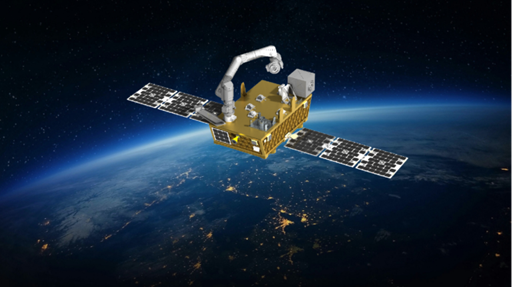
Scheduled for launch in late 2027, NASA’s Fly Foundational Robots (FFR) mission aims to demonstrate advanced robotic arm capabilities in low Earth orbit. This initiative, developed in collaboration with industry partners, is set to transform how space operations are conducted-an essential step toward sustainable human presence and activity on the Moon, Mars, and beyond. By showcasing in-space robotic technologies, NASA intends to unlock new tools that will enhance future scientific exploration and space infrastructure development.
Transforming Space Infrastructure with Robotic Innovation
Bo Naasz, the senior technical lead for NASA’s In-space Servicing, Assembly, and Manufacturing (ISAM) program, emphasizes the mission’s long-term potential: “While the current demonstration focuses on a robotic arm, the underlying technology could eventually enable the assembly of solar power arrays, satellite refueling, construction of lunar habitats, and even in-space manufacturing that benefits Earth’s industries.” This vision aligns with NASA’s broader goal of establishing a robust space economy and ensuring continuous human exploration on other celestial bodies.
Advanced Robotic Dexterity for Complex Space Tasks
The FFR mission features a sophisticated robotic hand developed by Motiv Space Systems, capable of intricate manipulation, autonomous tool handling, and mobility across spacecraft surfaces in microgravity or partial gravity environments. This dexterity opens possibilities for repairing and refueling satellites, building habitats on the Moon or Mars, maintaining life support systems, and assisting astronauts during extended missions. Moreover, advancements in space robotics often translate into innovations on Earth, impacting sectors such as construction, healthcare, and transportation.
Collaborative Testing and Industry Partnerships
NASA’s Space Technology Mission Directorate has partnered with Astro Digital to facilitate orbital testing of the FFR robotic arm through the Flight Opportunities Program. This hosted payload approach allows guest roboticists to utilize Motiv’s robotic platform as a testbed for unique experiments and operational tasks. NASA will serve as the initial guest operator, with plans to invite additional U.S. partners to participate, fostering a collaborative environment for advancing space robotics.
Building the Future of In-Space Robotics
Validating robotic operations in orbit is a critical precursor to deploying more complex servicing and refueling missions. The FFR mission will provide Motiv Space Systems the opportunity to prove their robotic arm’s capabilities in the space environment, paving the way for expanded applications and commercial opportunities in space servicing.
Mission Management and Funding
The Fly Foundational Robots demonstration is supported by NASA’s ISAM portfolio under the Space Technology Mission Directorate and is managed by NASA’s Goddard Space Flight Center in Greenbelt, Maryland. Motiv Space Systems, based in Pasadena, California, is supplying the robotic arm system through a NASA Small Business Innovation Research (SBIR) Phase III award. Astro Digital, located in Littleton, Colorado, is responsible for testing the robotics payload under NASA’s Flight Opportunities Program, which is managed by NASA’s Armstrong Flight Research Center in Edwards, California.
For more information on NASA’s efforts in in-space servicing, assembly, and manufacturing, visit the In-space Servicing, Assembly, and Manufacturing program page.
Colleen Wouters, NASA’s Goddard Space Flight Center, Greenbelt, Maryland