Challenges Facing Hardware Startups in the Robotic Lawn Mower Industry
In recent years, many hardware startups have stumbled during the manufacturing phase, and the robotic lawn mower sector is no exception. Airseekers, a company specializing in intelligent lawn mowers, has recently disclosed several critical obstacles that are severely impacting its operations.
Key Operational Hurdles at Airseekers
- Overambitious Production Goals: The company underestimated the complexities of scaling up manufacturing. Attempting to produce thousands of units in the initial run led to significant factory delays and operational bottlenecks.
- High Employee Turnover: Frequent staff departures disrupted product development workflows and internal communication, further extending production timelines and delaying shipments.
- Unsustainable Cost Structure: Internal financial analysis revealed that the actual manufacturing expenses per mower exceed both the crowdfunding price and the company’s available cash reserves. Without fresh capital injections, fulfilling all crowdfunding orders is financially unfeasible.
Despite successfully raising USD 2.2 million through crowdfunding within a month, Airseekers has only managed to deliver approximately 100 units from its first production batch. The company has yet to announce a definitive schedule for fulfilling the remaining orders.
Funding and Market Position
To date, Airseekers has secured substantial investment, including an eight-figure RMB sum across two funding rounds, with backers such as Gree Group, Cowin Capital, Blue Power Capital, Hypercycle Ventures, and Brizan Ventures. The company’s latest valuation reportedly exceeds RMB 100 million. However, success in the robotic lawn mower market demands more than innovative products; it requires robust research and development, stringent cost management, efficient supply chains, and effective marketing strategies. Deficiencies in any of these areas can jeopardize the entire venture.
From Prototype to Mass Production: The Pitfalls of Rapid Scaling
In hardware manufacturing, a sleek prototype often conceals the intricate challenges of mass production. The typical process involves progressing through stages such as Engineering Verification Test (EVT), Design Verification Test (DVT), and Production Verification Test (PVT), each aimed at refining design, stabilizing manufacturing, and securing supply chains before full-scale production.
Airseekers adopted an aggressive production timeline, reportedly completing over 500 EVT units in just three weeks-significantly faster than the industry norm of four to six weeks. The company then escalated PVT production to 2,500 units, a 500% increase over the pilot batch, far exceeding the usual 200-300% scale-up.
Such rapid expansion can obscure underlying issues. An industry expert likened it to “getting your driver’s license and immediately racing on a professional track,” where speed increases but quality control and supply chain stability often falter, leading to inevitable rework and delays.
Cost Challenges and BOM Analysis
The Bill of Materials (BOM) is a critical metric for hardware firms. Established companies like iRobot and Ecovacs Robotics typically maintain BOM costs between 18-22% of retail price. Early-stage products should aim to keep this below 25%, with mature products pushing it under 20%.
Airseekers priced its Tron mower at USD 1,299 on Kickstarter, implying a target BOM cost under USD 325 to align with industry standards. However, insiders estimate the actual BOM exceeded 30%, surpassing investor expectations and squeezing profit margins. This was exacerbated by volatile component prices, such as motors and chips, intensifying financial strain and complicating investor confidence.
Although the company attempted to cut material and manufacturing expenses to rebalance costs, these efforts fell short of resolving the fundamental issues.
Funding Gaps and Strategic Decisions
Airseekers launched its crowdfunding campaign in April 2024 but delayed its pre-Series A funding round until November, creating a critical seven-month capital gap during a key procurement period. The USD 2.2 million raised covered only a fraction of the 1,389 orders, with the remainder contingent on securing further investment.
Industry estimates suggest that advancing a startup with 60-70 employees to the EVT stage requires RMB 30-40 million (USD 4.2-5.6 million), including personnel and tooling costs, with total capital needs exceeding RMB 100 million (USD 14 million) when factoring in working capital.
Confronted with limited cash flow and production constraints, Airseekers prioritized commercial sales over fulfilling crowdfunding orders to maintain solvency. This choice led to prolonged delays and eroded trust among investors, customers, and the broader market.
Market Dynamics and Competitive Pressures
The robotic lawn mower industry is experiencing regional divergence, with Europe exhibiting a more competitive landscape than North America due to its mature market infrastructure and stringent regulations.
Notably, the European Union’s 2022 ban on petrol-powered garden tools, effective from 2024, has accelerated the shift toward electric and smart alternatives.
Chinese manufacturers have responded swiftly: Ninebot shipped over 140,000 units by 2024; Mammotion sold 80,000 units across Europe and North America; Ecovacs Robotics’ Goat series and Dreame each surpassed 80,000 and 100,000 units respectively; and Mova reported 100,000 shipments by mid-2024.
Product Positioning and Technical Trade-offs
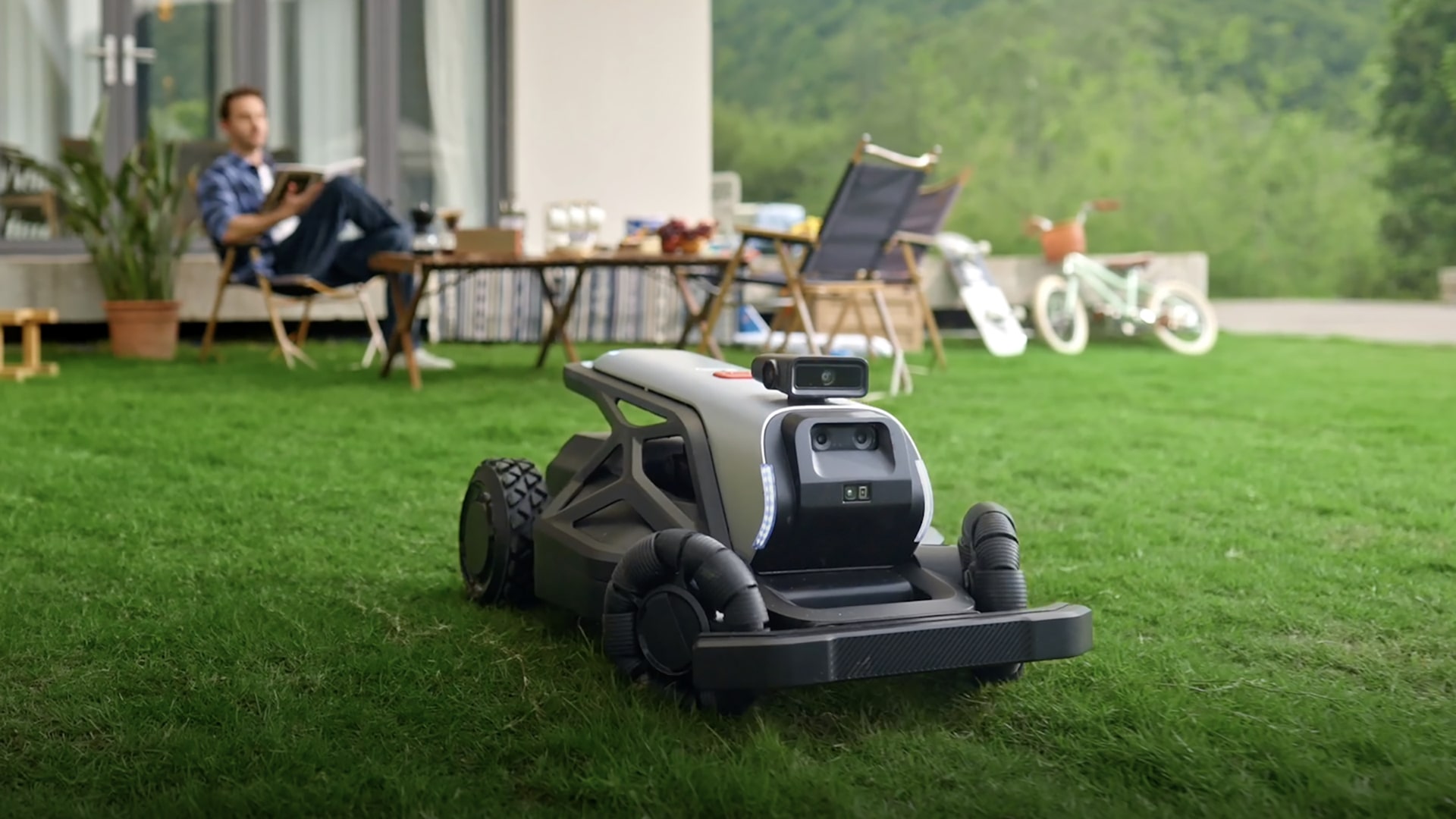
Airseekers’ Tron mower targeted lawns under 1,000 square meters, featuring a vision-based system with dense mapping and multiple cameras. This design reduced hardware expenses and enhanced route optimization but struggled under poor lighting conditions and with low-profile obstacles like stones or dry grass.
According to industry insiders, vision-based systems demand extensive training datasets and prolonged optimization cycles. Due to slowed R&D, Airseekers resorted to integrating an external algorithmic solution.
Despite advanced mapping, initial setup was time-intensive, and the mower’s technical performance lagged behind open-source competitors, making it difficult to rival established players like Ninebot, Dreame, and Mammotion.
Scale, Brand, and Distribution Challenges
Beyond product features, Airseekers faced hurdles related to its smaller scale, limited brand recognition, and weaker sales channels. Robotic lawn mowers are high-value, long-lasting products where buyers heavily rely on peer reviews and brand reputation. Local distributors often hesitate to stock lesser-known brands.
In contrast, incumbents benefit from entrenched relationships with European garden supply chains, home improvement stores, and other retail outlets, securing a significant distribution advantage.
The Road Ahead: Navigating a Rapidly Evolving Market
The gap between ambitious product development and effective commercial execution is narrowing. The robotic lawn mower industry has transitioned from technology validation to large-scale market deployment, where technical innovation alone is insufficient.
Market research firm Interact Analysis projects the global robotic mower market to surpass USD 6 billion by 2025, growing annually at over 25%. However, this growth conceals intensifying technical standards, more efficient supply chains, and increasingly competitive sales channels, leading to rapid market consolidation.
Startups unable to establish sustainable competitive advantages in niche segments risk exiting the market. Only those with comprehensive, end-to-end product capabilities-from R&D through manufacturing to distribution-are poised to thrive.