
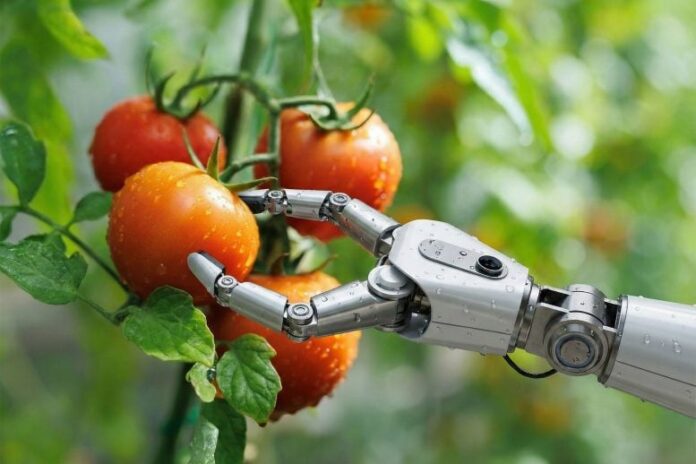
Why Robotic Tomato Harvesting Remains a Complex Challenge
With the ongoing scarcity of farm labor, the agricultural sector is increasingly turning to robotic solutions to automate harvesting processes. However, certain crops, particularly tomatoes, present unique difficulties. Tomatoes grow in dense clusters, requiring machines to selectively pick only ripe fruits while leaving unripe ones intact. Achieving this demands sophisticated judgment and precise manipulation capabilities.
Innovative Techniques for Assessing Harvestability
Addressing this challenge, Assistant Professor Takuya Fujinaga from Osaka Metropolitan University’s Graduate School of Engineering has developed a novel system that enables robots to estimate the ease of harvesting individual tomatoes before attempting to pick them. This method integrates advanced image recognition with statistical modeling to analyze multiple factors influencing pickability.
From Detection to Harvest-Ease Evaluation
Unlike traditional robotic harvesting approaches that focus primarily on detecting and recognizing fruit, Fujinaga’s system emphasizes “harvest-ease estimation.” This paradigm shift moves beyond the binary question of whether a robot can pick a tomato, toward assessing the probability of a successful harvest. The system evaluates visual data including the tomato’s ripeness, stem orientation, and occlusion by leaves or other plant parts, enabling the robot to select the optimal angle and method for picking.
Enhanced Success Rates Through Adaptive Strategies
Field tests of this system demonstrated an impressive 81% success rate in harvesting ripe tomatoes, surpassing previous benchmarks. Notably, about 25% of successful picks were achieved by adjusting the approach-harvesting from the sides after initial frontal attempts failed-showcasing the robot’s ability to adapt its strategy dynamically. This adaptability is crucial given the complexity of clustered fruit arrangements, varying stem shapes, and visual obstructions caused by foliage.
Quantifying Harvest Difficulty for Smarter Robotics
By establishing “ease of harvesting” as a measurable metric, this research marks a significant advancement toward intelligent agricultural robots capable of making informed decisions. Such robots can prioritize targets based on the likelihood of successful picking, reducing damage to crops and improving overall efficiency.
Envisioning a Synergistic Future of Human-Robot Farming
Looking ahead, Fujinaga envisions a collaborative agricultural model where robots autonomously harvest easily accessible tomatoes, while human workers focus on more challenging fruits requiring delicate handling. This hybrid approach promises to optimize labor resources and enhance productivity in the face of ongoing workforce shortages.
Recent studies indicate that automation in agriculture could increase harvesting efficiency by up to 40% by 2026, underscoring the importance of such innovations in meeting global food demand sustainably.