Dietary Habits of Spinosaurus and Its Relatives
Fossil evidence reveals fascinating insights into the feeding behaviors of large theropods related to Spinosaurus. Remarkably, remains of a pterosaur were discovered within the stomach contents of a Spinosaurus, indicating it preyed on flying reptiles. Similarly, fossils of Iguanodon have been found lodged in the jaws of Baryonyx, another formidable carnivore from the same family. These findings suggest that these predators maintained a varied diet, consuming a broad range of prey rather than specializing exclusively in large vertebrates.
According to paleontologist Rowe, these dinosaurs were ecological generalists, contrasting sharply with the bone-crushing specialization seen in other apex predators. Unlike the massive bite force and crushing capabilities of the Tyrannosaurus rex, members of the spinosaurid lineage exhibited different hunting strategies and dietary preferences.
Distinctive Adaptations of Tyrannosaurus rex
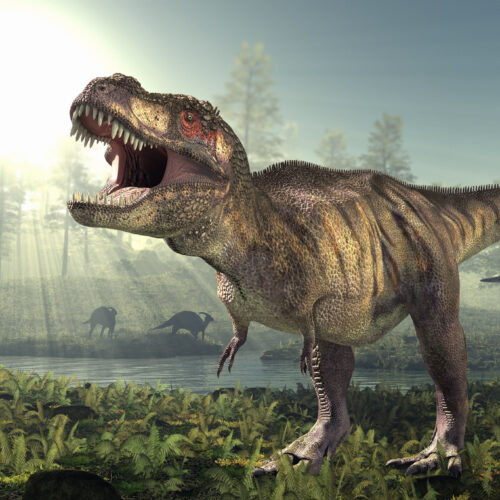
The Tyrannosauroidea clade, which includes T. rex, is characterized by rigid, akinetic skulls with limited joint mobility. This anatomical design allowed T. rex to endure tremendous bite forces, supporting a predatory approach focused on delivering powerful, bone-crushing bites. Rowe describes T. rex as a specialist predator, akin to modern crocodilians, equipped with robust jaw muscles and reinforced skull structures optimized for high-stress feeding.
Evidence from fossils supports this predatory specialization. For instance, a Hadrosaur specimen housed at the Museum of Natural History in New York exhibits embedded T. rex teeth, strongly indicating active predation rather than scavenging. Despite its formidable bite, T. rex did not always succeed in subduing prey on the first attempt, highlighting the challenges of hunting large, agile herbivores.
Comparing Combat Strategies: T. rex vs. Spinosaurus
Contrary to popular media portrayals, such as those in Jurassic Park III, a direct confrontation between T. rex and Spinosaurus would likely have unfolded differently in reality. Rowe emphasizes that while T. rex was anatomically adapted for aggressive combat with powerful bites and reinforced skulls, Spinosaurus lacked these features and was not built for similar fighting tactics.
Instead, Spinosaurus likely employed a distinct ecological niche, possibly focusing on aquatic prey and ambush strategies that leveraged its unique morphology, such as its elongated snout and conical teeth suited for catching fish. This divergence in hunting methods underscores the varied evolutionary paths of large Cretaceous predators.
Conclusion: Diverse Predatory Roles in the Cretaceous Ecosystem
The Cretaceous period hosted a complex web of predator-prey interactions, with large theropods like Spinosaurus and T. rex occupying different ecological roles. While T. rex exemplified a high-powered, bone-crushing ambush predator, spinosaurids demonstrated dietary flexibility and specialized adaptations for different prey types. These distinctions highlight the evolutionary diversity among apex predators and their strategies for survival in prehistoric ecosystems.
Reference: Current Biology, 2025. DOI: 10.1016/j.cub.2025.06.051