Revolutionizing Vehicle Manufacturing: Tesla Giga Shanghai’s Breakthrough in Model YL Production
Unprecedented Assembly Speed Through Parallel Manufacturing
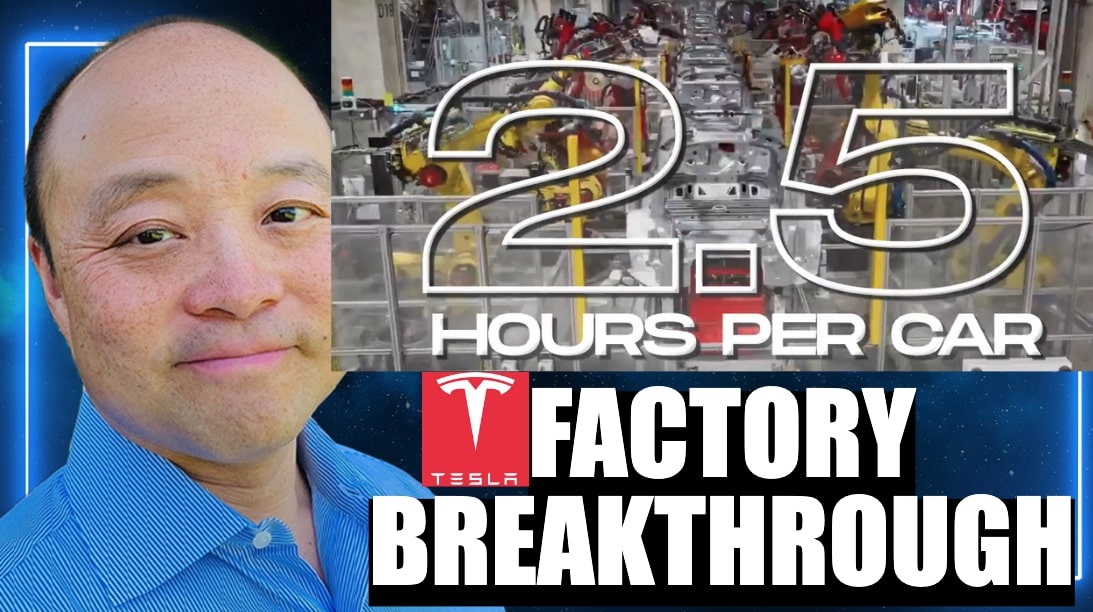
At Tesla’s Giga Shanghai facility, the production time for a Model YL has been slashed to an astonishing 2.5 hours from start to finish. This marks a dramatic 75% improvement compared to Tesla’s previous internal benchmarks of 8 to 10 hours before 2023. The key to this leap lies in the innovative use of parallel assembly lines, where critical components such as the chassis, battery pack, and interior modules are constructed simultaneously rather than in a traditional step-by-step sequence. For context, legacy automakers like Volkswagen still require 20 to 30 hours per vehicle, with their fastest production line (the ID.3 in Zwickau) taking around 16 hours. This new approach drastically reduces manual labor and internal logistics, cutting about 80% of touch labor and transport movements within the factory.
Automation at an Unmatched Scale
The Shanghai megafactory exemplifies Tesla’s next-generation manufacturing philosophy, pushing robotic automation from 70-80% to an impressive 95%. This shift not only accelerates production but also enhances precision and consistency. The factory’s extensive use of mega-castings and high automation enables efficiency gains of three to four times compared to traditional methods. With robots handling the vast majority of assembly tasks, Tesla can produce up to 1,000 Model Ys daily, potentially scaling to 7,000 units per week or 30,000 per month if operating continuously. This output translates to an estimated 84,000 to 91,000 vehicles per quarter, significantly alleviating delivery bottlenecks anticipated in Q4. Notably, these vehicles have yet to be made available for export markets.
Strategic Impact of Affordable Electric Vehicles
Looking ahead to the expected unveiling of a $35,000 Tesla model on October 7, 2025, which aligns with leaked images showcasing new headlights, the same advanced manufacturing techniques are likely to be applied to Model 3 and Model Y variants. This could push Shanghai’s production capacity beyond 50,000 cars monthly, equating to approximately 1.8 million vehicles annually. Expanding these processes globally to Tesla’s Austin and Berlin factories could potentially double or increase production by 50%, creating room for new models like the Cybercab.
Economic Advantages and Future Outlook
The cost benefits of this highly automated production are substantial. With manual labor reduced to just 5%, fixed costs are spread over a larger volume of vehicles, enabling aggressive pricing strategies-potentially $25,000 in China and under $30,000 in the United States. Over the long term, the adoption of fully robotic factories could extend beyond automotive manufacturing, driving a 5 to 10-fold increase in GDP through widespread automation across various industries.
Market Response and Investor Sentiment
Following a dip after Q3 earnings, Tesla’s stock rebounded to $454 on relatively low trading volume (55 million shares), indicating cautious optimism among investors. Positive catalysts include the release of Full Self-Driving (FSD) version 14 and the imminent launch of affordable electric vehicles. Market analysts anticipate the stock could surpass $470 in the near term.
Visual Insight