
NASA’s Accelerated Lunar Lander Missions: A New Era for Moon Exploration
NASA recently unveiled ambitious plans to ramp up the frequency of robotic lunar lander missions, marking a significant step toward establishing a sustainable human presence on the Moon. While the agency has been vocal about increasing robotic landings, details on expediting crewed lander development remain limited.
Phased Approach to Building a Lunar Base
At the March 24 “Ignition” event, NASA outlined a comprehensive strategy to develop a lunar base over the next decade. This initiative is divided into three distinct phases, spanning from 2026 to beyond 2033, with an estimated budget of $20 billion.
The initial phase (2026-2028) focuses on achieving reliable, high-frequency lunar landings. NASA aims to conduct 21 robotic landings during this period, delivering approximately 4,000 kilograms of payload to various lunar sites. The goal is to deploy assets across the Moon’s surface to identify optimal locations for future base construction. The number of missions is expected to grow from two in 2026 to nine in 2027, and ten in 2028, though these figures remain tentative pending ongoing contract solicitations.
Scaling Payloads and Mission Complexity in Phase Two
Between 2029 and 2032, Phase Two envisions 24 landings transporting a cumulative 60,000 kilograms of cargo. This phase will leverage larger robotic landers under the Commercial Lunar Payload Services (CLPS) program, each capable of delivering up to 5,000 kilograms. Although the number of missions per year decreases compared to Phase One, the increased payload capacity reflects a shift toward more substantial infrastructure deployment.
Advanced Logistics and Cargo Return in Phase Three
Starting in 2033, Phase Three will introduce CLPS landers with the capability to deliver up to eight metric tons per mission. This phase plans 28 landings over four years, supporting routine logistics, including cargo return missions from the lunar surface. NASA intends to evolve the CLPS program from its original low-cost, risk-tolerant model to one emphasizing higher mission reliability and leveraging agency expertise to assist providers in lander development.
Enhancing CLPS: The Next Generation
On the same day as the Ignition event, NASA released a draft request for proposals for CLPS 2.0. This next phase aims to support more advanced landers capable of surviving the harsh lunar night, returning lunar samples, and utilizing radioisotope power systems. These enhancements are critical for sustained lunar operations and scientific exploration.
Addressing Challenges in Increasing Mission Cadence
Carlos Garcia-Galan, NASA’s Moon Base program executive, emphasized that accelerating the pace of robotic landings is a top priority. Achieving a monthly cadence of lunar missions is unprecedented and requires identifying bottlenecks in manufacturing, testing, and technology development. NASA plans to provide greater technical support to CLPS providers, moving away from the earlier “shots on goal” approach toward a model focused on consistent mission success.
Recent CLPS Contract Award: Intuitive Machines’ IM-5 Mission
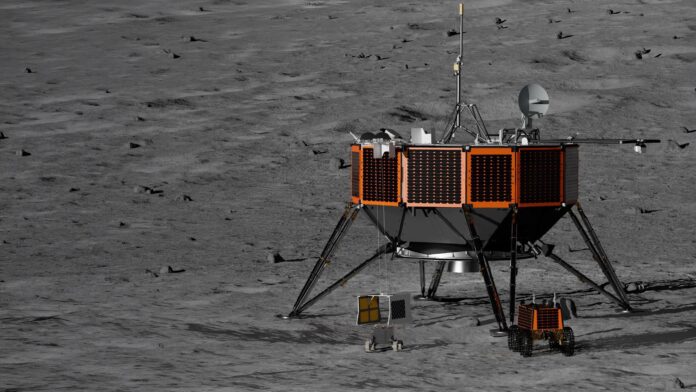
NASA announced a $180.4 million contract awarded to Intuitive Machines for a 2030 mission targeting the lunar south pole. The IM-5 lander will carry seven NASA payloads, including instruments with flight heritage, and two small rovers-one developed by Honeybee Robotics and another, “Roo-ver,” from the Australian Space Agency. Unlike previous missions using the Nova-C lander, IM-5 will utilize the larger Nova-D design, capable of transporting heavier payloads.
Steve Altemus, CEO of Intuitive Machines, highlighted the company’s scalable infrastructure as key to supporting the increased tempo of Artemis missions and advancing national space objectives.
Human Landing System (HLS) Program: Progress and Prospects
Despite the focus on robotic missions, the Human Landing System (HLS) program, which supports crewed lunar landings, received minimal updates at the event. NASA has previously discussed accelerating development of landers by Blue Origin and SpaceX to enable human missions as early as 2028, including an uncrewed test flight with Orion on Artemis 3 in 2027.
NASA’s acting associate administrator for exploration systems development, Lori Glaze, noted that both companies are working to simplify their lander designs to expedite development while maintaining the requirement for successful uncrewed landings before crewed missions. SpaceX is exploring streamlined alternatives to its Starship design, while Blue Origin is leveraging existing technologies as stepping stones toward their full-capacity lander.
Both providers have proposed alternatives to the near-rectilinear halo orbit initially planned for the Gateway lunar outpost. These alternative orbits could reduce lander performance demands and offer greater mission flexibility. NASA is currently evaluating how these changes will integrate with Orion and overall mission operations.
Glaze emphasized that NASA is close to finalizing assessments of these proposals and will soon provide guidance on development priorities and Artemis 3 test objectives.