Stanhope AI Secures €6.7 Million Seed Investment to Revolutionize Adaptive AI for Autonomous Systems
London-based deep technology startup Stanhope AI has successfully raised €6.7 million (approximately $8 million) in a Seed funding round aimed at developing a groundbreaking form of adaptive artificial intelligence. This innovative AI is designed to empower autonomous machines operating in complex, real-world environments.
Investment Backing from Leading Venture Firms
The funding round was spearheaded by Frontline Ventures, with significant contributions from Paladin Capital Group, Auxxo Female Catalyst Fund, UCL Technology Fund, and MMC Ventures. This diverse group of investors reflects growing confidence in AI technologies that extend beyond traditional paradigms.
Beyond Conventional AI: Introducing the “Real World Model”
Stanhope AI’s approach transcends the pattern recognition capabilities typical of large language models. Instead, it focuses on creating systems capable of perception, reasoning, and context-aware decision-making in unpredictable settings. Central to this vision is their proprietary “Real World Model”, which draws inspiration from neuroscience and computational theories to enable machines to learn and adapt dynamically.
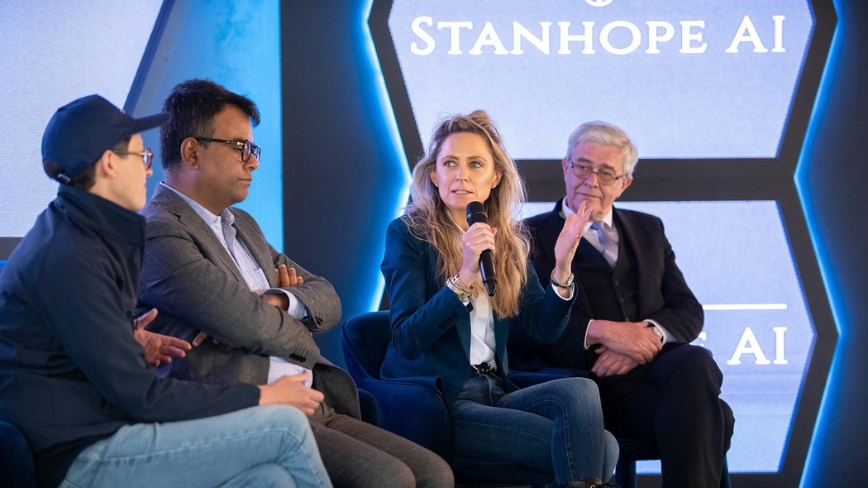
Professor Rosalyn Moran, CEO and co-founder of Stanhope AI, explains, “We are transitioning from language-based AI to intelligence that can actively interpret and respond to its environment – a system endowed with intrinsic agency.”
Expertise Rooted in Neuroscience and Computational Theory
The startup’s leadership team includes renowned theoretical neurobiologist Professor Karl Friston, whose pioneering work on the Free Energy Principle underpins the company’s innovative methodology. This principle helps machines minimize uncertainty by continuously updating their internal models of the world.
Optimized for Edge Computing in Autonomous Applications
Unlike many AI models that depend heavily on cloud infrastructure, Stanhope’s technology is engineered to operate efficiently on edge devices with limited computational resources and data availability. This aligns with a broader industry trend toward on-device AI, crucial for applications such as autonomous vehicles, robotics, and defense systems where real-time responsiveness and reliability are paramount.
Currently, Stanhope’s adaptive AI is undergoing trials on drones and other autonomous platforms in collaboration with international partners, demonstrating its practical viability in dynamic operational contexts.
Rising Investor Interest in European AI and Autonomy Ventures
The company’s recent funding round highlights sustained enthusiasm among investors for AI startups across Europe, particularly those focused on autonomy. In recent months, sectors ranging from robotic manufacturing to defense software have attracted substantial capital, reflecting a demand for AI solutions that surpass traditional machine learning capabilities.
Frontline Ventures partner Zoe Chambers remarked on Stanhope’s unique ability to translate academic research into scalable, production-ready systems, emphasizing the technology’s potential in environments where machines must adapt and respond instantaneously.
Christopher Steed of Paladin Capital Group underscored the critical importance of adaptive AI in security-sensitive and mission-critical applications, highlighting the strategic value of Stanhope’s innovations.
From Academic Roots to Industry Impact
Established in 2023 as a spin-out from University College London and King’s College London, Stanhope AI is positioning itself at the forefront of robotics, industrial automation, and defense technology. The fresh capital injection will accelerate the deployment of its adaptive AI solutions in real-world scenarios, addressing key challenges related to system resilience and flexibility.
With autonomous systems increasingly integral to sectors such as logistics, manufacturing, and national security, Stanhope AI’s advancements in context-aware intelligence could redefine how machines interact with and adapt to their environments.