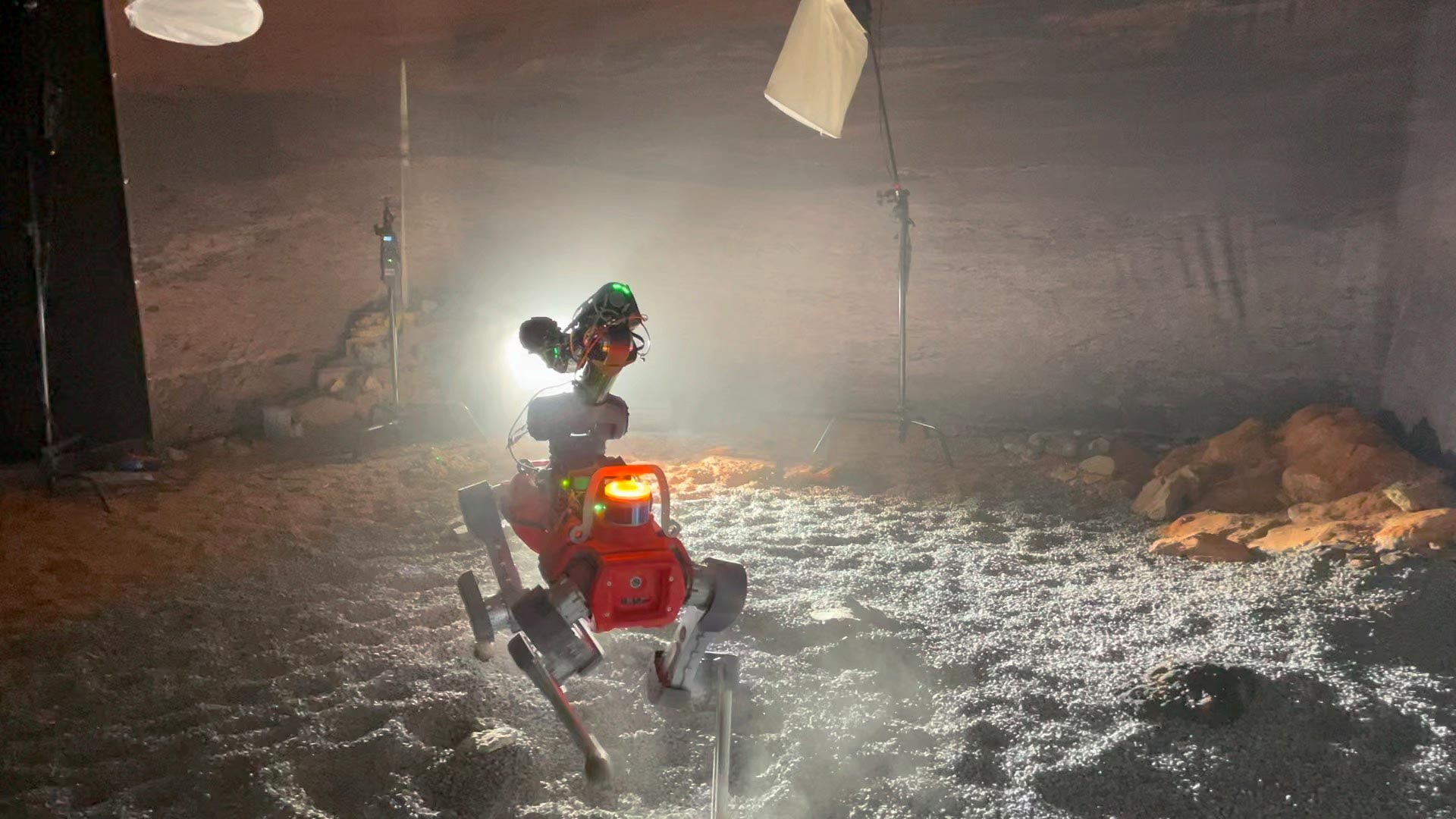
Innovative robotic technology promises to accelerate Mars exploration by autonomously analyzing geological samples, reducing reliance on human intervention.
Challenges in Remote Planetary Exploration
Investigating extraterrestrial terrains, such as Mars, presents significant logistical hurdles. Communication delays between Earth and Martian rovers range from approximately 4 to 22 minutes one-way, complicating real-time control. Additionally, bandwidth constraints limit the volume of data transmitted, necessitating meticulous pre-planning of rover operations. To conserve power and mitigate hazards, current rovers traverse cautiously, often covering mere hundreds of meters daily. This slow pace restricts the scope of geological surveys and the diversity of samples collected, impeding comprehensive scientific analysis.
Advancing Exploration with Semi-Autonomous Robotics
To address these limitations, scientists have developed a semi-autonomous robotic system capable of independently navigating between multiple points of interest and conducting scientific measurements without continuous human oversight. Unlike traditional missions that focus intensively on a single rock, this approach enables the robot to sequentially investigate several targets, enhancing data collection efficiency.
Equipped with compact yet effective instruments, these robots can expedite the search for biosignatures-indicators of past or present life-and resource identification on planetary surfaces. By autonomously analyzing multiple sites, the system maximizes scientific output within shorter timeframes.
Evaluating Compact Instrumentation for Rapid Data Acquisition
The research team investigated whether a robot outfitted with a streamlined suite of scientific tools could still yield significant findings while operating swiftly. Their experiments confirmed that even modest instruments are capable of identifying astrobiologically relevant rocks and potential resource deposits, validating the feasibility of this agile exploration model.
Field Trials with the ANYmal Quadruped Robot in Simulated Martian Terrain
Testing took place using the four-legged ANYmal robot, which featured a robotic arm equipped with two key instruments: a microscopic imager named MICRO and a portable Raman spectrometer developed for the ESA-ESRIC Space Resources Challenge. This interdisciplinary project involved collaboration among ETH Zurich’s Robotic Systems Lab, the University of Zurich, and the University of Bern.
Experiments were conducted at the Marslabor facility at the University of Basel, which replicates planetary surface conditions through analogue rocks, regolith simulants, and controlled lighting. The robot autonomously navigated to designated targets, deployed its instruments via the robotic arm, and transmitted high-resolution images and spectral data for analysis.
Identifying Key Geological Materials for Future Missions
The system successfully distinguished a variety of rock types critical to planetary science and exploration, including gypsum, carbonates, basalts, dunite, and anorthosite. These materials are particularly relevant for upcoming lunar and Martian missions. For instance, dunite, rich in olivine and oxides, and anorthosite, containing anorthite, are considered promising indicators of mineral resources. Oxides such as rutile also hold potential for in-situ resource utilization.
Efficiency Gains Through Multi-Target Autonomous Exploration
Comparative trials demonstrated a significant reduction in mission duration when employing the semi-autonomous multi-target approach. While traditional human-guided investigations required approximately 41 minutes to analyze a single target, the autonomous robot completed multi-site surveys within 12 to 23 minutes.
Despite the accelerated pace, the robot maintained exceptional accuracy, correctly identifying all test targets in one trial. This capability suggests that future missions could cover vastly larger surface areas, enabling scientists to prioritize sites for detailed follow-up studies based on preliminary autonomous assessments.
By minimizing the need for continuous human commands, robotic explorers can traverse challenging terrain more freely, rapidly scan geological features, and collect valuable data, thereby streamlining planetary science operations.
Implications for Upcoming Lunar and Martian Expeditions
This research highlights that integrating relatively simple scientific instruments with autonomous robotic platforms can yield substantial scientific returns. Rather than relying solely on bulky, complex equipment, future space missions might deploy nimble robots capable of swift reconnaissance to identify high-priority targets for in-depth examination.
As space agencies worldwide gear up for ambitious missions to the Moon, Mars, and beyond, semi-autonomous robots like ANYmal could become indispensable assets. Their ability to rapidly survey extensive areas will enhance both the search for extraterrestrial life and the assessment of in-situ resources, supporting sustainable exploration efforts.