Revolutionizing Workplace Safety with Astro: The Intelligent Robotic Dog
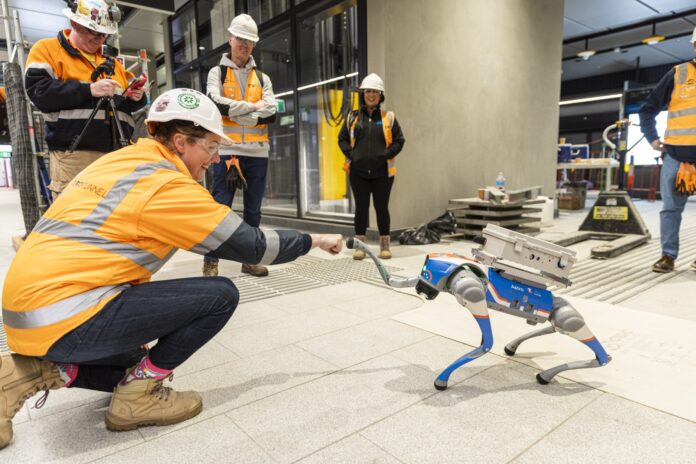
Astro, an advanced robotic canine developed by Unitree, has been put through rigorous trials by Telstra Enterprise in collaboration with John Holland Construction to enhance safety protocols in some of Australia’s most hazardous work environments, including subterranean tunnels and underground rail stations.
Astro’s Role in Enhancing Worker Protection
While Astro may not be designed for companionship, its sophisticated technology makes it an invaluable asset on construction sites. Equipped with cutting-edge sensors and real-time data transmission capabilities, Astro navigates perilous and confined spaces, continuously relaying critical information to on-site teams. This innovation significantly reduces the need for human presence in dangerous zones, thereby minimizing risk and improving communication efficiency.
The concept was developed through a partnership between Telstra Enterprise’s muru-D innovation hub and technology collaborator Ericom, culminating in successful field tests within an underground construction setting.
Integrating IoT, Cloud, and 5G for Safer Worksites
Astro exemplifies how the fusion of Internet of Things (IoT), cloud computing, and 5G connectivity can address longstanding safety challenges in construction. Unlike traditional environmental monitoring methods that depend on costly, stationary sensors or manual inspections, Astro offers dynamic, mobile surveillance. This approach enables comprehensive environmental assessments without exposing workers to hazardous conditions.
During trials with John Holland, Astro was outfitted with high-definition video cameras, radar systems, and a suite of sensors developed by Ericom. These technologies allow the robot to detect toxic gases, monitor air quality, and instantly upload vital data to the cloud, even in underground locations notorious for poor connectivity. This robust system ensures continuous, reliable monitoring where it matters most.
Case Study: Metro Tunnel Project in Melbourne
The trial took place deep within Melbourne’s Metro Tunnel Project, one of the city’s largest infrastructure undertakings. Here, Astro’s ability to gather and transmit environmental data in real time proved essential for pre-entry safety assessments in confined and high-risk areas.
Empowering Rapid Decision-Making with 5G Networks
Telstra’s 5G network was instrumental in enabling swift communication between Astro and the John Holland team. The low latency and high bandwidth of 5G ensured that safety-critical information was delivered promptly, allowing teams to respond quickly to changing site conditions.
“Safety remains our top priority, and we continuously seek innovative solutions to enhance it on our sites. Partnering with Telstra for this trial reflects our commitment to leveraging technology to improve project delivery while safeguarding our workforce,” said Steve Butcher, emphasizing the importance of integrating advanced networks with safety initiatives.
Synergizing Robotics and Network Technology for Industry Advancement
Beyond the robot itself, the trial underscored the vital role of Telstra’s networking infrastructure. Peggy Renders, Chief Customer Officer at Telstra Enterprise, highlighted the seamless integration of IoT, robotics, and cloud services as a game-changer for addressing real-world safety challenges without disrupting site operations.
Renders also pointed to the potential of 5G network slicing-a technology that creates multiple virtual networks within a single physical 5G infrastructure. This allows for customized network performance tailored to specific applications, such as ultra-reliable connectivity for safety robots or optimized bandwidth for video surveillance.
Understanding 5G Network Slicing and Its Impact
5G slicing enables clients to access dedicated network segments that guarantee performance levels suited to their unique requirements. For instance, a construction site could utilize a slice optimized for continuous video monitoring, while a transport system might require a slice with ultra-low latency and high reliability.
For safety robots like Astro, this means uninterrupted data transmission free from congestion or interference, which is critical for real-time hazard detection and response. Such dependable communication infrastructure is essential for the next generation of infrastructure projects demanding rapid, precise safety measures.
Scaling Up: The Future of Robotic Safety Solutions in Construction
John Holland is actively exploring the commercialization of Astro, aiming to deploy the robotic dog across multiple large-scale infrastructure projects. However, widespread adoption will depend on aligning commercial viability with operational effectiveness.
This pilot project signals a broader shift in how the construction industry approaches safety, moving towards scalable, technology-driven solutions. Steve Butcher expressed optimism about the transformative potential of IoT-enabled safety tools, describing the trial as a foundational step toward industry-wide implementation.
Astro: A Leap Forward in Workplace Safety Innovation
Far from being a mere technological novelty, Astro represents a significant advancement in harnessing Australian innovation to protect workers. It embodies a future where robotics and advanced network technologies collaborate to safeguard the workforce-the most valuable asset on any job site.
Through this pioneering effort, Telstra and John Holland have demonstrated that the most effective innovations often emerge from tackling the toughest challenges, setting a new standard for safety in complex work environments.