Innovative Robotics in Action: A Curated Video Collection
Discover the latest breakthroughs in robotics through our weekly video highlights, showcasing cutting-edge research and practical applications. We also maintain an up-to-date calendar featuring upcoming robotics conferences and events. Feel free to submit your events for inclusion.
Duawlfin: Revolutionizing Mobility with Quadrotor Motors
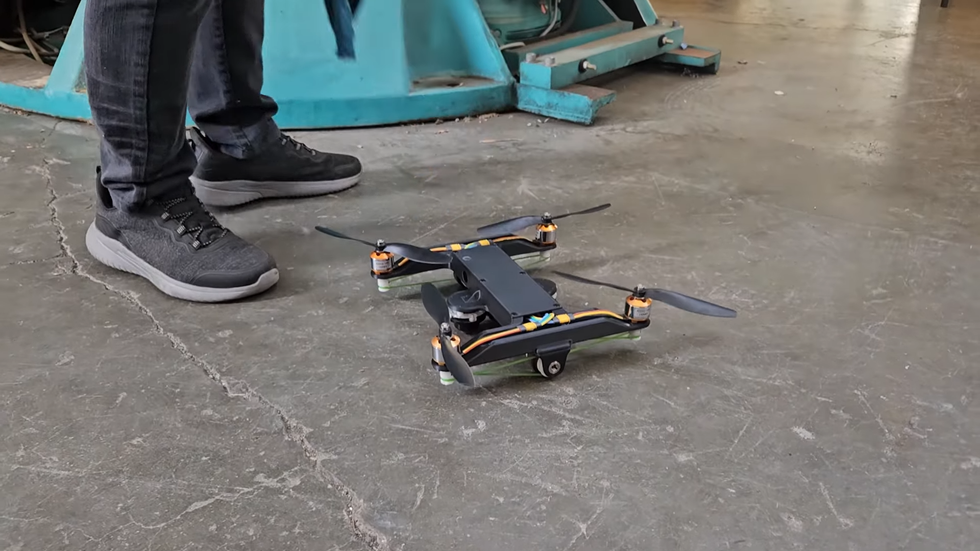
The Duawlfin robot pioneers a unique approach by eliminating traditional propeller-based ground propulsion and extra actuators, relying solely on its quadrotor motors. Its innovative differential drivetrain, equipped with one-way bearings, enables smooth transitions between flying and driving modes. This seamless adaptability holds significant promise for urban delivery systems and indoor navigation tasks.
NEO: Soft Robotics with Enhanced Tactile Sensitivity
NEO’s soft robotic fingers offer delicate manipulation capabilities, though their fragility remains a challenge. This design mimics the human ability to switch effortlessly between visual and tactile senses when interacting with objects, such as finding keys in a bag. Unlike robots that struggle to integrate multiple sensory inputs, NEO employs specialized policies for each sensor type, combining their outputs to improve decision-making.
Pipe-Crawling Robot: Field-Ready Inspection in Drainage Systems
Developed in collaboration with Iowa State University and the University of Georgia, this pipe-crawling robot navigates corrugated and smooth subsurface drainage pipes. Its robust design enables real-world deployment for infrastructure inspection and maintenance, demonstrating the practical utility of robotic systems in environmental monitoring.
Read the research paper | Smart Microsystems Lab, Michigan State University
SPINE-HT: Collaborative Multi-Robot Systems with AI Reasoning
SPINE-HT is a novel framework that enables heterogeneous robot teams to perform complex missions in unpredictable environments without prior maps. By integrating large language models (LLMs) with robot capabilities, it facilitates adaptive task planning and coordination. Field tests involving Clearpath Jackal, Husky, Boston Dynamics Spot, and UAVs achieved an impressive 87% mission success rate.
Astribot at IROS 2030: Autonomous Exploration and Mapping
Astribot continues to impress with its autonomous capabilities showcased at IROS 2030. Designed for versatile exploration, it integrates advanced sensors and AI to navigate complex environments efficiently.
Magnetically Controlled Self-Propelling Droplets: Microrobotics Inspired by Biology
Researchers at the Max Planck Institute for Intelligent Systems have engineered magnetic oil droplets capable of autonomous maze navigation by following chemical gradients, akin to single-celled organisms. These droplets can be externally guided using magnetic fields, opening new avenues for microrobotic applications such as targeted cargo delivery at microscopic scales.
Full-Body Teleoperation: Embodied Avatars for Remote Interaction
Experience the future of remote presence with a full-body teleoperation platform that enables users to control avatars in real time. This technology facilitates immersive data collection and interaction, bridging physical and virtual worlds seamlessly.
Cost-Effective Robotics: Practical Solutions for Everyday Tasks
While not humanoid, some robots excel in performing useful functions affordably and efficiently. These platforms demonstrate how robotics can be accessible and impactful across various industries without the complexity of humanoid design.
Precision Jumping Robots: Advanced Reinforcement Learning in Action
The Olympus robot employs a curriculum-based reinforcement learning framework to master precise jumping maneuvers. Separate policies for vertical and horizontal jumps enable it to achieve distances up to 1.25 meters horizontally and 1 meter vertically with centimeter-level accuracy, showcasing significant progress in dynamic robotic locomotion.
Read the full paper | Autonomous Robots Lab, Norwegian University of Science and Technology
KUKA KR TITAN Ultra: Heavy-Duty Robotic Payload Handling
The KR TITAN Ultra from KUKA sets a new benchmark in industrial robotics by handling payloads up to 1500 kilograms. This heavy-lifting powerhouse expands the possibilities for automation in manufacturing and logistics sectors requiring extreme strength and precision.
DEEP Robotics: Rugged Solutions for Challenging Environments
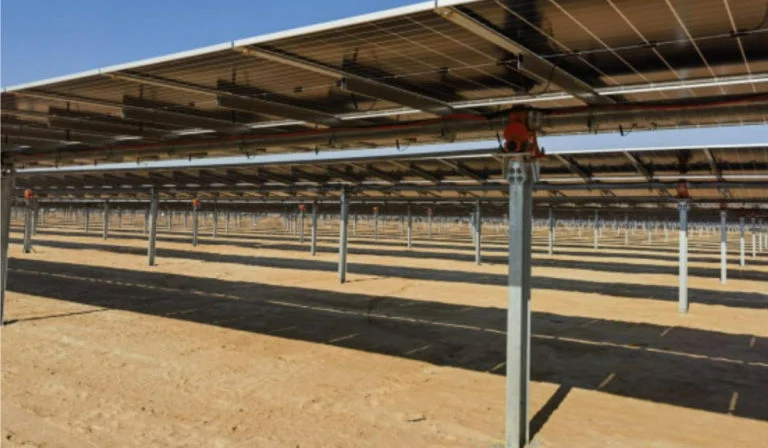
Designed to operate in harsh conditions, DEEP Robotics’ platforms demonstrate resilience and adaptability. Their robust engineering ensures reliable performance even in sandy or debris-filled environments, making them ideal for exploration and industrial applications.
Advancing Humanoid Robotics: Insights from Yuke Zhu’s Seminar
In a recent seminar at the University of Texas at Austin, Yuke Zhu discussed the challenges and opportunities in developing generalist humanoid robots. Emphasizing data-centric approaches and leveraging large-scale datasets, the talk highlighted progress toward robots capable of performing diverse everyday tasks with autonomy in open-world settings.