Video Friday: Unitree’s Human-Size Humanoid Robot (19459000)
IEEE Spectrum ( ]robotics]has a weekly selection of amazing robotics videos. We also publish a weekly calendar with upcoming robotics events. Please submit your events to be included.
Enjoy today’s videos.
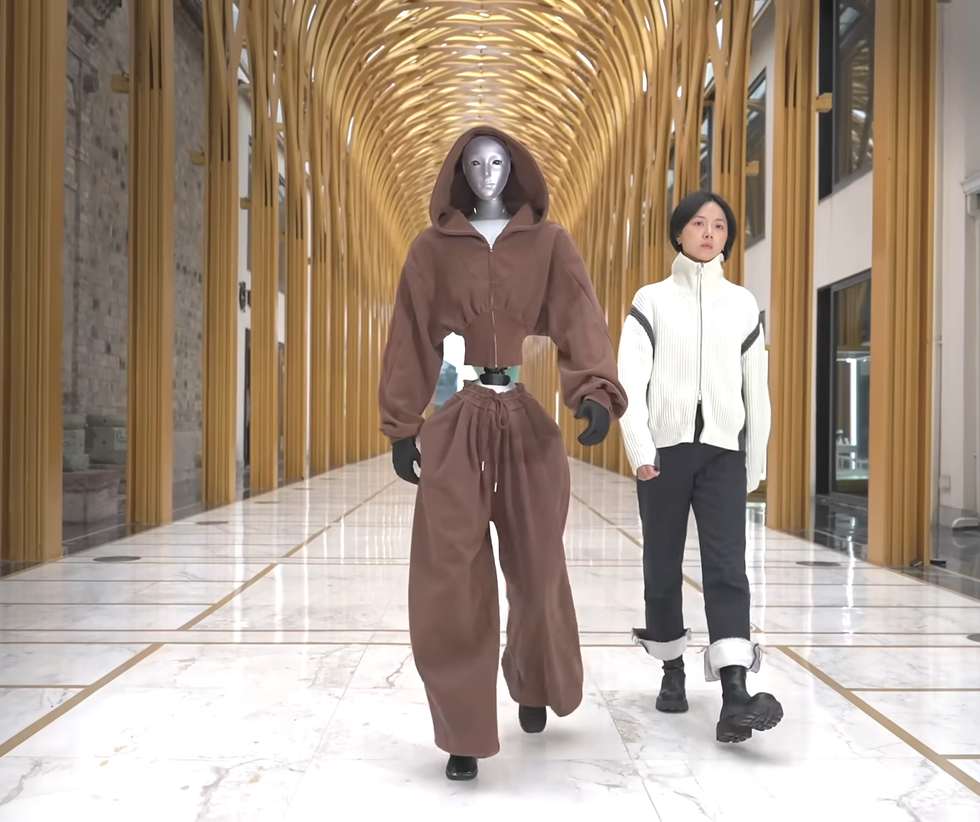
Hello, this is the world. It stands 180 cm tall at 70 kg. The H2 bionic Humanoid was born to serve everyone in a friendly and safe manner.
Prices starting at US$29.900 plus tax and delivery.
[
Unitree
The title of the video, “Eagle Stole our FPV Drone”, pretty much sums up what happened.
Small robots could not have arms in the past because motors were too heavy. We solved this problem by replacing multiple motors and electrostatic clutches with a single, lightweight motor. This innovation allowed us create a lightweight, high-DOF arm for small robots that can be attached to a drone.
Just FYI, any robotic sounding like a delicious baked good will be covered favorably on Video Friday.
[
Cleo Robotics ( ]
Oli now pulls of a smooth and coordinated whole-body movement from lying down to standing up. Oli, who stands 165 cm high and has 31 degrees of freedom at his disposal, continues to demonstrate fluid and natural motion.
[
LimX Dynamics ]
Thanks, Jinyan!
Bram Vanderborght, a friend of the blog, tours the exhibits at IROS in Hanghzou.
[
IROS 2025 ]
Tye Brady, Chief Technologer at Amazon Robotics will discuss the trajectory and role of generative AI in robotics innovation during a fireside conversation with Professor Sam Madden.
[
MIT Generative AI Impact Consortium ]
Prof. Dimitrios K. Kanoulas delivered an invited speech at the Workshop on The Art of robustness: Surviving failures in Robotics, IROS 2025.
[
IROS 2025 ]
This University of Pennsylvania GRASP talk is by Suraj Nair from Physical Intelligence, on “Scaling Robot Learning with Vision-Language-Action Models.”
Over the last few years, AI systems have made tremendous progress. This is largely due to foundation models that scale expressive data sources and architectures. The impact of this technology is clear in terms of vision and language understanding, but its use in robots is still in its infancy. The challenges of scaling robot learning are still many. From selecting the right data and developing algorithms to fit these data for closed loop operation in the real world, there are many open questions. Physical Intelligence aims to answer these questions. This talk will present our recent work on building vision-language-action models, covering topics such as architecture design, data scaling, and open research directions.
Hello, this is the world. It stands 180 cm tall at 70 kg. The H2 bionic Humanoid was born to serve everyone in a friendly and safe manner.
Unitree
Small robots could not have arms in the past because motors were too heavy. We solved this problem by replacing multiple motors and electrostatic clutches with a single, lightweight motor. This innovation allowed us create a lightweight, high-DOF arm for small robots that can be attached to a drone.
Cleo Robotics ( ]
Oli now pulls of a smooth and coordinated whole-body movement from lying down to standing up. Oli, who stands 165 cm high and has 31 degrees of freedom at his disposal, continues to demonstrate fluid and natural motion.
LimX Dynamics ]
IROS 2025 ]
Tye Brady, Chief Technologer at Amazon Robotics will discuss the trajectory and role of generative AI in robotics innovation during a fireside conversation with Professor Sam Madden.
MIT Generative AI Impact Consortium ]
IROS 2025 ]
Over the last few years, AI systems have made tremendous progress. This is largely due to foundation models that scale expressive data sources and architectures. The impact of this technology is clear in terms of vision and language understanding, but its use in robots is still in its infancy. The challenges of scaling robot learning are still many. From selecting the right data and developing algorithms to fit these data for closed loop operation in the real world, there are many open questions. Physical Intelligence aims to answer these questions. This talk will present our recent work on building vision-language-action models, covering topics such as architecture design, data scaling, and open research directions.