BrainCo’s Breakthroughs: Redefining Prosthetics and Brain-Computer Interfaces
Elon Musk’s futuristic vision for 2025, featuring invasive Neuralink robots and Optimus humanoid technology seamlessly restoring lost limbs, has captivated many in the tech community. However, Cicy Zhang, Vice President of BrainCo, offered a strikingly different perspective during TechNode’s Intelligent Futures Summit in Hangzhou. Watching Musk’s predictions from her office in China, Zhang remarked, “What Musk envisions for 2025, we accomplished a decade ago.”
BrainCo: Pioneering Noninvasive Brain-Computer Integration
BrainCo, a Boston-based unicorn at the forefront of brain-computer interface (BCI) innovation, merges expertise from neuroscience, machine learning, and design. Situated near Harvard and MIT, the company focuses on bridging the gap between human cognition and digital technology without the need for invasive procedures. Their approach relies on sophisticated algorithms rather than surgical implants, making advanced prosthetics more accessible and practical.
Revolutionizing Prosthetics: The 0.38-Second Response Time
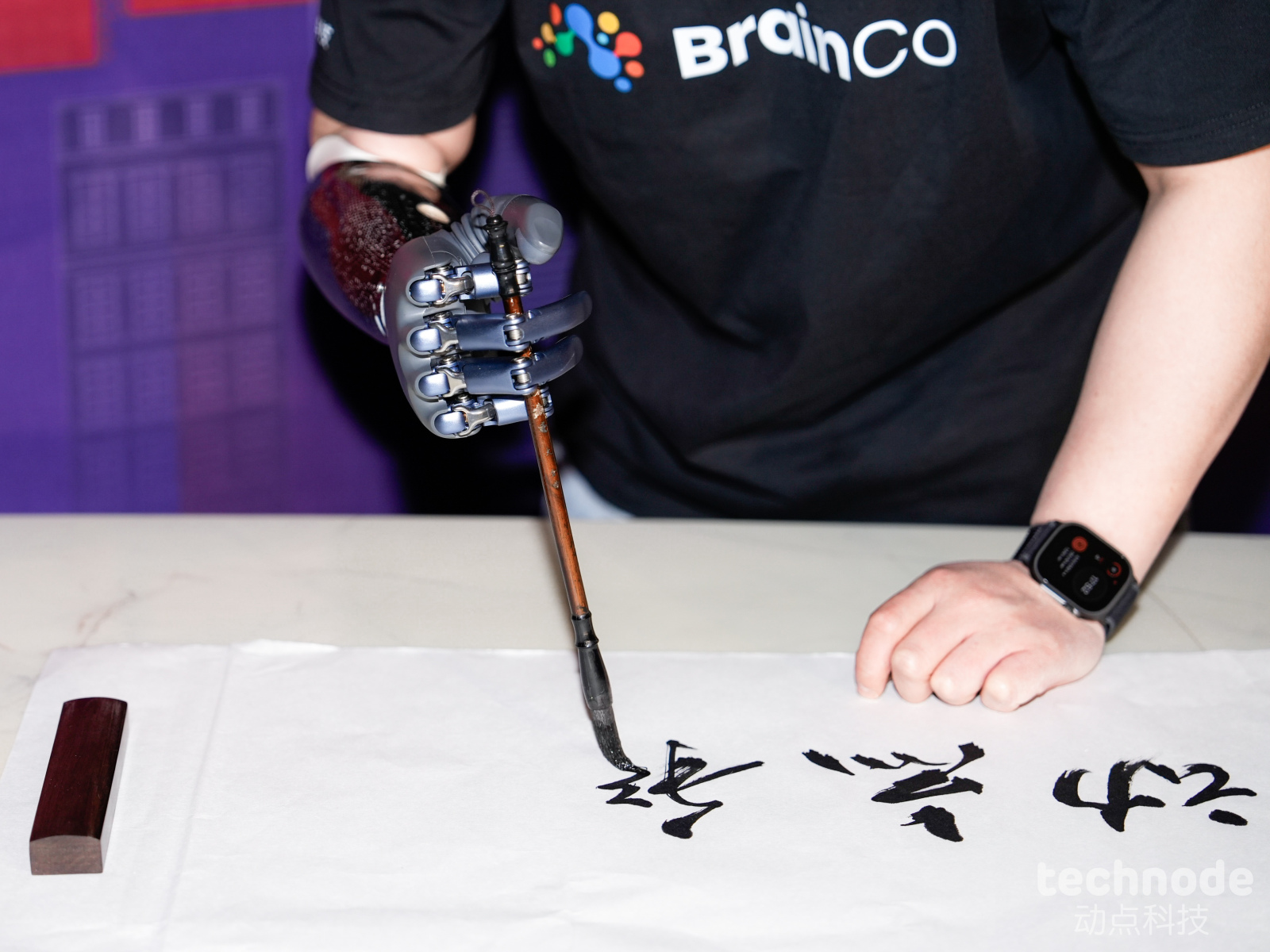
The inception of BrainCo’s journey was deeply personal-a response to a friend’s amputation rather than a commercial venture. The team’s mission was to restore the natural control and dexterity of a lost hand. Unlike traditional prosthetics that often resemble rudimentary hooks, BrainCo’s bionic hand is controlled by a wearable cuff that detects muscle signals (EMGs) on the skin’s surface, achieving an impressively low latency of just 0.38 seconds.
During the Hangzhou summit, a live demonstration showcased Will, a user equipped with the prosthetic, performing intricate calligraphy. He flawlessly wrote “Dong Dian Ke Ji” (TechNode’s Chinese brand name) with the prosthetic hand, illustrating the device’s remarkable sensitivity and responsiveness. Beyond simple grasping, users have been recorded manipulating the prosthetic from distances up to 20 meters and even playing the piano, highlighting the technology’s precision.
Integrating Human-Like Dexterity into Robotics
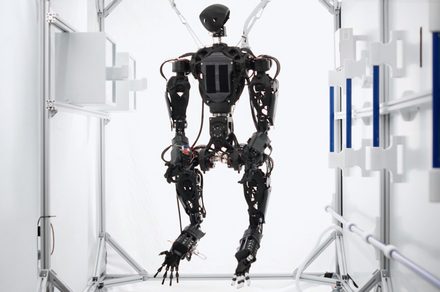
Zhang highlighted a gap in the robotics industry: the lack of dexterous, human-like hands. This year, demand for humanoid robots has surged, and companies like Unitree Robotics in Hangzhou have partnered with BrainCo to equip their G1 robot series with BrainCo’s advanced prosthetic hands. By replacing mechanical grippers with these “human-centric” hands, robots can now perform complex, delicate tasks, symbolizing a fusion of human-inspired technology and robotic innovation.
Affordable Innovation: Making Prosthetics Accessible
BrainCo’s business model diverges from Western approaches, where high-tech prosthetics often come with prohibitive price tags. Instead, BrainCo embraces a philanthropic framework, collaborating with corporations to subsidize devices for amputees. For example, Chinese electric vehicle manufacturer Leapmotor donated 5 million yuan to provide prosthetics to 100 amputees.
In 2023 alone, BrainCo helped 6,000 individuals regain mobility through donated devices, with an ambitious target of assisting 30,000 people in the coming year. This model prioritizes social impact over profit, aiming to democratize access to cutting-edge prosthetic technology.
Expanding Beyond Physical Rehabilitation: Neurological Health Solutions
BrainCo’s vision extends beyond restoring limbs to addressing neurological challenges. Zhang introduced a digital therapy for autism that employs EEG headbands to gamify social interaction training, enhancing engagement and progress. Additionally, clinical trials of a sleep aid device using cranial stimulation demonstrated a 50% reduction in sleep onset delay for 90% of users, showcasing promising results in improving neurological well-being.
Future Horizons: Scaling Impact Across Asia and Beyond
Looking ahead, BrainCo plans to broaden its reach by establishing its first office in Hong Kong next year, aiming to serve a wider Asian market. Zhang outlined an ambitious three-phase goal: to assist 1 million amputees, support 10 million individuals with neurological conditions, and ultimately enable 100 million people worldwide to benefit from brain-computer interface technology.
As the summit concluded, the contrast between Musk’s futuristic surgical enhancements and BrainCo’s current, noninvasive solutions was clear. BrainCo is already transforming lives today, restoring autonomy and dignity one neural connection at a time.