Autonomous robotics startup
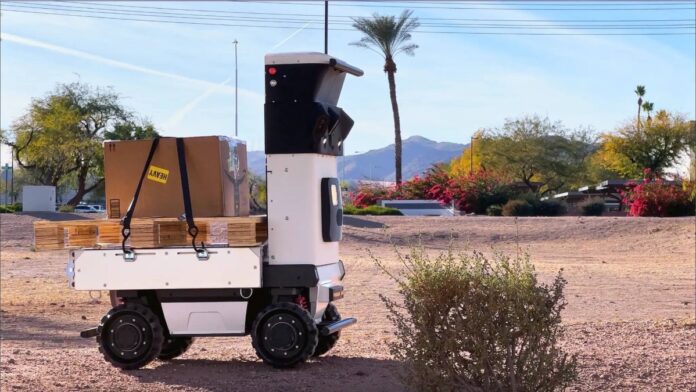
Cartkenknown for its four wheeled robots which deliver food to college campuses in Tokyo and on busy streets in the city, has a new focus: industrials. Cartken CEO Christian Bersch, who is also the co-founder of the startup, told TechCrunch he had always considered applying the delivery robots in industrial settings as they built their startup. Cartken looked closely when companies began asking about using robots in labs and factories.
Bersch, a former Google engineer who co-founded Cartken with other Google engineers behind the Bookbot Project, said: “What we discovered is that there’s actually a real need in industrial and on-site use cases.” “Sometimes, there are [been] even more direct benefits to companies optimizing material flows or production flows.” ZF Lifetec initially used its existing delivery robotics, the Cartken Courier. This robot can hold 44 pounds, and looks like an Igloo cooler. Bersch said that the food delivery robot quickly became their busiest robot. “That’s the moment we realized there were real use cases, and a real market need, and we began to target that segment more and a lot more.”
Cartken was still pushing ahead with its delivery sidewalk business at the time. It had even secured partnerships with Uber Eats, and GrubHub, for its last-mile deliveries across U.S. colleges campuses, and in Japan.
But the early success with ZF encouraged the startup’s founders, including Jake Stelman and Jonas Witt, to expand their business model. Bersch said that switching Cartken’s robotics from a food delivery setting to an industrial one was not a big challenge. The AI behind the robotics is trained using years of data from food delivery and the devices have been designed to navigate various terrains and weather situations.
October 27-29, 2025