Rodney Brooks Highlights Critical Safety and Dexterity Challenges in Humanoid Robotics
Insights from a robotics pioneer on why current humanoid robots remain unsafe and lack true dexterity despite AI advances
Why Keeping Distance from Walking Robots Is Essential
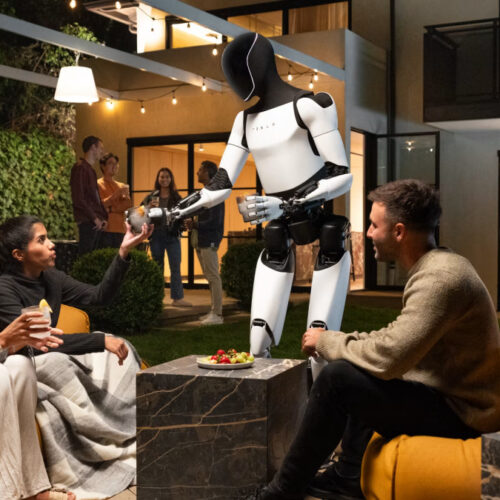
Rodney Brooks, a renowned robotics expert and MIT Professor Emeritus, advises maintaining a minimum distance of three meters (approximately nine feet) from any full-sized humanoid robot in motion. He emphasizes that until safer, more advanced bipedal robots are developed, these machines should not be deployed in environments shared with humans.
Brooks, who co-founded iRobot-famous for the Roomba vacuum-and Rethink Robotics, cautions that the current wave of investment in humanoid robots is chasing an unrealistic vision. One of his primary concerns is the significant kinetic energy these robots generate to maintain balance, which poses a serious risk of injury if they fall or collide with people.
The Limitations of Vision-Only Learning in Robot Dexterity
Despite the surge in AI capabilities, Brooks argues that relying solely on video-based training methods to teach robots dexterous tasks is fundamentally flawed. Companies like Tesla and Figure employ vision-only approaches, capturing human workers performing tasks with multi-camera setups to train AI models. However, this method overlooks the critical role of tactile feedback in human dexterity.
Research from neuroscience highlights the complexity of human touch: the fingertips alone contain around 1,000 mechanoreceptors each, contributing to a total of approximately 17,000 sensory receptors in the hand. Studies from institutions such as Umea University and Harvard have identified multiple neuron types responsible for sensing pressure, vibration, and skin stretch-sensory inputs that current robots cannot replicate or interpret effectively.
Brooks points out that when human fingertips are anesthetized, simple tasks like lighting a candle can take over four times longer, underscoring how indispensable touch is for fine motor skills. This sensory gap means that robots trained only through visual imitation lack the nuanced feedback necessary for true dexterity.
Physical Risks: The Danger of Falling Humanoids
Beyond dexterity, the physical safety of humanoid robots remains a pressing issue. Most bipedal robots use powerful electric motors and rely on the zero moment point (ZMP) algorithm to maintain balance by dynamically adjusting their posture. While effective to a degree, this approach requires pumping large amounts of energy into the system, which can result in sudden, forceful movements.
Due to the physics of scaling, doubling a robot’s height increases its mass-and thus potential impact energy-by a factor of eight. This exponential increase means that a full-sized humanoid falling or striking an object can cause severe harm. Brooks recounts a personal experience where he was dangerously close to a falling Digit robot, reinforcing his cautionary stance.
Notably, promotional materials from humanoid robot manufacturers rarely show humans in close proximity to moving robots, often using barriers or minimal robot motion to mitigate risk. Current safety standards in many countries prevent these robots from being certified for operation in shared human environments.
The Future of Humanoids: Redefining Form and Function
Looking ahead, Brooks predicts that within the next 15 years, robots labeled as “humanoids” will become commonplace but will differ significantly from today’s bipedal prototypes. Instead of two-legged designs, future robots may utilize wheels or alternative locomotion methods, feature multiple arms, and employ specialized sensors that diverge from human anatomy-such as cameras embedded in hands or torso-mounted vision systems.
This evolution mirrors shifts in other tech sectors, where terms like “flying cars” now often refer to electric vertical takeoff and landing (eVTOL) vehicles rather than traditional roadable aircraft, and “self-driving cars” frequently involve human oversight rather than full autonomy.
Brooks argues that the billions invested in current vision-only humanoid projects will largely be lost, as the industry pivots toward designs incorporating tactile sensing and safer physical interactions. For example, MIT’s dexterous manipulation research employs haptic gloves to relay touch sensations between human operators and robot hands, marking a step toward more sophisticated sensory integration.
Bridging the Gap Between Hype and Reality
While humanoid robots captivate public imagination and attract massive funding-Tesla’s CEO Elon Musk has projected Optimus could generate up to $30 trillion in revenue-the practical challenges remain formidable. The disconnect between glossy promotional videos and the current technological limitations is vast, encompassing unresolved issues in physics, safety, and sensory perception.
Brooks’ advice to maintain a safe distance from walking humanoids serves as a grounded reminder from a pioneer deeply familiar with the field’s realities. Until breakthroughs in tactile sensing and safer locomotion are achieved, humanoid robots will remain a work in progress rather than an imminent replacement for human labor.