
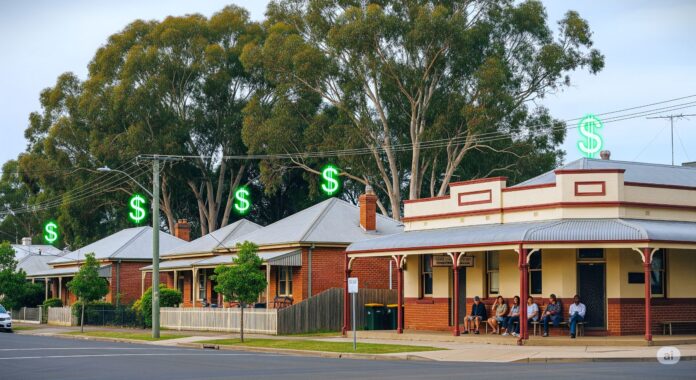
The Federal Government has announced new regulations to protect Australian households from unpredictable price increases in energy. Retailers will be limited to only one price increase each year starting July 1, 2026.
As part of a major shake-up in the retail energy sector, Prime Minister Anthony Albanese unveiled new rules to bring more stability and fairness to households’ budgets. After signing up for a market offer your electricity retailer will not be able to increase the rates for atleast 12 months. This provides more certainty for consumers. This initiative is backed up by the Australian Energy Market Commission, which has introduced a series of reforms aimed at protecting customers from price gouging. The AEMC will also ban excessive late payment fees, and other unfair charges for vulnerable customers.
Although the elimination of fees will not have a significant impact on your overall energy costs it would still be a welcome change if you could click ‘Pay Now’ and make a credit/debit transaction without any additional charges.
Often, legislation is well-intentioned, but the reality can be quite different. Take the idea of a single price increase per year. In theory, it sounds like a good thing for consumers, as they will have certainty about the cost of electricity in any given year. Energy prices will likely increase earlier to cover costs for the next twelve months. Existing configurations may have seen customers pay less.
The announcement comes at a moment when many households are earning less money from the solar energy they generate and send back to energy retailers. My Solar feed-in tarrif will drop from 3.3c/kWh down to 1c/kWh on July 1, 2025.
People who invested in solar did so to lower their energy bills. A lower payment for energy returned to the grid means that households will pay more for electricity, which is likely to have a greater impact than any of the recent changes.
I would love to see a kWh produced by a house be valued appropriately. Producing that same kWh in a power plant is clearly more expensive. This means that the excess solar energy is a benefit for the energy provider.
For those who want to reduce their energy bills, they will have to invest in a home battery that can store excess solar energy and use it locally. This will reduce or, in a dream world, eliminate usage of the grid.
Key Changes Coming for Energy Customers
Annual Price Lock-In
From July 1, 2026, energy retailers will be restricted from increasing prices on their market retail contracts more than once in any 12-month period. This is designed to give customers peace of mind and predictability in their energy spending.
Ban on Unfair Fees
The new rules will prohibit retailers from charging excessive fees for late payments. Additionally, certain fees will be banned altogether for customers experiencing financial hardship, ensuring those most in need are not further penalised.
Better Deals for Hardship Customers
Retailers will be placed under a stronger obligation to ensure customers in their hardship programs are on their best possible deal. This aims to prevent vulnerable households from languishing on expensive, legacy plans.
This move to regulate price increases is part of the government’s broader climate and energy agenda, which targets a 42.7% reduction in emissions by 2030. By providing more stability in the retail market, the government hopes to build consumer confidence as the nation continues its transition to renewable energy sources.
Our goal is to ensure that power companies offer you a better deal on your bill. Here’s how.
Prices will not increase more than once per year.
To stop excessive charges, we’ll ban high late fees and make sure that you can pay with a method without fees.
Our new rules will make sure… pic.twitter.com/UILDi2xGt1
— Anthony Albanese (@AlboMP) June 19, 2025
Energy Minister Chris Bowen acknowledged the pressure on households, stating that the reforms are designed to get a “best deal” for consumers.
I’m not going pretend that they are a magic bullet, but it’s clear that the situation hasn’t worked. Many Australians, whether in or out of hardship, are not following their best plan. It’s not their responsibility. We need to make it as easy as possible for them to change.”
Chris Bowen, Minister for Climate Change and Energy
For more information, head to https://www.energy.gov.au/