By Spooky, August 14th, 2025 | Category: Technology
China’s Groundbreaking Humanoid Surrogate Robot Nears Completion Amid Ethical Debates
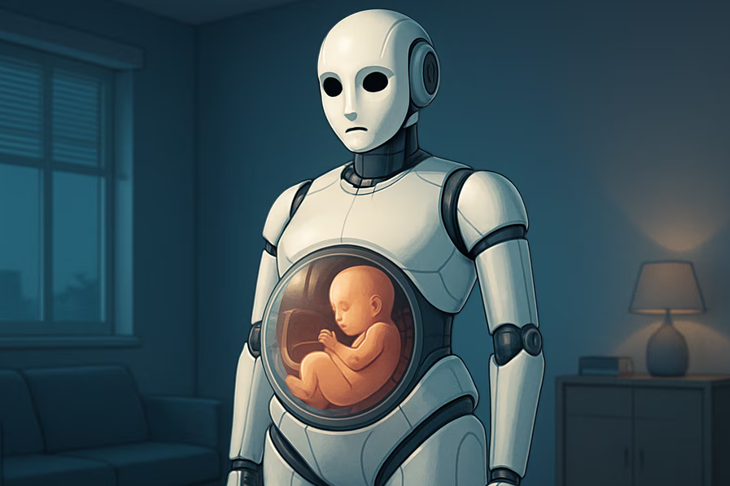
On August 8th, a prominent Chinese science and technology platform, Kuai Ke Zhi, featured an exclusive interview with Zhang Qifeng, a doctoral candidate at Nanyang Technological University in Singapore and the CEO of Kaiwa Technology. His startup is pioneering an unprecedented humanoid robot designed to function as a surrogate mother. Zhang disclosed that the company is on the verge of finalizing the world’s first humanoid pregnancy robot, equipped with a sophisticated artificial womb embedded within the robot’s abdominal cavity. This innovation promises to carry a full-term pregnancy and deliver a living infant, mimicking human gestation.
According to Zhang, the artificial uterus has undergone preliminary animal trials, and the humanoid surrogate is projected to be commercially available within the next year, with an estimated price tag below 100,000 yuan (approximately $14,000 USD).
In a statement reported by Chosun Daily, Zhang explained, “The artificial womb technology has reached a mature phase. The next step involves integrating it into the robot’s abdomen to enable interaction between the human and the machine, facilitating fetal development within the robotic surrogate.”
While Zhang did not elaborate on the specific mechanisms of fertilization-such as how sperm and egg union occurs within this system-the announcement quickly ignited widespread discussion across Chinese social media platforms. Critics have labeled the technology as “unnatural” and raised concerns about the ethical ramifications of separating a fetus from a biological mother. They argue that such detachment could be psychologically and morally problematic.
Conversely, the concept has garnered significant enthusiasm from individuals facing infertility challenges or those for whom traditional artificial insemination has failed. One social media user commented, “If it costs half my yearly salary, I would invest in it immediately.” Another shared, “After three unsuccessful artificial insemination attempts, this gives me hope to finally have a child.”
Despite the excitement, many medical professionals remain cautious. They emphasize that replicating the complex biological environment of human pregnancy-such as maternal hormone production, immune system modulation, and neuroendocrine interactions-is an immense scientific challenge. Current understanding of these processes is limited, making it uncertain whether artificial surrogacy via humanoid robots can fully emulate natural gestation.
As of 2025, the global infertility rate affects approximately 15% of couples, according to the World Health Organization, underscoring the potential impact of such technologies if proven safe and effective. Similar advances in artificial womb research are underway internationally, but Kaiwa Technology’s humanoid surrogate represents a novel integration of robotics and reproductive science.
Posted under Tech Tags: China