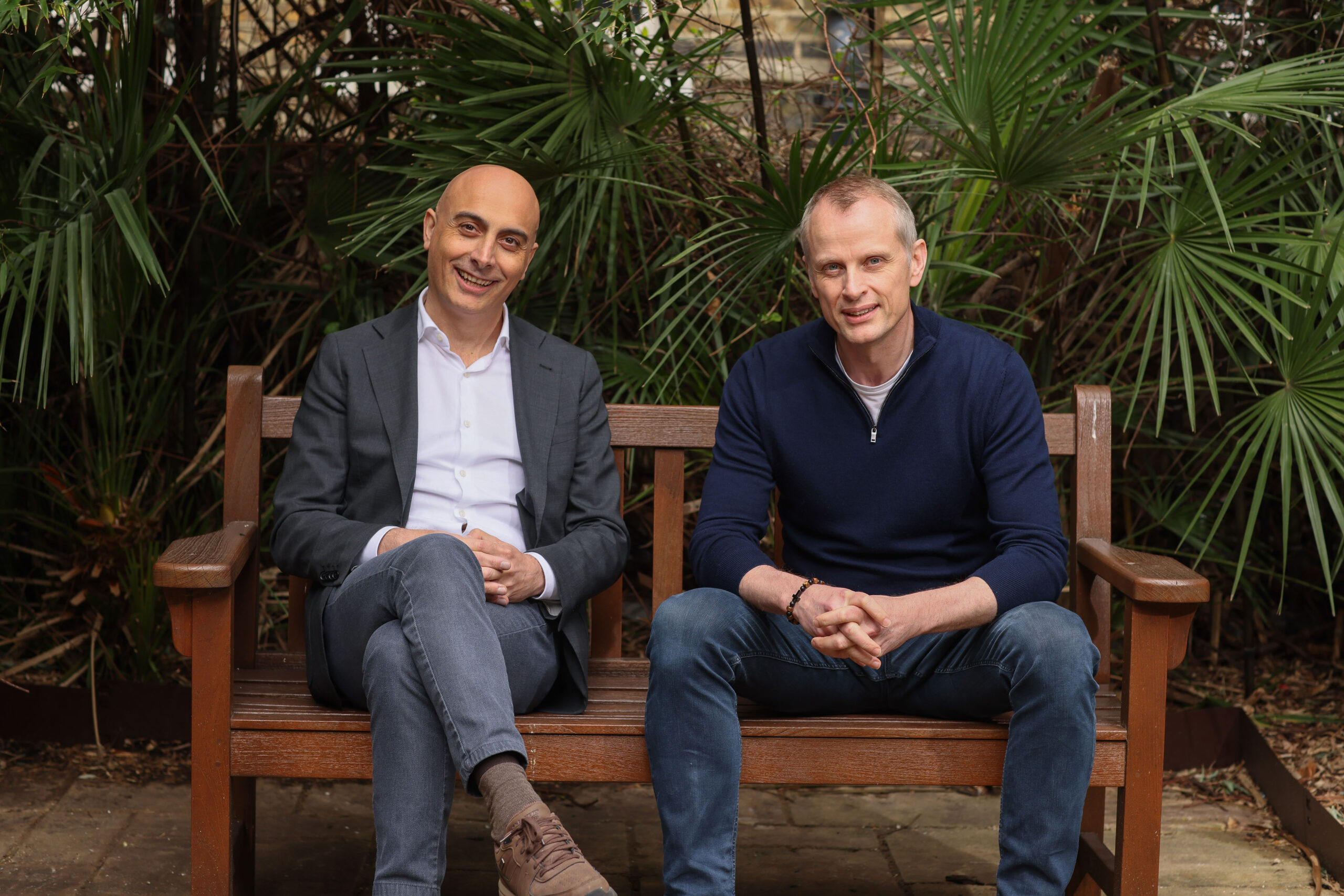
Xense Robotics has completed a pre Series A funding round and raised a nine-figure RMB amount. The round was led Fortera Capital with participation from Li Auto and BeFor Capital. Capital for Science & Industry and existing investors GL Ventures and Oriza Seed also participated. The proceeds will be used for R&D, product development, team expansion and market development in order to improve the company’s capabilities. This is Xense’s 3rd funding round for 2025. Previous investments include GL Ventures and Agibot. Other investors include Plug and Play China and Jiaotong University Hanyuan Venture Capital. Fortera Capital’s involvement with Li Auto will accelerate Xense’s commercial roll-out of tactile sensing technologies in industrial settings. Xense, a multimodal tactile sensing system for intelligent manipulation, will be founded in Shanghai in May 2024. The company’s goal is to move embodied intelligence away from fine-grained manipulating towards generalized perception by enhancing robots’ ability to perceive and interact.
An embodied path towards tactile intelligence
The founder of the company, Ma Daolin, a PhD graduate from Peking University who studied under robotics researcher Alberto Rodriguez, focused on integrating vision, tactile sensing, and robotic perception. Ma is said to have been among the first to propose space perception through touch. He demonstrated high-precision tracking of grasped items purely by tactile input. Other core members are from the Massachusetts Institute of Technology (MIT), Peking University (PKU), Shanghai Jiao Tong University (SJTU), and University College London.
Although technologies such as LiDAR, or light detection and ranger (light detection and ranger), and 3D cameras are mature, manufacturing environments still require precision and flexibility tasks for which visual sensing is not sufficient. Tactile sensing is becoming increasingly important for embodied system as the demand for adaptive and fine manipulating grows. It improves perception, adaptability, and allows for more human-like interaction and feedback.
According
Verified Market ResearchThe global tactile sensor market is expected to reach USD 35.6 billion in 2031.
Building a ecosystem
The performance and accuracy of embodied manipulator models depends on high-quality tactile information, which is often difficult to collect. Traditional tactile sensors are often limited by low resolution, limited input multimodality, poor durability and high costs. This limits their use in automation.
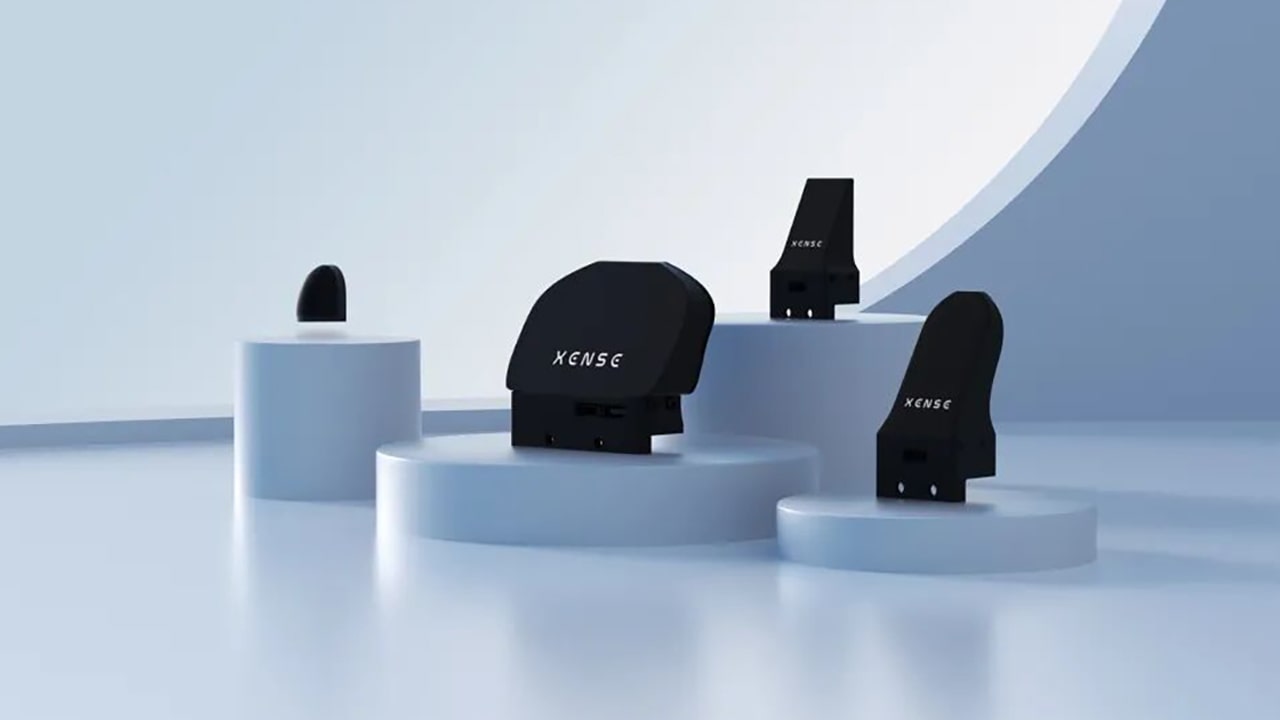
Xense Robotics developed a complete product line to address these limitations. This includes tactile sensors, data-acquisition systems, tactile simulators and actuators.
Xense’s multimodal vision and tactile sensors overcome these limitations with higher resolution, better resistance to interference, multimodal fusion and dynamic response. The technology allows for dexterous handling, precision assembly, flexible logistic, and human-robot interactions.
According to the company, its sensors can detect micron-level changes and force variations during assembly. This helps prevent part jamming or wear. They maintain reliability after millions of compression tests. Self-calibration algorithms built into the sensors preserve lifetime accuracy and reduce maintenance frequency and costs. The sensors are compact, measuring only four cubic centimeters. They can be easily integrated into robotic arms and grippers to enable precision wire insertion and mini bearing assembly.
Xense’s data collection solutions are also said to reduce costs by up 95% depending on the scale and application.
Xense’s integrated solutions have been validated for industrial environments by combining proprietary sensors, control algorithms, and perception algorithm. Its systems are able to detect subtle force variations in real time and adjust motion accordingly, enabling high precision insertions that traditional robots cannot perform.
Xense claims that its technologies have been deployed in dexterous manipulating, precision assembly, tactile tests, flexible logistics and home robotics. Clients include Agibot and Google. X Square Robots, Galbot and EngineAI are also clients. The company has also begun pilot collaborations with Contemporary Amperex Technology, Li Auto and Haier.
Xense plans on developing a tactile cloud-based platform that integrates sensors with data acquisition systems, simulations, and real world applications as deployment expands. The platform is designed to provide high-quality data in tactile form to enterprises and developers. This will reduce innovation costs and accelerate the adoption of embodied Intelligence.
KrASIA Connection includes translated and adapted material that was originally published 36Kr. This article has been written by Huang Nan exclusively for 36Kr.