Xpeng Unveils Ambitious 2026 Robotaxi and Advanced IRON Humanoid Robot
In a recent event held in Guangzhou, China, Xpeng introduced its groundbreaking plans for 2026, featuring a fleet of autonomous Robotaxis and the next-generation IRON humanoid robot. Both innovations are rooted in the concept of physical artificial intelligence (AI), highlighting Xpeng’s strategic pivot from conventional automobile manufacturing toward intelligent mobility and robotics solutions. He Xiaopeng, the company’s CEO, emphasized that physical AI has transitioned from theory to practical application, with Xpeng aiming to accelerate its evolution into a global leader in embodied intelligence technologies.
Revolutionizing Urban Mobility: The 2026 Robotaxi Initiative
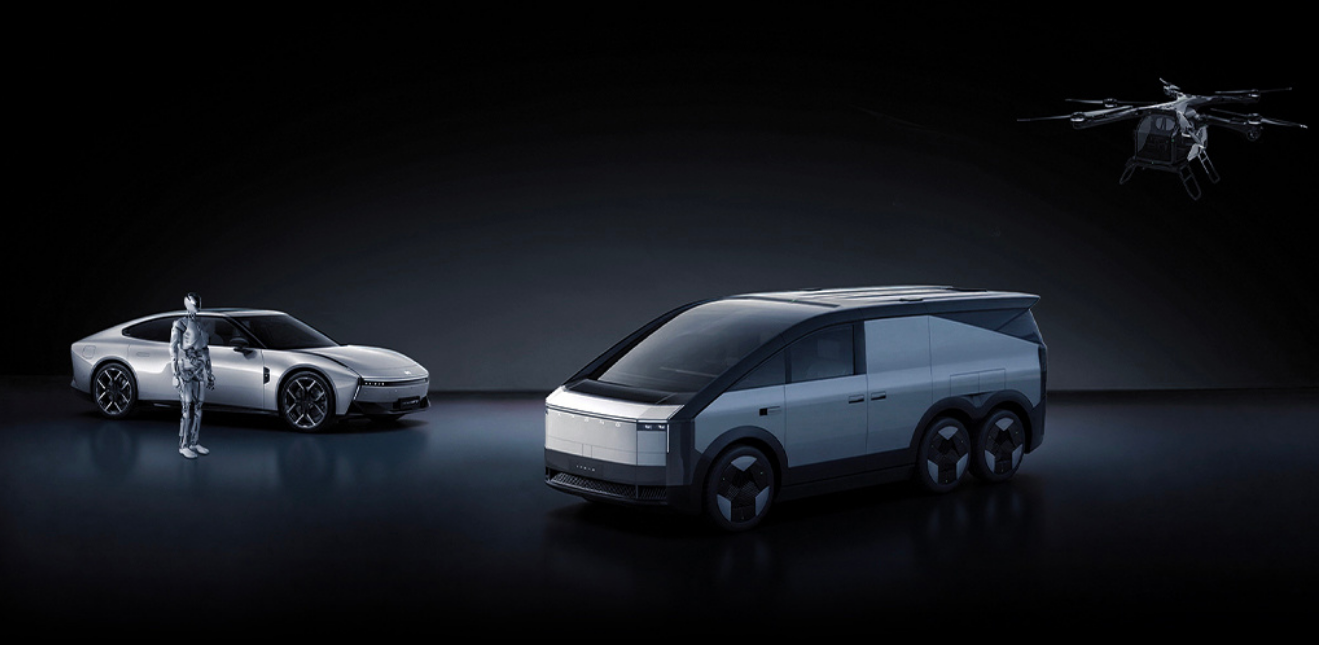
Xpeng has announced the development of three distinct Robotaxi models slated for mass production by 2026. These vehicles will undergo pilot testing in major urban centers, including Guangzhou, to refine their autonomous capabilities. Designed to meet Level 4 autonomy standards, the Robotaxis will be powered by Xpeng’s proprietary Turing AI chips, delivering an impressive 3,000 TOPS (trillions of operations per second) – currently the highest computational capacity available in mass-produced vehicles worldwide.
Unlike many competitors, Xpeng’s Robotaxi employs a pure-vision system that operates independently of high-definition maps or lidar sensors, enabling it to adapt seamlessly to diverse road conditions globally. The vehicles feature a dual-redundant hardware architecture, ensuring swift failover in case of system malfunctions. A novel design element includes an exterior display integrated into the sun visor, facilitating visual communication with pedestrians to foster trust and enhance safety in human-autonomous vehicle interactions.
In collaboration with leading navigation platform AMap, Xpeng is building an extensive service network that allows users to conveniently book self-driving rides. He Xiaopeng described this launch as a transformative milestone, marking Xpeng’s evolution from a “future mobility explorer” to a pioneer in physical AI-driven mobile transportation.
Introducing IRON: The Next-Generation Humanoid Robot
Alongside its autonomous vehicles, Xpeng showcased IRON, a humanoid robot designed with biomimetic features that closely resemble human anatomy. Standing under 170 cm tall, IRON incorporates a sophisticated skeletal, muscular, and skin-like structure with over 60 articulated joints, enabling fluid, human-like movements such as walking, standing, and lying down.
IRON is powered by a cutting-edge solid-state battery and integrates Turing AI chips within a large-scale physical framework. This combination forms an advanced intelligent system-referred to as VLT+VLA+VLM-that equips IRON with capabilities including natural language conversation, obstacle avoidance, and precise object manipulation.
Xpeng plans to commence mass production of IRON by the end of 2026, initially targeting applications in factory automation before expanding into household robotics. This phased approach reflects the company’s vision to embed physical AI robots into everyday environments, enhancing productivity and convenience.
Looking Ahead: Xpeng’s Vision for Intelligent Mobility and Robotics
With these ambitious projects, Xpeng is positioning itself at the forefront of the intelligent mobility revolution. The company’s focus on physical AI-melding advanced robotics with autonomous driving-signals a future where smart machines seamlessly integrate into urban life, transforming transportation, manufacturing, and domestic assistance.
As of 2024, the global autonomous vehicle market is projected to grow at a compound annual growth rate (CAGR) of over 40%, underscoring the immense potential for innovations like Xpeng’s Robotaxi. Similarly, the humanoid robotics sector is rapidly advancing, with applications expanding beyond industrial settings into personal and service domains.