Robots Take Center Stage at the 2026 Spring Festival Gala
Innovative Robotics Steal the Spotlight
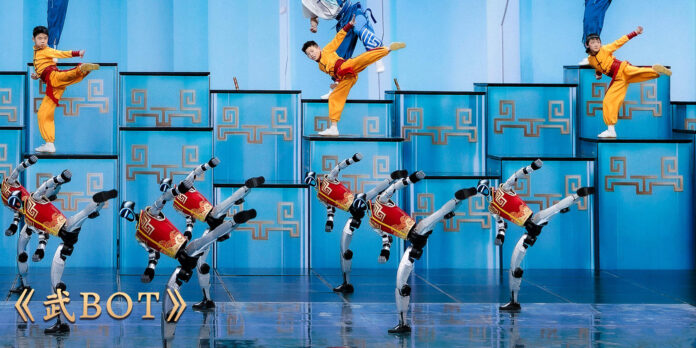
This year’s Spring Festival Gala showcased a remarkable fusion of technology and tradition, as robots from four leading Chinese robotics companies captivated audiences with their dynamic performances. From humanoid figures expertly handling nunchaku to intricately synchronized “drunken boxing” routines, over a dozen robots shared the stage with human artists, delivering a visually stunning spectacle.
The robots executed complex maneuvers such as backflips, cartwheels, and rapid formation changes while running, highlighting significant advancements in motion precision and coordination. These displays underscored the rapid evolution of robotics in entertainment, blending cutting-edge engineering with cultural artistry.
The Gala’s Enduring Popularity and Digital Engagement
Since its inception in 1983, the Spring Festival Gala-known locally as chunwan-has been a cornerstone of Chinese New Year celebrations, broadcast annually by CCTV. This year’s event attracted an impressive 677 million viewers across multiple platforms, reaffirming its status as the nation’s most-watched television program.
Notably, younger demographics showed a 10% increase in viewership compared to the previous year, now representing over 40% of the audience. This shift reflects the Gala’s strategic efforts to engage digital-native viewers through contemporary content, including a comedic sketch parodying the popular narrative of a wealthy CEO falling for a janitor-a clear nod to the booming ultra-short video series trend in China.
Technology as a Central Theme
Technological innovation was a dominant motif throughout the broadcast. References to “quality productive forces” surged to more than eight times last year’s mentions, emphasizing the growing prominence of robotics and artificial intelligence in Chinese media and culture.
AI integration extended beyond performance to hosting and production elements. ByteDance’s Doubao chatbot interacted live with hosts, voiced a humanoid robot character, and provided real-time text interpretation. Additionally, ByteDance’s Seedance 2.0 video generation model created immersive animated backdrops, such as ink-wash horses that appeared to gallop off the screen, enhancing the visual storytelling.
Robotics Companies Showcase Cutting-Edge Talent
The Gala’s robotic performances followed intense online buzz about the substantial investments robotics firms made to secure stage time. Unitree Robotics, Noetix Robotics, and MagicLab each presented consecutive live acts, sparking the trending hashtag “robots are fully invading Spring Festival Gala” on Weibo, which quickly rose to the platform’s second most popular topic.
Noetix Robotics featured four humanoid robots portraying empathetic elderly-care assistants, performing acrobatic feats alongside human actors. One android was even modeled after renowned actress Cai Ming, adding a lifelike touch to the performance.
Unitree Robotics returned with an advanced martial arts routine, including nunchaku-wielding robots engaging in choreographed duels with human performers. The company touted this as the world’s first demonstration of highly dynamic, coordinated swarm control among humanoid robots.
MagicLab’s robots executed the inaugural “Thomas 360” spin-a full rotation maneuver by a humanoid robot of similar scale-during the opening act, later joining a musical number themed on smart manufacturing.
Beyond live acts, Galbot appeared in a pre-recorded short film, showcasing wheeled dual-arm robots performing household chores such as folding clothes, sorting items, and cooking sausages, illustrating practical applications of robotics in daily life.
AI Enhances Hosting and Visual Effects
Artificial intelligence played a pivotal role not only on stage but also behind the scenes. ByteDance’s Doubao chatbot was prominently featured, engaging with hosts and audiences alike, while Seedance 2.0’s animated visuals added a new dimension to the performances. This marked the model’s debut client appearance following its recent public release, sparking conversations about the potential and risks of deepfake technology.
CCTV also utilized its proprietary large language model for the first time during the Gala, generating digital avatars and visual content that enriched the broadcast’s immersive experience.
While the AI-driven production received widespread acclaim for innovation, some viewers noted minor visual inconsistencies, such as mismatched petals in a floral-themed segment. A popular Weibo joke humorously remarked, “The Gala’s AI involvement surpasses my thesis,” reflecting mixed public reactions.
Global Artists Join the Festivities
Following last year’s nostalgic performance by OneRepublic, the 2026 Gala continued its tradition of featuring international stars. At the main Beijing venue, artists like John Legend, Hélène Rollès, and Westlife performed beloved hits including “All of Me,” “Beauty and the Beast,” and “My Love.”
These global acts shared the stage with Chinese performers, blending diverse cultural expressions. Spanish flamenco and Hungary’s traditional Legényes dance were presented alongside ethnic performances from China’s Hani and Lisu communities. Additionally, Chinese and Austrian acrobats collaborated on a high-tech diabolo routine enhanced with motion tracking and lighting effects.
At a secondary venue in Yiwu, Zhejiang province, Lionel Richie and Jackie Chan delivered a pre-recorded rendition of the iconic anthem “We Are the World,” symbolizing unity and cultural exchange.
Conclusion: A New Era of Cultural Celebration
The 2026 Spring Festival Gala exemplified how traditional festivities can evolve by embracing technological innovation. The seamless integration of robotics and AI not only entertained but also highlighted China’s advancements in these fields, while the inclusion of international artists underscored the Gala’s global cultural resonance. As the event continues to adapt, it remains a vital platform for showcasing the intersection of heritage and modernity.