
Leadership Changes and Strategic Shifts at Agibot
On August 6, it was confirmed that Wei Qiang, President of Agibot’s Lingxi Division, and cofounder Yan Weixin have both departed from the company. Their duties are now being managed on a rotating basis by Peng Zhihui.
Profiles of Key Departed Executives
Yan Weixin, an associate professor and doctoral advisor at Shanghai Jiao Tong University’s School of Mechanical Engineering, also serves as chief scientist at the Shanghai Artificial Intelligence Laboratory. As a cofounder of Agibot, Yan’s expertise was deeply rooted in academia. Wei Qiang brought extensive industry experience from Panasonic, JD.com, Huawei, and Anker Innovations. He was instrumental in launching Panasonic’s first HD TV set-top box in China, JD’s Dingdong smart speaker, and Huawei’s smart earbuds.
Market Frenzy and Stock Surge
Just over a month ago, Agibot announced plans to acquire a controlling 63.62% stake in Swancor Advanced Materials. The initial transaction priced Swancor shares at RMB 7.78 each. By August 5, Swancor’s stock had skyrocketed to RMB 110.48, marking an extraordinary increase of over 1,300% within 20 trading days.
This surge ignited intense market speculation around robotics stocks. The Shanghai Stock Exchange flagged unusual trading activity related to Swancor on August 5, citing investor conduct that disrupted market order and misled participants, resulting in account suspensions. These events have raised questions about the internal dynamics at Agibot, the company at the center of this excitement.
Understanding the Executive Departures
Amid rumors questioning Yan Weixin’s capabilities, an insider using the pseudonym Yang Kexin suggested Yan’s strengths were more aligned with academic research than Agibot’s commercial ambitions. Wei Qiang, by contrast, was praised for his unwavering focus on product excellence.
Agibot has experienced several leadership changes this year, a common occurrence in the fast-evolving robotics sector. Tina, a veteran headhunter, noted that Agibot remains a nascent company, having been established only two years ago.
Major Organizational Overhaul
In October of the previous year, CEO Deng Taihua announced a significant restructuring of Agibot’s R&D division. The company shifted from a centralized R&D model to a decentralized structure organized around distinct product lines. This reorganization, reportedly decided during a late-night meeting, was likely influenced by new policy directives issued in September 2024 aimed at accelerating mergers and acquisitions among listed firms.
Employees were caught off guard by the sudden changes, having worked overtime the night before only to discover the company’s structure had been radically altered the next morning.
New Business Units
- Expedition: Focused on general-purpose humanoid robots.
- Genie: Dedicated to dual-arm wheeled robots.
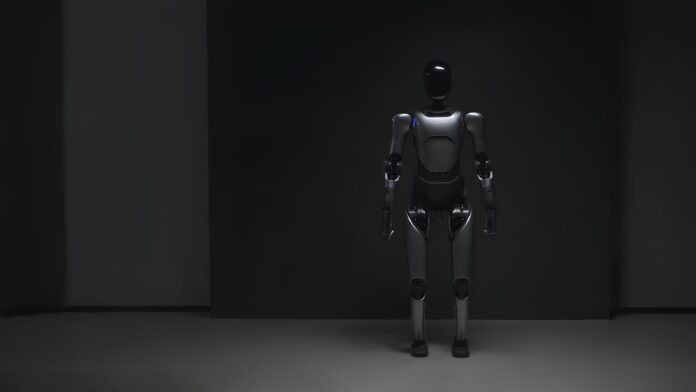
- Lingxi: Specializes in compact humanoid robots.
- Commercial Cleaning Solutions: Spun off as an independent subsidiary by year-end.
Leadership Across Divisions
Yao Maoqing, former engineering director at Nio, leads the Genie division and heads Agibot’s embedded intelligence research institute. Colleagues describe him as a charismatic leader who balances emotional intelligence with effective management, likening him to a strategic figure from classic Chinese literature.
Yao recruited chief scientist Luo Jianlan, a UC Berkeley Robotics PhD graduate who collaborated with Google DeepMind’s Physical Intelligence team.
Wang Chuang, heading the Expedition division, brings experience from DJI and Anker’s robotics division, known for empowering teams and decisive leadership.
Wei Qiang, formerly leading the Lingxi division, was respected for his product-focused approach and manufacturing expertise.
The selection of these leaders, all with proven track records in mass production and commercialization, signals CEO Deng’s intent to hold each unit financially accountable.
Innovative Organizational Model
Unlike traditional robotics companies that organize R&D vertically by function-hardware, software, algorithms, and systems-Agibot adopted a horizontal structure where each product line operates as an independent business unit responsible for its own revenue and delivery targets. This approach contrasts with companies like Unitree Robotics, which maintain a functional R&D hierarchy.
Agibot’s model effectively splits what was once a unified team into multiple sibling groups, each with distinct performance goals. The company has publicly set ambitious revenue targets of RMB 800 million (approximately USD 112 million), with a stretch goal of RMB 1 billion (USD 140 million).
Mounting Pressure and Talent Exodus
As commercialization accelerated, engineers faced intense pressure, tight deadlines, and rigorous internal benchmarks. This environment contributed to the departure of several key personnel, including Li Zhen (head of embodiment), Zhu Guangfei, and core developers Xiong Zhilin and Liu Jifan.
Yang Kexin described the workload as mentally exhausting, with 14-hour workdays leaving little time for refining technology. Data indicates that over 60% of Agibot’s R&D staff hold postgraduate degrees from prestigious institutions such as Shanghai Jiao Tong University and the University of Chinese Academy of Sciences.
Industry recruiter Tina praised Agibot’s workforce as among the most dedicated in robotics, while R&D leader Wang Luchuan emphasized their drive and capability. However, some veterans like Lin Qingmu argue that the sector should prioritize stability over speed when bringing products to market.
Public Demonstrations and Industry Skepticism
At the 2024 World Artificial Intelligence Conference (WAIC), Wang Chuang highlighted Agibot robots’ ability to walk continuously for over 360 hours. However, during the event, the Expedition robot (weighing 70-80 kg) fell during a demo, which the company attributed to low battery power. Agibot pledged to provide a 24/7 live stream to showcase the robot’s stability.
Despite reassurances, the fall raised safety concerns, especially given the potential hazards of a large robot toppling in industrial environments.
Other demonstrations, such as the Expedition A2-W logistics showcase, were criticized for using overly controlled conditions unlike real-world warehouse environments. Wang Luchuan remarked that such tasks were achievable as early as 2018, contrasting Agibot’s efforts with more advanced demonstrations by competitors like Figure AI.
The viral Lingxi X2 bicycle-riding demo also faced scrutiny; the robot was mounted on the seat and relied on center-of-gravity physics rather than genuine balance algorithms.
“If Tesla scores 30-40 out of 100, Agibot is around 5. There is significant room for improvement,” Wang Luchuan summarized.
Challenges of Rapid Growth and Innovation
Rapid expansion can leave some team members struggling to keep pace. Peng Zhihui, Agibot’s CTO and cofounder, is known for his creativity and relentless work ethic but has faced challenges in product launches. A former colleague, Qin Yi, noted that Peng’s lack of prior product launch experience has complicated team dynamics.
Peng gained recognition as a student by winning nearly 40 innovation awards and participated in Huawei’s “Genius Youth Program.” He also built a following as a tech influencer on Bilibili. In February 2023, he co-founded Agibot and took on the CTO role.
In August 2024, Peng introduced the Lingxi X1, a fully open-source robot priced at RMB 108,000 (about USD 15,120). Developed in just two months by a small team at Peng’s X-Lab, the robot’s release included all blueprints and source code. However, customer feedback highlighted issues such as uneven weight distribution, instability, and inadequate after-sales support.
Qin emphasized Peng’s good intentions, aiming to revive the open-source ethos reminiscent of the early internet era.
Commercialization Hurdles and Product Evolution
By January, Agibot claimed to have shipped 1,000 robots: 731 bipedal models (Expedition A2 & Lingxi X1) and 269 wheeled units (Expedition A2-D & A2-W). However, transitioning from lab prototypes to commercial products proved premature, with users encountering integration and usability challenges due to insufficient support infrastructure.
Insiders report that the Lingxi X2 has undergone refinements making it more suitable for mass production and is expected to outsell the Expedition series this year.
Wang Chuang clarified that while the X1 was an X-Lab creation, the X2 is a market-ready product. Peng’s dual responsibilities as CTO and X-Lab head have been demanding, with some employees noting his visionary ideas sometimes lack practical grounding.
Internal conflicts and divergent visions have contributed to further turnover, including the departures of former algorithm director Gao Wei and manufacturing general manager Zhang Shaozheng. Yin Kuan, an insider, lamented missed opportunities due to these leadership changes.
Industry Context and Future Prospects
Unitree Robotics, founded in 2016 by Wang Xingxing, began IPO preparations only in mid-2024 and is now supported by CITIC Securities, standing as a well-established industry player.
In contrast, rumors circulated in July that Agibot was pursuing a Hong Kong listing alongside its Swancor acquisition, which the company denied. Yang Kexin indicated that a domestic IPO by year-end remains under consideration.
If Agibot files for an IPO in December, it could reach public listing within three years-a significantly faster timeline than Unitree’s decade-long journey.
Some insiders view the Swancor acquisition as a strategic hedge by CEO Deng, potentially preserving listing ambitions even if Agibot does not become China’s first publicly traded humanoid robotics firm. A merger could serve as an alternative path to public markets.
Structural Challenges and Market Realities
Agibot’s divisional setup currently supports rapid, production-focused growth. However, the absence of a coordinating layer may heighten internal tensions, possibly necessitating future reorganizations to introduce cross-functional platform teams and restore strategic alignment.
While the Swancor episode has temporarily calmed investor concerns, the company faces the challenge of meeting the expectations of public market investors if it proceeds with an IPO.
The robotics sector has attracted many opportunists amid the boom, but the industry’s long-term success depends on genuine innovation and the dedication of its talent pool beyond mere hype.