
Advancements and Challenges in Humanoid Robotics: Insights from the Humanoids Summit
On December 11, the Humanoids Summit in Mountain View, California, witnessed a remarkable scene as humanoid robots arrived, drawing a registration line that stretched into the lobby. These robots were escorted by their human operators, who ensured they avoided the physical strain of climbing stairs by using elevators to reach the mezzanine registration area.
Current State of Humanoid Mobility
During the event, Abhinav, co-founder of Skild AI, humorously noted that humanoid robots are rarely shown climbing stairs in demonstrations. However, Skild AI’s Foundation model was showcased in a video illustrating a robot’s ability to navigate stairs and uneven surfaces, highlighting progress in robotic locomotion.
Despite such advancements, Modar Alaoui, founder and chair of the Humanoids Summit, remarked that “locomotion is a solved problem.” While optimistic, this statement somewhat overstates the current reality. Although humanoid robots can perform impressive tasks in promotional materials, widespread commercial adoption remains years away. Technical hurdles like fine motor skills, high production costs, and safety concerns continue to impede their practical deployment.
Market Landscape and Industry Perspectives
Industry experts Ani Kelkar from McKinsey & Company and corporate consultant Mikael Robson provided valuable insights into the evolving humanoid robotics market. Robson highlighted a surge in investment and interest in humanoid robots, reflecting growing confidence in their potential applications.
Kelkar identified approximately 50 credible companies developing humanoid robots globally, with about 20 based in China, 15 in North America, 7 in Europe, the Middle East, and Africa (EMEA), and 7 in other parts of Asia. However, she emphasized that the integration of robots into industrial workflows depends heavily on how human labor is managed, which remains a significant factor limiting productivity gains.
Human-Robot Collaboration: Redefining the Workforce
Kelkar stressed that the primary goal of robotics and automation is not to replace human workers but to transform the nature of work itself. Robots are envisioned as collaborators and tools that augment human capabilities rather than substitutes that displace jobs.
This perspective suggests the necessity of fostering a cooperative relationship between humans and robots. However, human acceptance remains a major barrier. Jeff Pittelkow, managing director of Roboworx, an automation service provider, noted that while companies are eager to adopt robots-regardless of whether they are teleoperated or autonomous-employees often resist their presence.
Workplace Resistance and Social Acceptance
Pittelkow described how workers sometimes view robots as threats to their job security, leading to acts of sabotage or neglect. For instance, in one case, employees placed a “On Strike” sign on a robot and deliberately ignored software updates to hinder its performance. Such resistance underscores the social challenges that must be addressed alongside technological development.
These human factors can significantly impact the operational effectiveness and financial viability of robotic systems. Pittelkow shared an anecdote about an autonomous mobile robot (AMR) used in a luxury restaurant that was rendered inoperable after a mouse damaged its internal components-highlighting the unpredictable real-world challenges robots face.
Technical Limitations and the Road Ahead
Joe Michaels, senior global vice president of sales and marketing at 1HMX, echoed the call for critical evaluation of humanoid robots’ capabilities, particularly regarding manual dexterity. He pointed out that most robots are still limited to basic gripping functions, a sentiment confirmed by Alaoui during the conference.
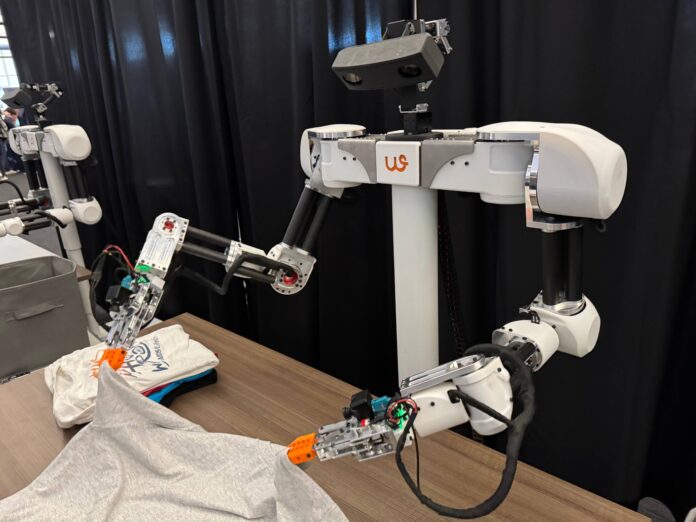
Exhibits at the summit, such as a robot torso funded by ALM Ventures, demonstrated these limitations by performing simple tasks like folding shirts slowly and imprecisely. This highlights the gap between current robotic abilities and the complex, nuanced tasks humans perform effortlessly.
Data and Learning: Essential Ingredients for Progress
Another significant obstacle is the scarcity of high-quality data required to train machine learning models that enable robots to mimic human actions effectively. Developing commercially viable humanoid robots will demand extensive experimentation and data collection to refine their performance.
Conclusion: From Novelty to Necessity
For now, humanoid robots often serve as entertainers or novelties rather than practical tools. However, as technology advances and social acceptance grows, these robots have the potential to become indispensable collaborators in various industries. The journey from experimental prototypes to everyday helpers will require overcoming both technical and human-centric challenges.
- Chinese astronauts inspect Shenzhou-20 spacecraft during Tiangong spacewalk
- Cybersecurity experts warn about the rise of mobile botnets
- Human agents continue to outperform AI in customer service roles
- Russia’s first autonomous humanoid robot experiences falls during debut