Summary: Accenture Ventures has strategically invested in General Robotics, a company whose GRID platform delivers a cohesive AI intelligence layer across over 40 robotic systems from diverse manufacturers such as FANUC, Flexiv, and Ghost Robotics. This move enhances Accenture’s physical AI initiatives, complementing its NVIDIA-powered Physical AI Orchestrator and previous investments in humanoid robotics ventures like Sanctuary AI and Schaeffler.
Accenture Ventures recently acquired a stake in General Robotics, a startup revolutionizing industrial automation by integrating robots from multiple manufacturers into a single AI-driven control system. This investment highlights Accenture’s conviction that the next wave of enterprise innovation will stem from physical AI applications, extending beyond conversational AI technologies.
Transforming Manufacturing with Unified Robotic Intelligence
Modern manufacturing environments often rely on robots sourced from various vendors, each operating on distinct software platforms and programming languages. This diversity creates significant challenges in scaling automation efficiently, as each robot requires individual programming and integration efforts. General Robotics addresses this fragmentation through its GRID platform, which acts as a universal orchestration layer. This system enables manufacturers to deploy AI-powered tasks seamlessly across their entire robotic fleet without the need for repetitive coding tailored to each device.
Prasad Satyavolu, Accenture’s global head of manufacturing and operations, emphasizes the urgency: “The manufacturing industry is grappling with workforce shortages and mounting pressure to enhance productivity. By combining General Robotics’ GRID platform with Accenture’s extensive industry expertise, we can deliver scalable, enterprise-grade robotics intelligence and orchestration.”
Founded by Ashish Kapoor, formerly the general manager of autonomous systems and robotics research at Microsoft and creator of the widely adopted AirSim simulator, General Robotics leverages simulation-based training to optimize robotic AI. GRID integrates NVIDIA’s Isaac Sim, enabling manufacturers to develop and refine robotic skills within digital twin environments before deploying them on physical machines, reducing risk and accelerating implementation.
Accenture’s Expanding Role in Physical AI Ecosystems
This investment aligns with Accenture’s broader physical AI strategy. In October 2025, the company introduced its Physical AI Orchestrator, a proprietary platform utilizing NVIDIA Omniverse libraries and the Mega NVIDIA Omniverse Blueprint to synchronize robotic and autonomous systems across industrial facilities. Accenture has positioned itself as a pivotal integrator within NVIDIA’s physical AI ecosystem, combining vision-based analytics powered by NVIDIA Metropolis with its own orchestration technologies.
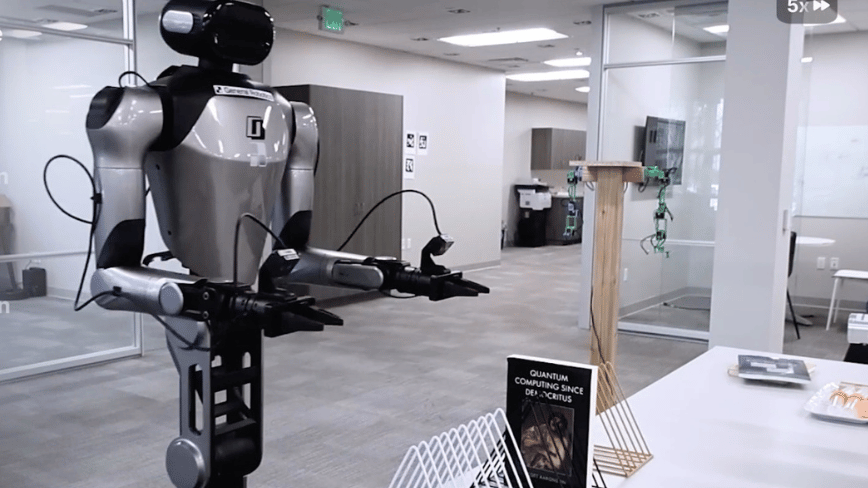
Within this framework, General Robotics serves as the critical software intelligence layer. While the Physical AI Orchestrator manages coordination at the facility level, GRID focuses on the AI capabilities of individual robots-enabling perception, decision-making, and task execution autonomously.
Accenture’s investments in this domain extend beyond General Robotics. Earlier, in March 2024, it backed Sanctuary AI, a Vancouver-based company developing versatile humanoid robots for manufacturing. Additionally, Accenture partnered with Schaeffler in 2025 to deploy humanoid robots in automotive and precision manufacturing sectors. The General Robotics deal complements these efforts by enhancing the software infrastructure that empowers diverse robotic hardware in enterprise environments.
Market Dynamics and Growth Potential
Physical AI-defined as AI systems that interact with and manipulate the physical world through robotics, autonomous vehicles, and industrial automation-is rapidly gaining investor attention. Market forecasts predict growth from approximately $1.5 billion in 2026 to over $15 billion by 2032, reflecting a compound annual growth rate (CAGR) of 47%. NVIDIA CEO Jensen Huang has described this surge as the “ChatGPT moment for physical AI,” with NVIDIA’s Isaac and Omniverse platforms becoming foundational tools for developers in this space.
A recent Deloitte survey revealed that 58% of global executives have adopted some form of physical AI, predominantly in automotive, electronics, and logistics sectors. However, transitioning from pilot projects to widespread deployment remains a significant hurdle-one that Accenture aims to overcome through its deep enterprise integration expertise.
One of the primary obstacles is interoperability. Factories typically operate a heterogeneous mix of robots, each optimized for specific tasks and controlled by proprietary software. Integrating these into a unified automated workflow has historically been cost-prohibitive for all but the largest manufacturers. General Robotics’ GRID platform claims to resolve this by abstracting hardware differences, allowing AI capabilities to be transferred across robots much like software applications run across different operating systems.
Limitations and Industry Challenges
While the financial details of Accenture’s investment remain confidential, General Robotics is still in its early stages. The company has benefited from Microsoft’s Pegasus Program, which offers cloud resources and market support, but has yet to disclose significant revenue or large-scale customer deployments.
A critical challenge lies in convincing manufacturers to adopt an independent orchestration platform amid strong incentives from robot makers to maintain proprietary ecosystems. Industry leaders such as FANUC, ABB, and KUKA provide their own integrated software solutions, making it essential for General Robotics to demonstrate clear advantages that justify switching costs. Accenture’s extensive client network offers a valuable distribution channel, but the technology must prove its effectiveness in complex, real-world factory settings.
Moreover, the physical AI sector faces substantial capital demands similar to those in frontier AI. Training robotic AI in simulation requires significant computational power, deploying these systems necessitates robust edge computing infrastructure, and ensuring safety in physical environments is exponentially more challenging than software testing. Success will favor companies that can reliably bridge the gap between simulated training and dependable real-world operation, while others risk becoming part of the long list of robotics startups that fail to scale beyond impressive demonstrations.
For Accenture, the strategic bet is that its global manufacturing clients are prepared to evolve from isolated robotic deployments to fully integrated, AI-driven automation ecosystems. General Robotics represents a vital component of this vision. Ultimately, the success of this integration depends on execution within the unpredictable and intricate realities of industrial environments-far beyond what simulations can fully replicate.