AI-Driven Robotic Surgery: A Leap Forward in NHS Patient Care and Hospital Efficiency
By Lucy Johnston, Health and Social Affairs Editor


Cutting-edge robotic systems powered by artificial intelligence are revolutionizing surgical care within the NHS, promising to dramatically shorten patient recovery periods, minimize surgical risks, and alleviate the strain on hospital resources amid ongoing capacity challenges.
Transforming Complex Surgeries with Advanced AI Robotics
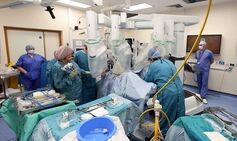
The latest iteration of surgical robots, exemplified by the da Vinci 5 platform, is being introduced across UK hospitals to assist in intricate procedures such as cancer resections and emergency interventions. This technology represents a monumental advancement in medical practice, enabling surgeons to perform with unprecedented precision and control.
At its core, the system integrates sophisticated AI algorithms that analyze extensive intraoperative data in real time, all while remaining under the direct supervision and command of skilled surgeons.
Minimally Invasive Techniques Enhance Patient Outcomes
By facilitating minimally invasive operations, these robots allow for significantly smaller incisions-often just a few centimeters-compared to traditional 8-10 cm cuts. This shift not only reduces postoperative pain but also accelerates healing, enabling patients to return home in less than 24 hours rather than enduring week-long hospital stays.
Such improvements are critical for the NHS, which currently faces bed shortages and record-high waiting lists, with over 7 million patients awaiting treatment as of early 2026.
Precision Surgery Reduces Complications and Preserves Vital Functions
Enhanced dexterity and superior visualization offered by AI-assisted robots minimize tissue trauma and protect sensitive nerves and organs. This precision is particularly beneficial in surgeries for bowel, lung, and pancreatic cancers, as well as complex gynecological procedures, where preserving nerve function can significantly impact long-term quality of life.
For example, surgeons can now perform thyroidectomies through intraoral incisions, avoiding visible neck scars, or conduct cardiac surgeries via small chest incisions instead of splitting the sternum, reducing recovery time and postoperative complications.
Royal Stoke University Hospital: A Pioneer in Robotic Surgery
Thanks to a generous £12 million grant from the Denise Coates Foundation, Royal Stoke University Hospital has become one of the first UK centers to implement the da Vinci 5 system extensively. Consultant colorectal surgeon Mr. Philip Varghese describes this technology as a “game-changer,” likening the leap in capability to upgrading from an iPhone 1 to an iPhone 17.
He emphasizes the system’s enhanced computational speed, improved navigation, and the ability to collaborate remotely with specialists, all contributing to safer, more efficient surgeries with fewer complications.
Boosting NHS Capacity and Efficiency
Robotic surgery is already demonstrating its potential to increase surgical throughput. Where traditional methods might limit surgeons to one operation per day, AI-assisted systems enable multiple procedures within the same timeframe, significantly improving hospital productivity.
Patients benefit from shorter hospital stays-often less than 24 hours compared to the previous 5-10 days-freeing up beds and resources to accommodate more individuals in need of care.
Surgeon-Controlled Technology Ensures Safety and Precision
Importantly, these robotic systems do not replace surgeons but serve as advanced tools under their direct control. The AI continuously monitors the procedure, alerting the surgeon to any deviations or potential errors in real time, allowing immediate corrective action.
Looking Ahead: The Future of Surgical Care in the NHS
Royal Stoke plans to expand its robotic surgery capacity to six da Vinci units, positioning itself as one of the UK’s largest robotic surgery hubs. Health experts anticipate that widespread adoption of AI-powered surgical robots will be instrumental in addressing the NHS’s ongoing challenges by enabling faster, safer, and more precise treatments for a growing patient population.
As the technology evolves, it holds promise not only for improving immediate surgical outcomes but also for preserving patients’ long-term health and quality of life through nerve-sparing and function-preserving techniques previously unattainable.