Robotics Put to the Ultimate Test at CUHK’s ATEC2025 Challenge
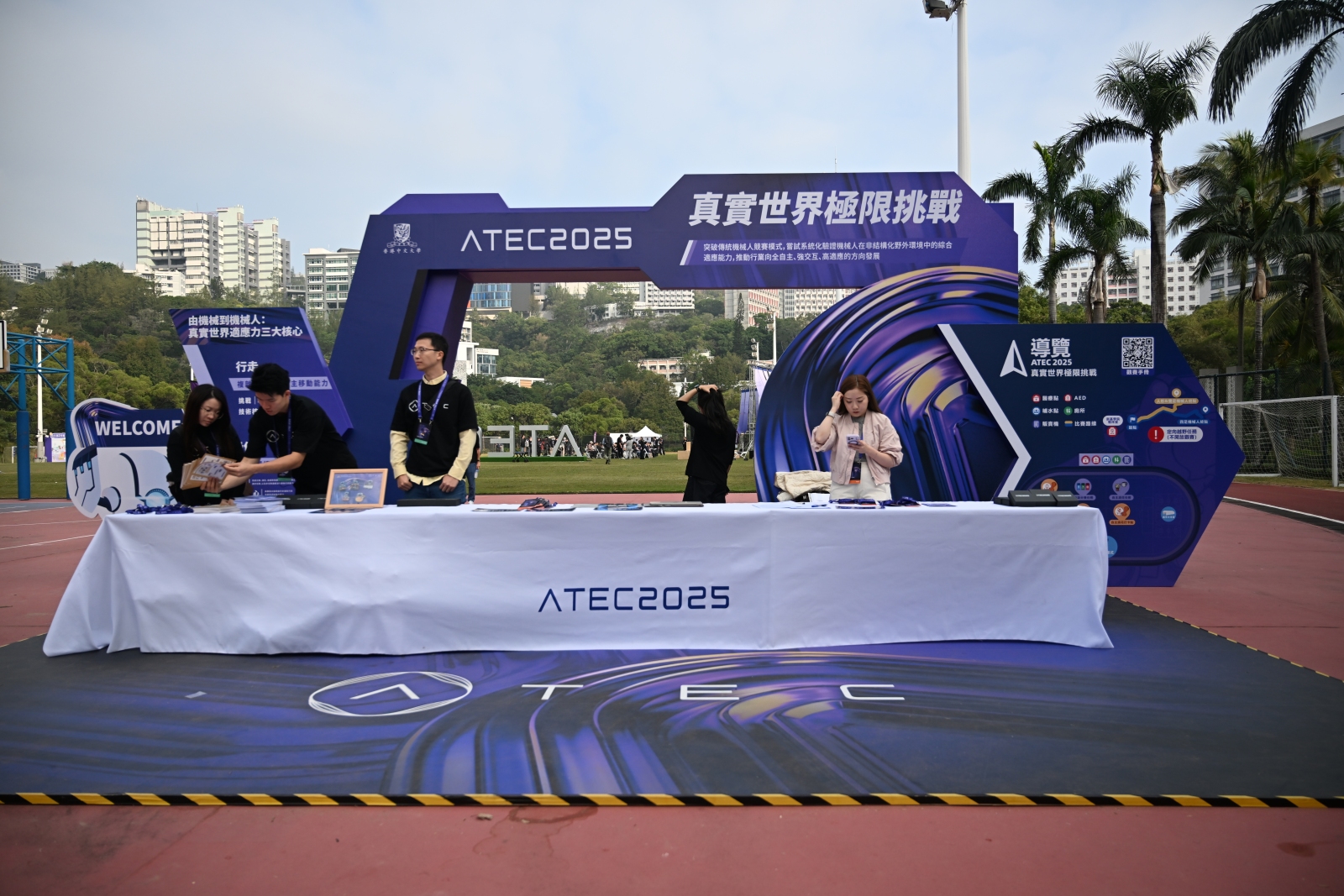
At The Chinese University of Hong Kong (CUHK), the ATEC2025 Real-World Extreme Challenge presented a groundbreaking robotics competition that pushed machines beyond controlled indoor environments. Unlike traditional contests held in predictable settings, this event subjected robots to unpredictable outdoor conditions such as muddy terrain, unstable walkways, and irregular landscapes. The goal was to close the gap between laboratory prototypes and practical, real-world applications.
Evaluating Robotics in Unpredictable Environments
Professor Yunhui Liu, Co-Chair of ATEC2025 and a leading figure at the Hong Kong Academy of Engineering, described the competition as a rigorous stress test for robotic systems. He emphasized the event’s core question: “Can robots truly transition from controlled labs to adapt and function effectively in the chaotic real world?” This challenge reflects a broader evolution in artificial intelligence, supported by key industry players like Ant Group, who see AI’s future as deeply intertwined with real-world adaptability.
Assessing Three Fundamental Robotics Skills
Out of 392 teams from academia and industry worldwide that participated in the initial online qualifiers, only 13 advanced to the intense two-day final. These finalists faced four demanding tasks designed to test essential robotic competencies: waste sorting, autonomous plant irrigation, outdoor navigation, and bridge traversal. These challenges were carefully crafted by Professor Liu to measure what he terms the “Three Core Capabilities” of robotics: mobility, manipulation, and environmental interaction. Unlike previous competitions that focused mainly on locomotion, ATEC2025 emphasized the integration of movement with operational tasks.
Learning Through Trial and Error
The competition’s difficulty was evident, with even fundamental actions like grasping objects requiring multiple attempts. Some top teams needed 10 to 20 tries before succeeding, highlighting the complexity of real-world conditions. Professor Liu noted that such setbacks are expected in this pioneering format. “Failure is part of the process,” he said. “What matters is the progress teams make as they refine their approaches through repeated trials.”
Raw Performance Over Polished Demonstrations
ATEC2025 distinguished itself by showcasing unfiltered robot performance rather than edited highlight reels. Professor Liu pointed out that many online videos of robots often mask numerous failures behind seamless clips. In contrast, this competition revealed the genuine challenges robots face, such as navigating uneven ground or narrow staircases, where failure rates rise sharply compared to flat surfaces.
Looking Ahead: The Road to Practical Robotics
While the winning team will receive a $150,000 prize, the competition’s primary aim is to drive foundational advancements rather than immediate commercialization. Professor Liu hopes the event will inspire new talent and foster collaboration within the robotics community to tackle complex problems. Although partnerships with investors may develop over time, the focus remains on advancing robotic intelligence.
Despite recent progress, Liu cautions that widespread deployment of robots capable of complex household tasks-such as cooking or laundry-remains years away. “Simple tasks like food delivery are achievable now, but reliable, safe, and dexterous robots for more intricate chores won’t be commonplace in the next five years, or possibly even longer,” he explained.
The current objective is for robots to successfully perform 20-30% of basic human tasks with a 90% success rate, including activities like sorting waste or watering plants. Achieving this milestone would represent a significant leap forward in robotics.
Setting New Standards for Embodied AI
ATEC2025’s approach centers on evaluating robots based on their ability to perform human-relevant functions, not just technical accuracy. By focusing on functional equivalence to human actions, the competition aims to establish fresh benchmarks that will guide future research and development.
With strong backing from academia, industry, and government, and leveraging the rich talent and hardware ecosystem of the Greater Bay Area, ATEC is poised to become a recurring platform where the next generation of embodied artificial intelligence is tested and refined-not in simulations, but in the unpredictable elements of nature such as soil, rain, and wind.