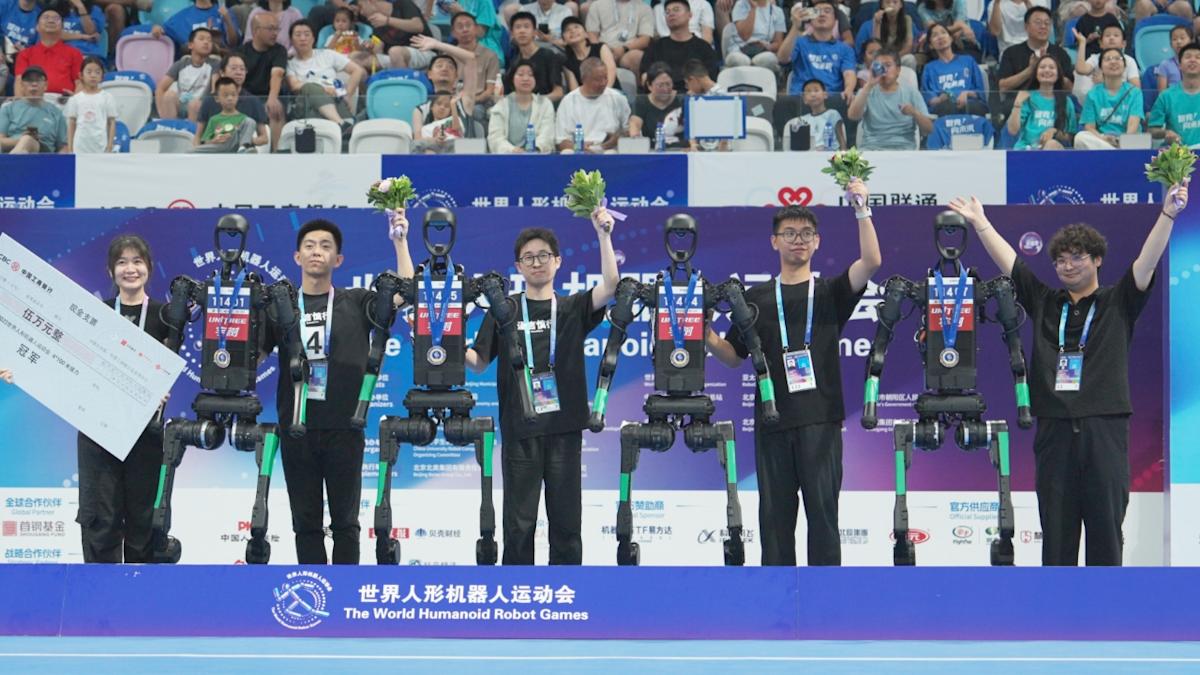
Inaugural World Humanoid Robot Games Showcase Emerging Robotics Talent
The debut edition of the World Humanoid Robot Games (WHRG) recently concluded in Beijing, China, marking a significant milestone in the field of robotics. Over the course of three days, humanoid robots from across the globe competed in a variety of challenges ranging from athletic contests to practical tasks. Despite impressive performances, these robots remain far from rivaling human athletes in speed, particularly in sprinting events.
Global Participation Highlights Growing Interest
The competition attracted more than 280 teams representing countries such as the United States, Germany, Brazil, and the host nation, China. The majority of participants hailed from academic institutions, reflecting the strong involvement of universities in advancing humanoid robotics research. Additionally, several established robotics companies, including Unitree Robotics and Fournier Intelligence, fielded teams, underscoring the event’s blend of academic and commercial innovation.
Robotic Athletes Compete in Diverse Disciplines
Robots took part in a wide array of sporting events, including running races, soccer matches, and table tennis games. Beyond athletics, the competition also tested robots on functional tasks such as cleaning and pharmaceutical sorting, demonstrating their potential utility in real-world applications. Unitree Robotics dominated the track events, securing gold medals in the 100-meter, 400-meter, 1,500-meter, and 4×100-meter relay races.
Performance Benchmarks and Technological Insights
One of Unitree’s humanoid robots reached a top speed of approximately 4.78 meters per second (around 10.7 miles per hour) during the sprint events. Its best 100-meter dash was completed in 33.71 seconds, a remarkable feat for a bipedal machine but still significantly slower than Usain Bolt’s world record of 9.58 seconds. These results highlight both the progress and the current limitations of humanoid robotics in terms of speed and agility.
Challenges and Future Prospects for Humanoid Robots
While the event served as a valuable platform for teams to showcase their robots’ capabilities and to push the boundaries of current technology, widespread adoption of humanoid robots in everyday environments remains a distant goal. One of the critical hurdles is improving robots’ spatial awareness and coordination to prevent collisions and navigate complex settings safely. Advances in sensor technology and artificial intelligence will be essential to overcoming these obstacles.
Looking Ahead: The Evolution of Humanoid Robotics
As research continues and more sophisticated designs emerge, humanoid robots are expected to gradually enhance their performance in both athletic and practical domains. The World Humanoid Robot Games provide a unique opportunity to benchmark progress and inspire innovation. With ongoing developments, future competitions may witness robots achieving speeds and dexterity closer to human levels, potentially transforming industries such as healthcare, logistics, and personal assistance.