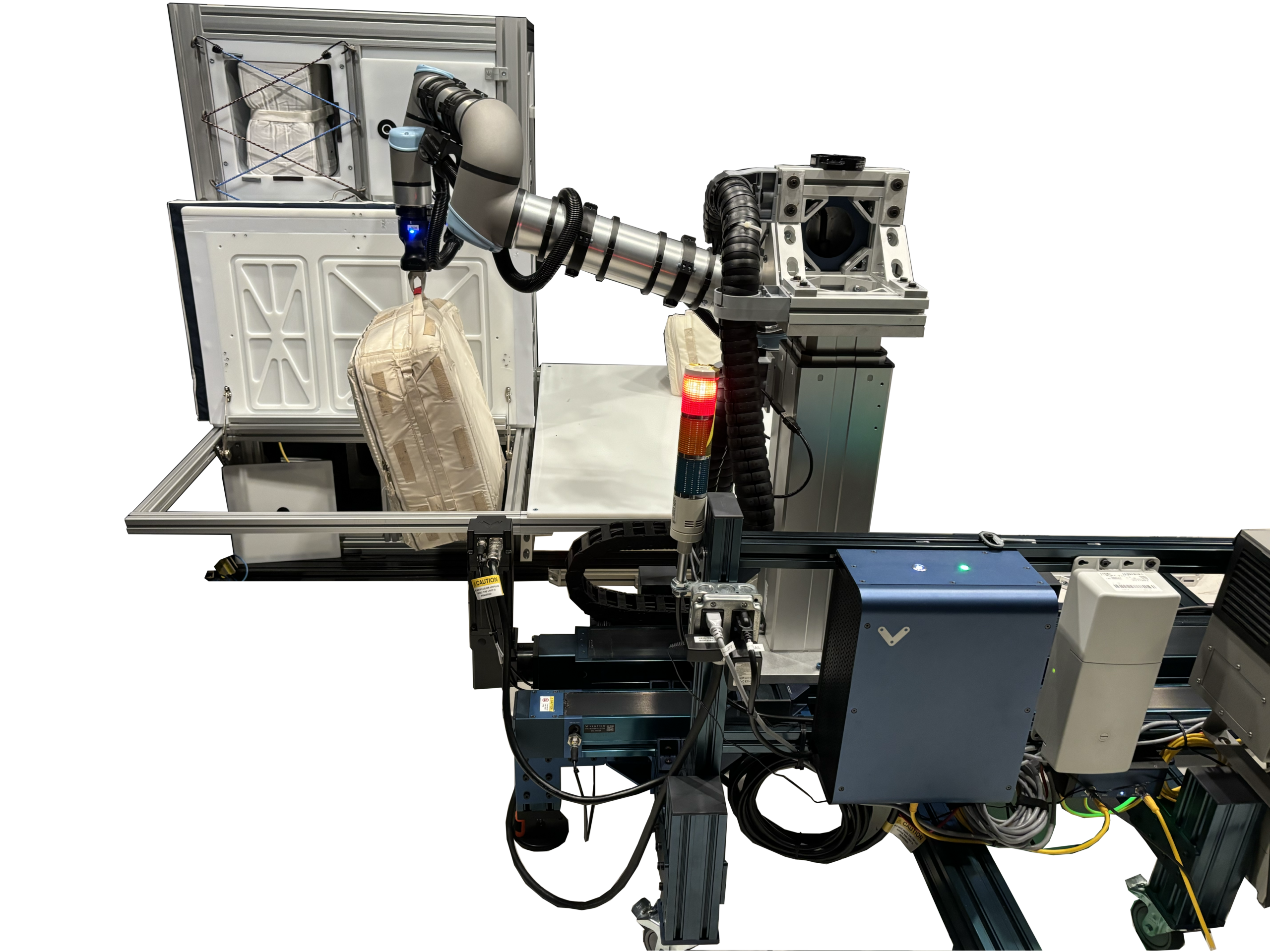
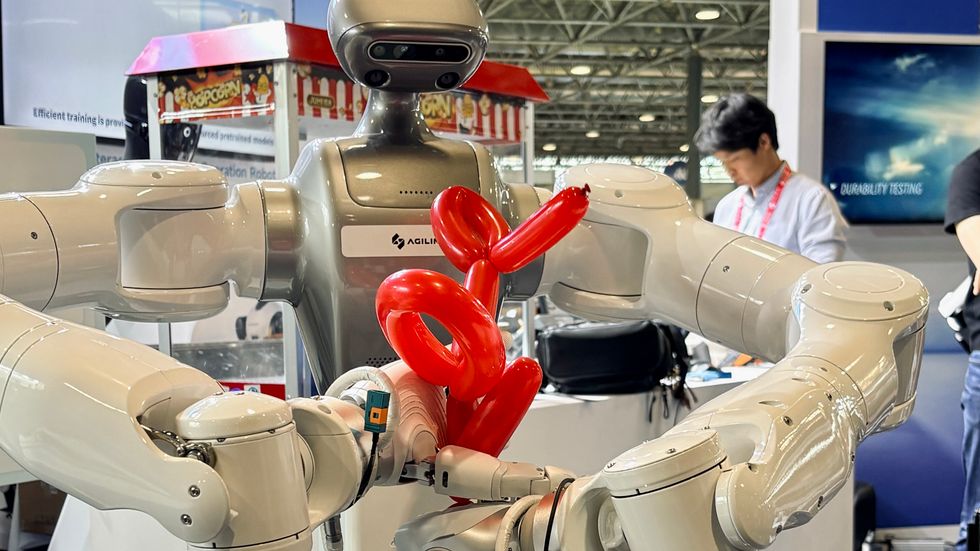
HITBOT launched a “operating system + Hardware Matrix” framework in this year, as embodied intelligent entered large-scale applications. This marked a new phase in the company’s progress in intelligent robotics. The company, founded in 2015, is a member of the Xiaomi ecosystem and has unveiled three key innovations. These include the HITBOT operating system, a universal embodied-intelligence operating system, the eHand-6 dexterous robotic arm, and a prototype humanoid robot.
HITBOT has a new lineup that reflects its push towards system-level intelligence. The goal is to make human-machine interaction more flexible, accessible and scalable in research, manufacturing and service industries.
HITBOT OS – the Android system for robotics
Launched by the company in March 2025 HITBOT OS will be its first universal embodied-intelligence operating system. It is a dual-layer “brain + Cerebellum” cognitive architecture. The brain integrates distributed AI and industry knowledge bases to automatically generate execution strategies and understand natural language instructions. The cerebellum then translates these decisions into precise and safe mechanical movements. This architecture allows robots to move from passive execution to actively understanding. Researchers in life science laboratories can, for example, input “perform pre-processing” and the system will automatically break down the task into steps like dissolving and filtering and then coordinate the appropriate machines to complete the workflow. HITBOT OS’s low-code visual interface and more than 300 equipment protocols allow users to design automation through drag-and-drop actions, reducing development time to just a few hours.
HITBOT released the eHand-6 (19459049) this year, a robotic dexterous hand priced at 2,999 RMB. Its five finger biomimetic design allows for precise grasping and rotation, as well as other complex movements. The maximum grip force is 10N, and the lifting capacity is 5kg. The modular design and open interfaces enable users to customize the device and expand its capabilities to suit a variety of applications, ranging from research and education through to small and medium enterprises.
eHand-6 is a commercial robot that can automate tasks such as grabbing drinks and preparing them, or light industrial operations, like assembling small parts and packaging products.
Humanoid prototype from understanding to actions in a closed-loop
At the China International Industry Fair last month, HITBOT showed a humanoid prototype with 19 degrees freedom. The robot is deeply integrated with HITBOT OS and features a closed-loop intelligent system that allows it to understand tasks, and execute actions, autonomously. HITBOT is still in the testing and development phase, so it has not yet given this humanoid prototype a name.
Hardware Matrix and Intelligent Ecosystem Connecting Smart Agents Like Building Blocks
HITBOT’s four-axis cooperative robotic arms hold more than half of the Chinese domestic market share, while its six axis arms have a repeat position accuracy of +-0.02mm. These actuators, along with smart electric grippers, rotary cylinders and electric dexterous arms, form a comprehensive system that spans manufacturing and research scenarios, as well as new retail scenarios.
The company stated that its goal was not to simply provide tools. “We want to create a open embodied intelligent ecosystem that allows smart agents to fit into different applications as quickly as snapping building blocks together.” Currently HITBOT solutions serve over 3,000 customers across industries like life sciences, 3C electronic, and retail beverage chains. Overseas markets include the US, Germany, Japan, and dozens of other countries.
Advancing robots through modular hardware and operating system
HITBOT advances robotics by combining a universal OS with modular hardware. The integration of HITBOT OS with the eHand-6 lowers barriers to automation and provides a foundation for broader adoption of embodied intelligent.
This method is enabling human machine collaboration to expand beyond high-end labs into practical industrial and scientific settings, reflecting broader trends on the evolution of automation.
Jessie Wu, a Shanghai-based tech reporter, is a member of the
team. She covers the gaming, semiconductor and consumer electronics industries for TechNode. Connect with her via e-mail: jessie.wu@technode.com. More by Jessie Wu