Hongkonger Lo Wai shing, 45, says he was diagnosed with drug resistant epilepsy at 15 years old. He once had 10 seizures in one month and still has up to two episodes per month, despite taking medication.
He said that his condition made it difficult to hold down a regular position. He added that he only ever worked at his uncle’s business and a supermarket where his aunt was employed.
Lo underwent minimally-invasive surgery in April at Queen Mary Hospital, which involved a robotic system. The procedure allowed doctors identify the area of the brain that was causing his seizures and used heat generated by radiowaves to destroy a tiny part of tissue to help alleviate his condition.
“I haven’t had any seizures in the month following the surgery and I sleep well,” he said. “I am very pleased as it has reduced the frequency of seizures.”
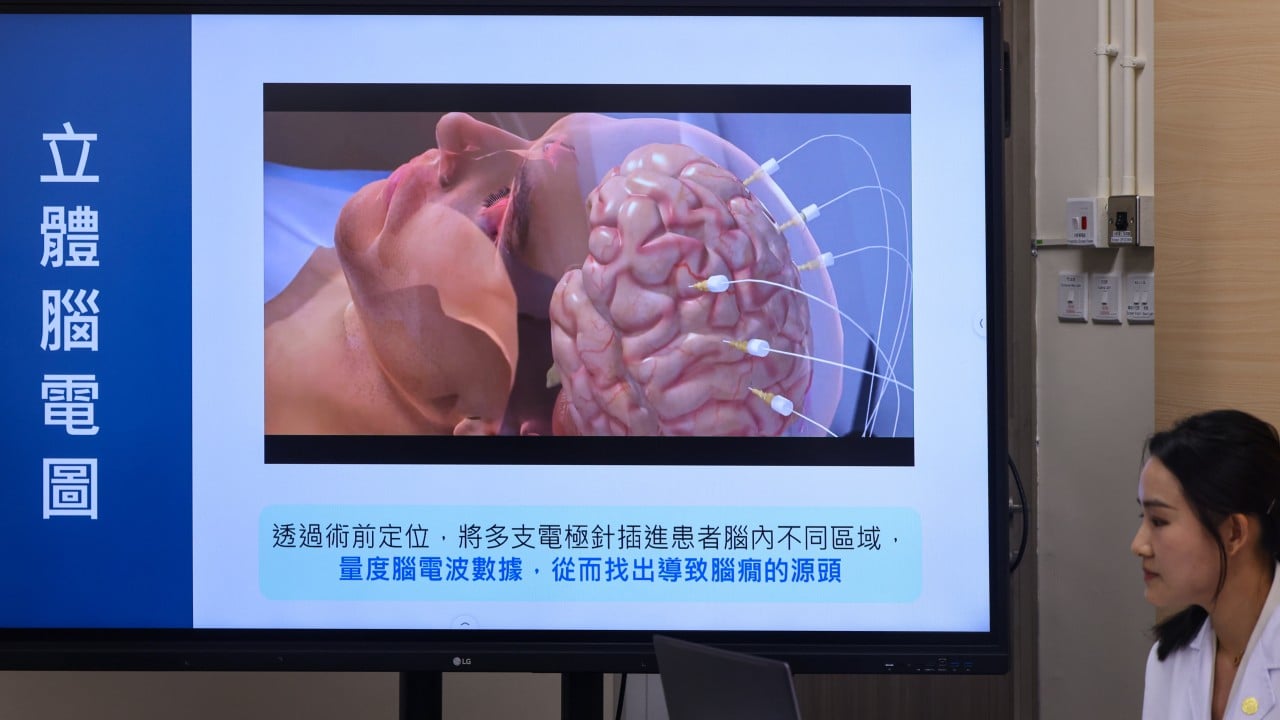
The new robotic system allows doctors in Hong Kong to use a less invasive and more accurate approach to identify the source of epilepsy conditions which are not treatable with medication.
Dr Benedict Taw Beng-teck, a neurosurgery consultant at the hospital, said the system could assist surgeons during a procedure named stereoelectroencephalography (SEEG), which involves locating the area of the brain that causes epilepsy.