Article by Neha Mehta.
The Inclusion Conference held at the Bund in Shanghai radiated an electrifying atmosphere. While the city’s iconic skyline shimmered in the distance, inside the expo halls, visitors were immersed in cutting-edge robotics, luminous AI displays, and forward-thinking discussions on the future of finance and healthcare technology. The event felt like a glimpse into the world of 2030.
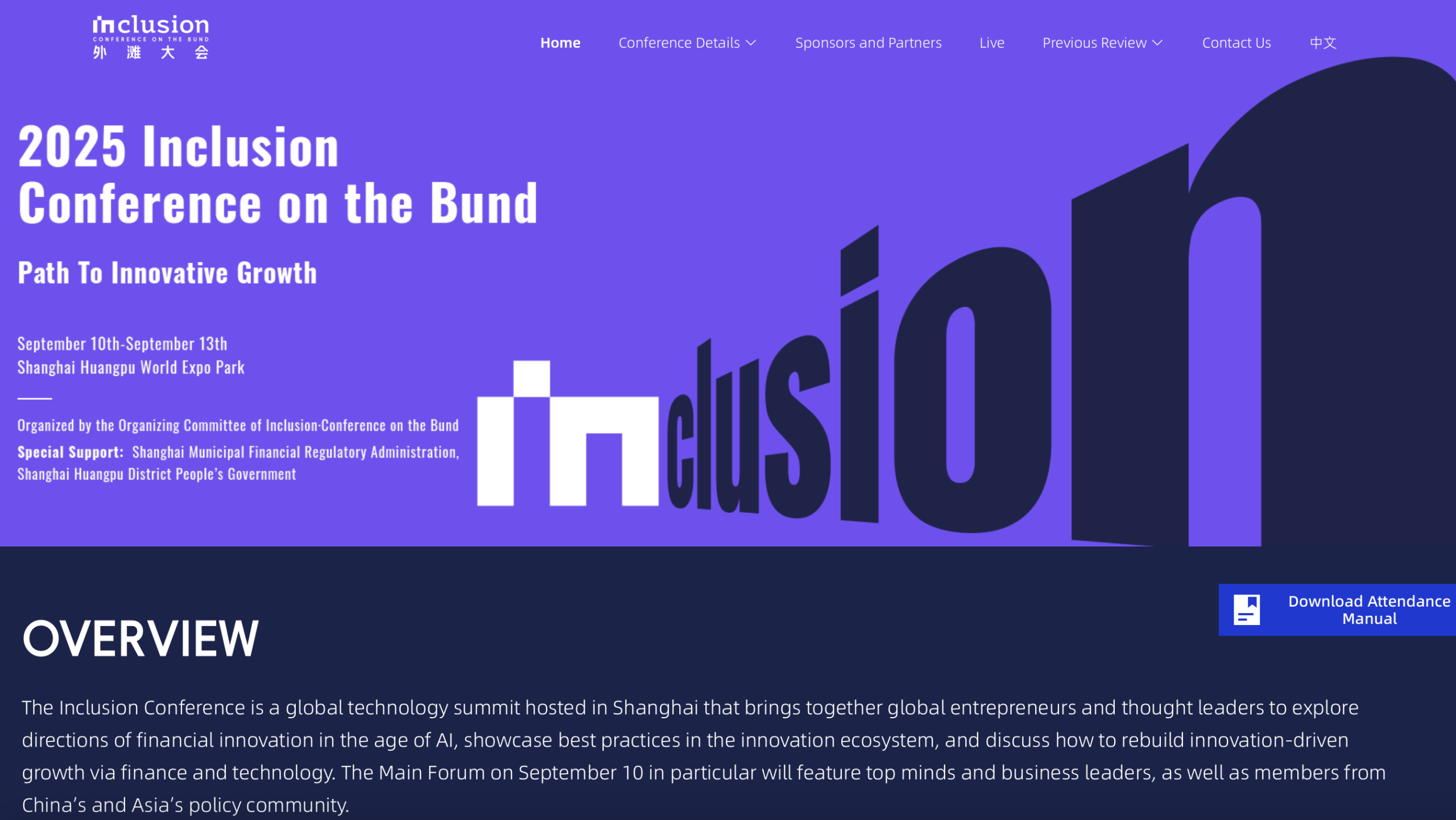
Hosted at Shanghai’s Huangpu World Expo Park, this international technology summit gathered innovators and industry leaders worldwide to delve into the next wave of financial innovation powered by artificial intelligence. The conference also spotlighted best practices within the innovation ecosystem and explored how the synergy between finance and technology can fuel inclusive economic development.
Shanghai: A Global Nexus for AI and Innovation
Now in its fourth edition, the conference has evolved into a premier global platform for showcasing breakthroughs in technology and robotics. Shanghai’s role as host was fitting, given its status as a vibrant hub for AI research and development. The event featured over 40 Insight Forums, a Global Thematic Day, and more than 10 stages dedicated to various tech topics. Additionally, an AI Innovation Contest and a Technology Job Fair were held, emphasizing the city’s commitment to fostering talent and innovation.
What stood out most was the event’s inclusive approach. The exhibition welcomed families, students, and curious onlookers alike, offering the younger generation a firsthand look at the “Path to Innovative Growth.” It highlighted how emerging technologies are already reshaping everyday life, particularly through advancements in payment systems and healthcare solutions. These product unveilings were among the conference’s most compelling moments.
Revolutionizing Healthcare Access with AI
A highlight was the launch of Ant Group’s AI-driven healthcare application, Q. Building on its foundational services, Q aims to make healthcare more accessible and equitable. Since its debut in June 2025, the app has attracted over 140 million users, with 60% residing in tier-three and lower-tier cities-underscoring its success in bridging healthcare gaps in underserved regions.
Powered by AI Doctor Agents capable of analyzing medical reports within seconds, Q integrates with more than 5,000 hospitals and thousands of medical professionals. This connectivity transforms healthcare delivery, especially in smaller cities where medical resources are scarce. Witnessing how Q links expert care to everyday users was truly inspiring.
Alibaba’s DAMO Academy also showcased its pioneering AI medical imaging technology, designed to detect diseases through routine CT scans. Each screening costs approximately 100 yuan (around 20 Singapore dollars) and is covered by the national health insurance program. This affordable, AI-powered diagnostic tool has the potential to revolutionize healthcare accessibility in rural and remote areas.
Purpose-Driven Robotics: From Play to Practicality
The conference featured an entire “robot city” where humanoid robots engaged in activities such as boxing, playing soccer, mixing cocktails, and even performing rescue operations on simulated disaster sites. Numerous robotics startups displayed innovations in components and hardware. For example, Ti5 specializes in lightweight robotic joints, dexterous hands, and chassis designs that enhance robot mobility and functionality.
On the software side, companies like Robbyant focus on the cognitive capabilities of robots. Their Robbyant R1 model employs a sophisticated embodied AI system, enabling it to execute complex, long-term tasks with remarkable autonomy. Watching the R1 navigate the space and serve refreshments was a glimpse into how robots might seamlessly integrate into daily life.
Insight Forums: Shaping the Future of Technology and Payments
Beyond product demonstrations, the conference’s Insight Forums offered deep dives into emerging trends. The “Vision 2030: Technology, Payments, and the Future of Living” panel painted a vivid picture of how payment systems will evolve. Experts predicted a shift away from prioritizing speed and security alone, toward payments becoming ambient-embedded invisibly into wearables, gadgets, and everyday routines.
A key innovation supporting this shift is Alipay’s Model Context Protocol server, which enables merchants and AI developers to access payment systems through natural language commands. One standout experience was trying on Rokid AR Glasses, developed in partnership with Alipay. With a simple glance and voice command, I completed a payment without needing a wallet, phone, or hands. Security was ensured through unique voiceprint recognition, functioning similarly to facial or fingerprint identification.
This voice-activated, AI-powered payment system exemplifies the seamless, hands-free future of transactions, setting a new industry standard.
Essential Insights from Inclusion 2025
- Healthcare as a Strategic Priority: Applications like Q demonstrate that scaling healthcare access is not charity but a strategic imperative, with adoption strongest in smaller cities.
- Empowered AI Agents: Across sectors-healthcare, payments, robotics-there is a clear trend toward AI systems that think and act contextually, enhancing autonomy and effectiveness.
- Hands-Free Future: Technologies like AR glasses reveal a world where payments and interactions are frictionless, voice-driven, and integrated invisibly into daily life.
Shanghai’s Vision for Innovation Leadership
Shanghai is solidifying its position as China’s innovation powerhouse, particularly in fintech and AI. At the conference, the city’s Deputy Mayor announced new policies aimed at optimizing the fintech ecosystem, accelerating collaboration between research institutions and enterprises, and expanding AI infrastructure deployment.
Ranked third globally in the 2024 Global Fintech Centers Index-just behind New York and London-Shanghai is investing heavily in future technologies. The city government committed over 100 billion yuan (approximately US $13.8 billion) to innovation in AI, integrated circuits, and biomedicine. This strategic funding underscores Shanghai’s dedication to nurturing local innovation and advancing frontier technologies.
Inclusion 2025 was more than a showcase of new products; it was a vivid demonstration of a future where technology enhances health, empowers machines to assist humans, and integrates payments effortlessly into everyday life. The future was not just discussed-it was unfolding before my eyes in Shanghai.
About the Author
Neha Mehta is the founder of FemTech Partners and the bestselling author of One Stop Penguin. She offers incisive analysis on the rise of super-apps like Alipay and WeChat, exploring their transformative impact on finance, commerce, and daily living.
A recognized authority on digital policy and fintech, Neha advises global organizations on digital transformation with a focus on empowering underserved communities through technology. She also serves as an adjunct professor at Nanyang Technological University and Singapore Management University, teaching courses on climate, fintech, and innovation.