Xpeng’s Robotics Division: Navigating Leadership Shifts and Mass Production Challenges
Leadership Overhaul Amid Critical Growth Phase
As Xpeng accelerates its robotics ambitions in the latter half of 2026, CEO He Xiaopeng has taken direct control of the company’s robotics division, underscoring the strategic importance of this sector. This move followed the resignation of Shi Xiaoxin, the former chief product officer of the robotics unit, on June 5. Just days later, He announced his personal appointment as CEO of the robotics business, signaling a hands-on approach as the company approaches the commercialization and mass production of humanoid robots.
In May, He convened a large-scale robotics mass production mobilization meeting with over 1,000 participants, including Vice President Gu Jie and robotics center head Mi Liangchuan. The meeting set an ambitious goal: to achieve mass production of humanoid robots by the end of 2026. He also highlighted Xpeng’s unique position in China as the sole company with comprehensive in-house development capabilities spanning chips, operating systems, robotic joints, and dexterous hands.
Organizational Restructuring and Departures
Following Shi’s departure, Xpeng restructured its robotics center into nine specialized departments, appointing Gu Jie, Liu Xianming, and Yu Tao as department heads. He Xiaopeng himself will fill the vacancy in the product department, leveraging his background as a product manager. Notably, Mi Liangchuan’s name was absent from the new organizational chart, fueling speculation about his imminent exit. Industry insiders revealed that Mi began contemplating resignation shortly after Shi’s departure, a move later confirmed by exclusive reports.
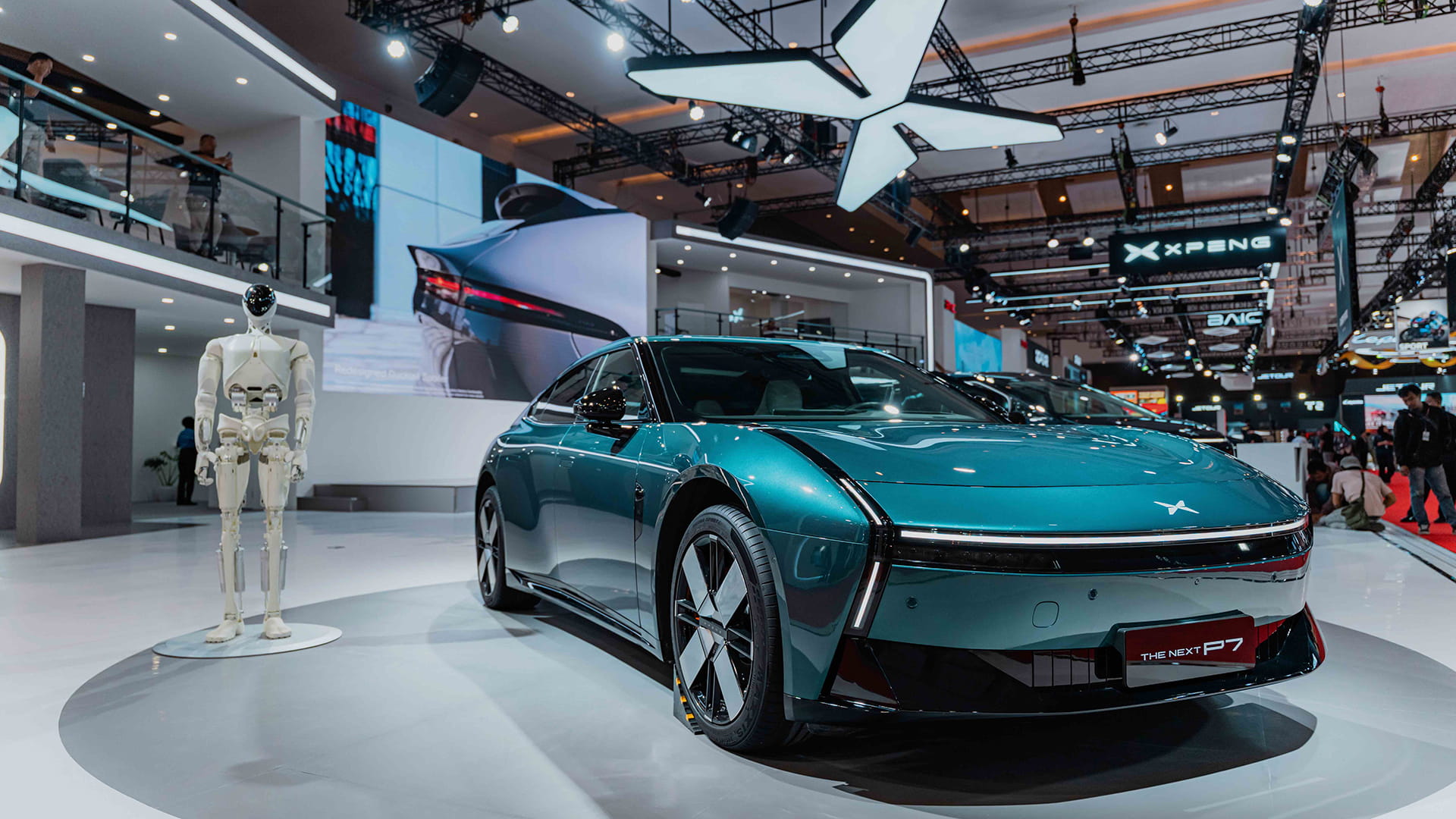
Further compounding leadership changes, Zheng Cunyuan, a key figure responsible for the robot’s full-body design and considered equal in stature to Shi, quietly left Xpeng in late May 2025 to launch his own venture. Together, Mi, Shi, and Zheng had formed the core leadership trio that propelled Xpeng’s robotics team to unveil the Iron humanoid robot in November 2025, a product noted for its lifelike appearance that sparked rumors of a hidden human operator.
Uncertainty in Leadership Succession
With the departure of these pivotal leaders, questions loom over who will steer Xpeng’s robotics division forward. Sources close to the company suggest that He Xiaopeng has yet to finalize a successor. After Shi’s resignation, He met with a prominent figure in smart driving technology, possibly to gauge interest in recruiting a new leader from outside the robotics field. However, frontline employees express reservations about appointing leaders without a robotics background, citing past challenges with cross-industry hires.
Recruitment efforts have been inconsistent, with shifting preferences between candidates with direct robotics experience and those from adjacent industries. Headhunters report frequent turnover among HR personnel managing robotics recruitment, hindering the development of deep industry expertise and continuity in talent acquisition strategies. Moreover, Xpeng’s compensation packages are viewed as less competitive compared to other players in the sector, complicating efforts to attract top-tier talent.
Evaluating Past Leadership and Execution Challenges
Mi Liangchuan, who joined Xpeng in 2021 and took over the robotics unit in 2023, was often the public face of the division. With credentials including a master’s degree in robotics and experience at Nvidia and Carnegie Mellon University, Mi bridged automotive and robotics domains. However, insiders describe him as a “reporting-oriented executive” who excelled at upward communication but was less involved in hands-on execution, leading to a disconnect between leadership perception and frontline realities.
While Mi’s background in AI and autonomous driving brought valuable insights, his limited deep expertise in robotics hardware, manufacturing processes, and supply chain management posed challenges during the critical mass production phase. Robotics production demands rapid iteration and tolerance for trial and error, contrasting with the automotive industry’s stringent standards and zero-defect culture. This mismatch contributed to internal friction and execution gaps.
The Synergy of the Founding Trio
Despite these challenges, the combined efforts of Shi Xiaoxin, Zheng Cunyuan, and Mi Liangchuan were instrumental in advancing Xpeng’s robotics program. Shi, a meticulous product veteran, managed both technology and productization, while Zheng, with a mechanical engineering background from Columbia University and experience at SpaceX and GE Research, led full-system integration. Mi coordinated external communications and strategic alignment.
The trio shared a unified vision centered on first principles: prioritizing hardware development alongside algorithm incubation to build intelligent robots. Their complementary skills and aligned strategic outlook sustained the robotics business through its formative years, culminating in the successful launch of the Iron robot.
Mass Production Goals Spark Strategic Divergence
The push toward mass production exposed differing perspectives within the leadership. Initially, the trio enjoyed autonomy and patience from He Xiaopeng. However, as mass production targets crystallized, He adopted a more directive role, emphasizing the need for scalable manufacturing and supply chain development to meet investor expectations and market demands.
Mass production in robotics remains a delicate balance. Premature scaling risks product underperformance and reputational damage, while cautious ramp-up may delay market entry. Industry experts argue that success hinges not on shipment volume alone but on establishing robust supplier relationships, achieving stable software-hardware integration, and meeting product-stage readiness.
Industry Context and Competitive Landscape
In 2025, Xpeng reported revenues of RMB 76.7 billion (approximately USD 11.3 billion), reflecting its automotive strength. However, robotics revenue remains nascent; for comparison, Unitree Robotics shipped over 5,500 humanoid robots in 2025, generating only several hundred million RMB. This revenue disparity highlights the unique challenges of scaling robotics compared to automotive or consumer electronics.
Other automakers are also advancing in humanoid robotics. BYD has secretly developed a humanoid robot for four years with over 80% in-house component production, though it denies rumors of large-scale deployment in 2026. Li Auto has restructured its robotics division into embodied engineering, interaction, and behavior departments. Chery recently completed batch delivery of 220 humanoid robots, becoming the first automaker globally to achieve such scale.
Talent Acquisition: Navigating a Complex Market
Xpeng’s search for senior robotics talent has been hampered by a limited pool of candidates with the right blend of skills in embodied intelligence, motion control, and product management. The talent market in 2026 can be broadly categorized into academic experts, cross-industry professionals, and embodied-native specialists-those whose expertise integrates AI with physical-world interaction from the ground up.
The concept of embodied nativity, introduced by startups like Dexmal, emphasizes designing AI systems inherently attuned to physical environments rather than retrofitting general AI models onto robots. This approach contrasts with traditional robotics development, which often progresses incrementally from components to full systems.
Investors increasingly favor teams with comprehensive system capabilities, viewing them as more likely to deliver commercially viable humanoid robots. Within this framework, distinctions arise between embodied-native talent, robot-native talent (focused on electromechanical control), and AI-native talent (centered on artificial intelligence algorithms).
Xpeng’s Unique Position and Future Outlook
Unlike many competitors, Xpeng benefits from its automotive data ecosystem, enabling proprietary data collection and feedback loops critical for robotics development. This advantage sets it apart from companies relying on third-party data sources.
He Xiaopeng’s direct involvement as robotics CEO is unusual among automakers, reflecting the strategic priority placed on this division. Despite leadership turnover and recruitment challenges, Xpeng remains committed to advancing its humanoid robotics program, drawing parallels between the current stage of Iron and the early days of its first electric vehicle, the G3.
As Xpeng prepares for the next phase of mass production, the company will need strong, technically adept leaders capable of bridging the gap between laboratory innovation and factory-scale manufacturing. The coming months will be critical in determining whether Xpeng can maintain its momentum and realize its vision of humanoid robots at scale.