Innovative Delivery Robots Transforming Last-Mile Food Service
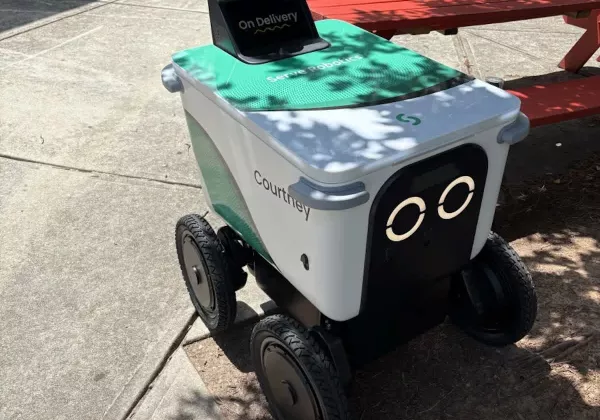
Meet the autonomous delivery robots, known as ‘Courtney’ and ‘Esther,’ easily recognizable by their distinctive blinking LED “eyes.” These compact, four-wheeled vehicles, engineered by Serve Robotics, are revolutionizing the way food is delivered by handling short-distance trips-typically under one mile-with remarkable efficiency.
How Serve Robotics is Shaping the Future of Food Delivery
Serve Robotics has designed these self-driving machines to navigate urban environments autonomously, ensuring timely and contactless delivery of Uber Eats orders. By focusing on short-range routes, these robots reduce delivery times and operational costs while minimizing environmental impact compared to traditional vehicle-based methods.
Advantages of Autonomous Delivery in Urban Settings
With increasing demand for quick and safe food delivery, especially in densely populated areas, these robots offer a sustainable alternative. Their electric-powered systems contribute to lowering carbon emissions, aligning with global efforts to combat climate change. Additionally, their compact size allows them to maneuver through crowded sidewalks and pedestrian zones where larger vehicles cannot operate efficiently.
Current Trends and Future Prospects
As of 2024, the deployment of delivery robots has expanded significantly, with Serve Robotics partnering with multiple food delivery platforms beyond Uber Eats. Industry reports indicate a 35% growth in autonomous delivery services over the past year, highlighting increasing consumer acceptance and technological advancements. Looking ahead, enhancements in AI navigation and battery technology promise to extend their operational range and capabilities.
Real-World Impact: A New Era of Convenience
For example, in cities like San Francisco and Austin, these robots have become a common sight, seamlessly delivering meals to customers’ doorsteps while reducing human contact-a feature that gained particular importance during recent public health concerns. Their presence not only streamlines logistics but also opens opportunities for businesses to scale delivery operations without proportional increases in labor costs.