In September, the Defense Advanced Research Projects Agency (DARPA) launched an innovative competition where robotic teams tackled simulated mass-casualty incidents, such as a plane crash and a nighttime ambush. These autonomous machines were tasked with locating injured individuals and evaluating the severity of their wounds to assist human medical personnel in prioritizing care effectively.
Introducing Kimberly Elenberg and Team Chiron
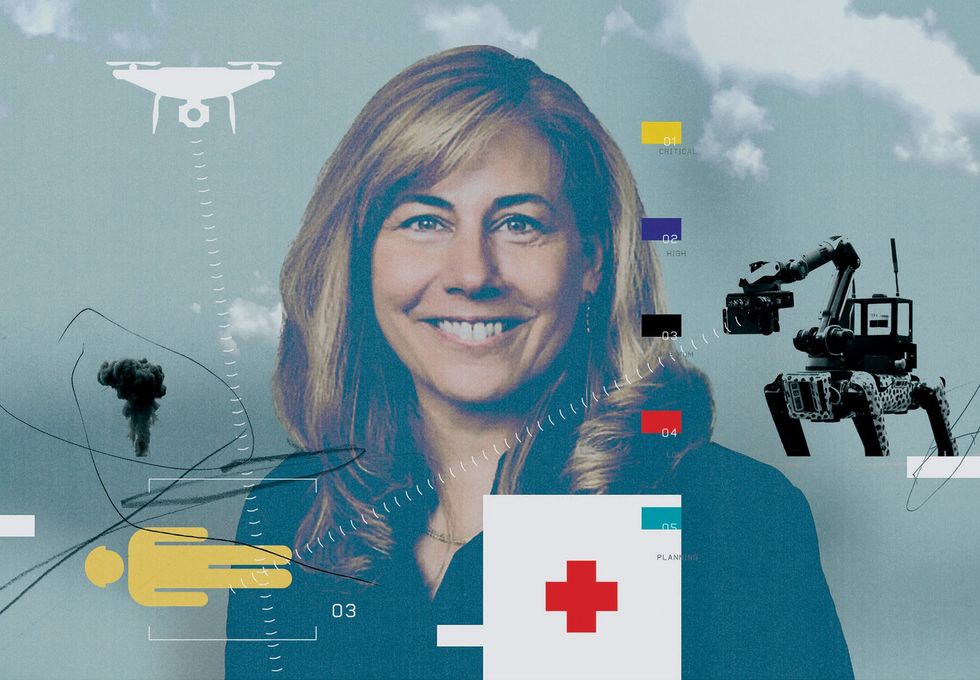
Leading one of the competing groups, Team Chiron from Carnegie Mellon University, is Kimberly Elenberg, a principal project scientist at CMU’s Auton Lab within the Robotics Institute. Elenberg brings a wealth of experience from her 28-year career as an Army and U.S. Public Health Service nurse, including 19 deployments and a pivotal role in incident response strategy at the Pentagon.
The Upcoming DARPA Triage Challenge Finale
The final round of the DARPA Triage Challenge is scheduled for November, where Team Chiron will deploy a combination of quadruped robots and aerial drones. Their mission: to autonomously identify casualties, assess injury severity, and relay critical information to human responders to optimize rescue efforts.
Addressing the Shortage of Emergency Responders
Why are robotic systems essential in triage scenarios?
Kimberly Elenberg: Mass-casualty events often overwhelm available medical personnel. Our robotic platforms provide vital situational awareness by pinpointing victim locations, evaluating who requires urgent care, and guiding responders to those individuals swiftly and safely.
Real-World Applications and Challenges
Can you share an example where such technology would have been invaluable?
Elenberg: On my way to one of the challenge events, I encountered a multi-vehicle accident on a rural road. Alone, I was faced with a mass-casualty situation. I could hear voices and see some victims moving, which indicated they were breathing and conscious. However, one man trapped in a car had an obstructed airway and was showing signs of shock. I had to physically enter the vehicle to assist him-something a robot currently cannot do.
The challenge lies in enabling robots to remotely gather critical data, such as detecting heart rate through subtle skin color changes or monitoring breathing sounds from a distance. Had I possessed such robotic assistance, I could have prioritized care more effectively by identifying the most critical patient sooner.
Designing User-Friendly Triage Technology
How do you ensure the technology integrates seamlessly with medical workflows?
Elenberg: Simplicity is key. Medical responders cannot afford distractions or devices that require them to divert attention from patients. Our solution involves a vest-mounted Android device that flips down to display a real-time map showing GPS locations of casualties, marked with color-coded triage priorities. This information is autonomously updated by the robotic team, allowing medics to make informed decisions without interrupting care.
Evaluating Robotic Performance in the Field
Are these robotic systems meeting expectations?
Elenberg: From my military experience, true capability is proven through rigorous development, testing, and iterative improvement. This challenge integrates sensing, communication, autonomy, and real-world field trials. While limitations remain, the rapid advancements are remarkable, blending scientific innovation with practical application.
Looking Ahead: The Future of Robotic Triage
What would constitute a major success for this initiative?
Elenberg: We’ve already made significant strides by enabling responders to locate casualties and assess urgency remotely. The next breakthrough will be the robots’ ability to identify specific injury types and recommend life-saving interventions autonomously. This evolution will transform disaster medicine and emergency response.
Published in the January 2026 issue under the title “Kimberly Elenberg.”