
Chicago Residents Push Back Against Sidewalk Delivery Robots
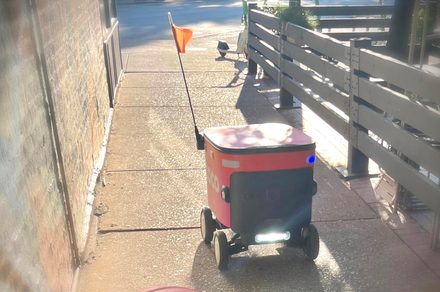
In Chicago, a growing movement seeks to remove autonomous delivery robots from public sidewalks. These wheeled machines, deployed by companies like Coco and Serve, have sparked controversy as they navigate pedestrian pathways delivering meals across the city.
Community Concerns and Safety Issues
Since November, an online petition opposing these delivery robots has gathered over 1,200 signatures from Chicagoans who want the devices banned from sidewalks. Josh Robertson, the petition’s initiator, initially viewed the robots as an exciting technological advancement. However, his enthusiasm waned after witnessing firsthand how these machines interfere with pedestrian traffic. He emphasizes that sidewalks are primarily designed for people on foot, not for autonomous vehicles.
Robertson’s concerns extend beyond inconvenience. He highlights the challenges faced by individuals with mobility aids such as wheelchairs and crutches, who find the robots obstructive. A notable incident involved Anthony Jonas, who suffered injuries after colliding with one of the robots. Jonas recounted, “I tripped over the robot and hit my left eyelid on the attached visibility sign. It resulted in bleeding, a trip to urgent care, and stitches.”
Public Sentiment and Online Reactions
Online discussions reflect a divided public opinion. Some users express frustration and fear about the robots’ presence, with comments ranging from concerns about liability if a robot falls to outright dislike. One user bluntly stated, “I hate them,” a sentiment echoed by others in the community.
Privacy and Surveillance Concerns
Beyond physical safety, privacy advocates raise alarms about the data collection capabilities of these robots. Equipped with multiple cameras and sensors for navigation, the devices continuously record their surroundings, potentially infringing on public privacy in urban spaces.
Industry Response and Regulatory Landscape
Coco, one of the companies behind these delivery robots, has expressed willingness to engage with Robertson and other concerned residents to address their issues. Despite this openness, changing public perception remains a challenge.
Delivery robots like those from Coco have been operational in various cities for several years, competing in a rapidly evolving market. However, some municipalities, including San Francisco, have imposed strict regulations limiting robot operations to low-traffic areas to mitigate pedestrian disruption.
What’s Next for Chicago?
The outcome of Robertson’s campaign remains uncertain. City officials have yet to decide whether to implement restrictions similar to those in other urban centers. As autonomous delivery technology continues to advance, balancing innovation with public safety and accessibility will be crucial for Chicago’s policymakers.
With the delivery robot industry projected to grow by over 20% annually through 2027, according to recent market analyses, the debate in Chicago highlights the broader challenges cities face integrating robotics into everyday life.