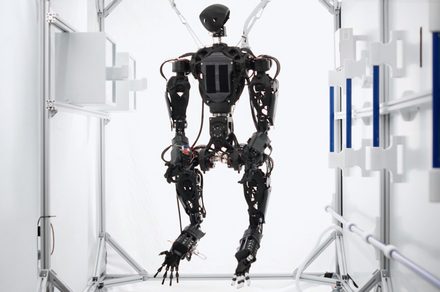
Unitree G1: Revolutionizing Humanoid Robotics with Basketball Skills
Unprecedented Agility in Humanoid Robots
Unlike many humanoid robots that move with stiff, awkward motions reminiscent of joint pain, Unitree’s G1 robot has set a new standard for fluidity and grace in robotic movement. Launched within the past year, the G1 exhibits a level of smoothness and coordination that rivals elite human athletes.
Demonstrations of the G1 reveal its remarkable capabilities: it can engage in simulated combat, recover seamlessly from falls, and even perform household chores with impressive dexterity. This versatility highlights the robot’s advanced design and control systems.
Teaching a Robot to Play Basketball Like a Pro
A research team from the Hong Kong University of Science and Technology has pushed the boundaries further by training the G1 to emulate professional basketball players. The robot not only dribbles and maneuvers the ball fluidly but also shoots hoops with precision reminiscent of NBA stars like Nikola Jokic.
This breakthrough was achieved using SkillMimic, an AI framework that learns complex human motions by analyzing video footage and motion capture data. The system then refines these movements through extensive virtual simulations before transferring the skills to the physical robot.
Comparing Unitree G1 to Previous Humanoid Basketball Robots
While Toyota introduced a humanoid robot capable of shooting basketballs seven years ago, its mobility was limited, relying on wheels rather than natural leg movements. In contrast, Unitree’s G1 combines agility and dynamic body control, enabling it to navigate the court and perform basketball maneuvers with human-like finesse.
Advancing AI Transfer from Simulation to Reality
The success of the G1 in mastering basketball skills underscores a significant advancement in sim-to-real AI transfer. This technology enables robots to learn complex, dynamic tasks in controlled virtual environments and then execute them reliably in unpredictable real-world settings.
This capability is crucial for expanding the practical use of humanoid robots in environments such as warehouses, manufacturing floors, and public spaces where robots must interact safely and efficiently alongside humans.
Commercial Availability and Future Prospects
Unitree launched the G1 humanoid robot commercially last year, pricing it at approximately $13,000. Targeted primarily at research institutions, universities, and companies focused on robotics R&D, the G1 offers a versatile platform for exploring advanced humanoid applications.
Interestingly, hobbyists have also acquired the G1, using it for creative projects, including themed builds for events like Halloween, showcasing the robot’s adaptability beyond industrial and academic settings.
Implications for the Robotics Industry
The G1’s achievements highlight the growing potential of humanoid robots to perform complex, human-like tasks with agility and precision. As AI and robotics technologies continue to evolve, we can expect to see more robots capable of seamlessly integrating into daily life and specialized work environments.
With ongoing improvements in AI learning models and hardware design, the future of humanoid robotics promises enhanced collaboration between humans and machines, driving innovation across multiple sectors.