A New Era for Robotics: The Imminent Breakthrough in AI-Driven Robot Mobility
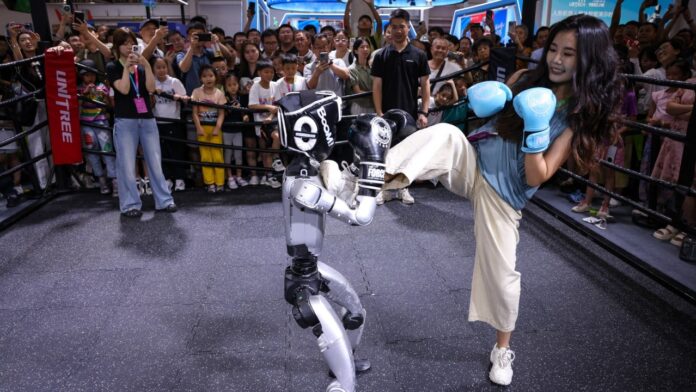
Wang Xingxing, the visionary founder of Unitree Robotics-China’s leading robotics enterprise-foresees a transformative period for the robotics sector within the next two years. This anticipated leap hinges on the advancement of sophisticated artificial intelligence systems capable of autonomously guiding robots in dynamic environments.
Defining the Milestone: Robots Performing Tasks in Unfamiliar Settings
Wang characterizes this breakthrough as the first instance where robots can seamlessly execute tasks in previously uncharted locations, such as tidying a room or delivering a beverage to a person. This capability marks a significant shift from pre-programmed, repetitive actions to adaptive, context-aware operations.
Timeline and Technological Challenges
Speaking at the recent World Robot Conference in Beijing, Wang expressed optimism that such advancements could materialize within one to three years, contingent on rapid progress in AI development. While the mechanical components-like agile robotic arms-and the availability of extensive training datasets are sufficiently advanced, the core challenge remains the development of robust AI for embodied intelligence.
Limitations of Current AI Architectures in Robotics
Wang voiced skepticism regarding the effectiveness of prevalent Visual Language Models (VLMs), which often rely on relatively simplistic architectures. Unitree Robotics has experimented with integrating these models alongside reinforcement learning to enhance task-specific performance. However, this method demands extensive fine-tuning and optimization, limiting scalability and real-world applicability.
Innovative Approaches to Robot Motion Control
Alternatively, Wang highlighted a promising strategy that involves generating interactive robot models or videos from textual commands, enabling robots to interpret and execute complex instructions more naturally. This approach could significantly improve the precision and adaptability of robot movements in diverse scenarios.
Inspiration from Cutting-Edge AI Models
As an example of this new direction, Wang referenced Google’s recently unveiled Genie 3 “world model,” launched in early February. This advanced AI framework is designed to create dynamic, physics-informed virtual environments, offering robots a richer understanding of their surroundings and enhancing their ability to interact with the physical world effectively.
Looking Ahead: The Future of AI-Enabled Robotics
With the robotics industry projected to grow at a compound annual growth rate (CAGR) of over 25% through 2027, the integration of advanced AI models like those discussed by Wang could accelerate the deployment of autonomous robots in everyday settings. From healthcare assistance to logistics and home automation, the potential applications are vast and transformative.