Expanding Solar PV Developments in the Middle East
The Middle East is witnessing a surge in large-scale solar photovoltaic (PV) projects, with over 2 gigawatts currently in various stages of development and construction. Key players from Saudi Arabia, the United Arab Emirates, and neighboring countries are spearheading these initiatives, aiming to capitalize on the region’s abundant solar resources.
Innovative Tracker Technologies for Diverse Terrains
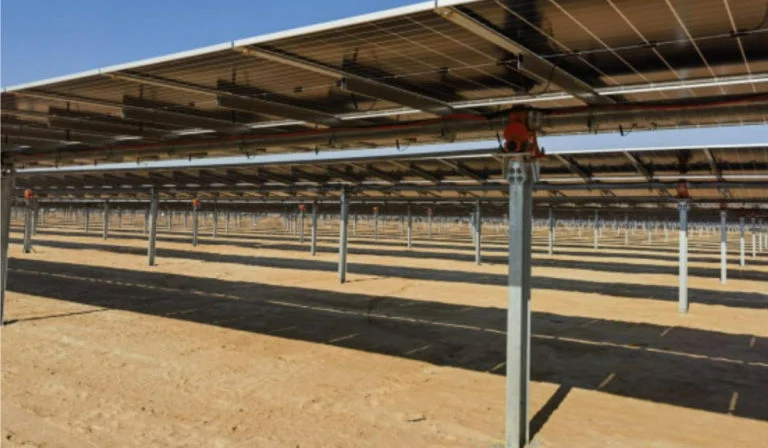
At the recent SNEC exhibition, a leading solar technology company unveiled its latest lineup of advanced, integrated solar tracker systems. Among these, the SkyLine II all-terrain tracker stands out, designed specifically to transform difficult landscapes into lucrative energy-producing sites. This system is optimized for a wide array of environments, including desert sands, mountainous regions, and emerging applications such as agrivoltaics and aquavoltaics, where solar panels coexist with agriculture and aquaculture.
Automation Revolutionizing Solar Plant Construction
The company also introduced a suite of robotic solutions aimed at streamlining solar plant assembly. These include automated cleaning robots, cable installation devices, piling machinery, and other installation tools that significantly cut down labor requirements and overall project costs. Such innovations represent a pivotal move toward fully automated solar farm construction, encompassing every phase from foundation piling to ongoing operations and maintenance.
Industry-Wide Shift Toward Comprehensive Solar Solutions
Arctech’s strategy to broaden its offerings beyond traditional tracker manufacturing mirrors a wider industry trend. Major global tracker manufacturers-such as NextPower (formerly Nextracker), GameChange Energy, and Array Technologies-are increasingly diversifying their portfolios. This expansion often involves acquiring or developing complementary technologies that cover the entire solar array ecosystem.
These companies are not only enhancing their product lines but also integrating construction services like piling, foundation work, and electrical balance of system (eBOS) components. The adoption of robotics and automation in utility-scale solar projects is accelerating, as highlighted in recent discussions with PV robotics firms like Maximo, which emphasize the efficiency gains from automated installation and construction processes.
Financial Challenges Amid Market Volatility
Despite technological advancements, Arctech Solar faced significant financial setbacks in 2025. The company’s net profit plummeted from RMB 632 million (approximately US$93.4 million) in 2024 to a net loss of RMB 10 million (around US$1.4 million) the following year. This downturn was largely attributed to volatile solar module prices, which disrupted downstream product development and reduced tracker shipments. Additionally, global economic uncertainties and fluctuations in the US dollar to Chinese Yuan exchange rate further strained the company’s financial performance.
Looking Ahead: The Future of Solar Automation and Integration
As the solar industry continues to evolve, the integration of smart technologies and automation is expected to play a crucial role in reducing costs and improving project timelines. With the Middle East’s ambitious renewable energy targets and the global push for sustainable power, innovations in tracker systems and robotic construction are set to become standard practice, driving the sector toward greater efficiency and scalability.