Unitree Robotics’ G1 Humanoids Dazzle in High-Tech Dance Performance
Elon Musk, CEO of Tesla, recently shared a captivating video on the social media platform X, praising it as “Impressive.” The clip features an extraordinary collaboration between human performers and advanced humanoid robots, instantly sparking interest across the global tech community.
Robotic Dance Sensation in Chengdu
During a live concert by Wang Leehom in Chengdu, six G1 humanoid robots developed by Hangzhou-based Unitree Robotics took the stage alongside human dancers. Clad in shimmering silver costumes, these robots executed a synchronized dance routine that culminated in a challenging Webster flip, flawlessly landing on the stage. This display highlighted the robots’ remarkable agility and coordination.
Breakthroughs in Dynamic Balance and Motion Control
Experts in robotics have hailed this performance as a significant advancement in dynamic balance technology. The Unitree G1 humanoid robots are equipped with cutting-edge 3D LiDAR sensors and sophisticated multi-agent coordination algorithms. These features enable rapid response times and joint flexibility that closely mimic human movement, allowing the robots to perform complex dance maneuvers with impressive fluidity.
Compared to the tentative and cautious robot movements showcased at China’s Spring Festival Gala less than a year ago, the G1’s smooth and stable performance marks a major technological leap. This progress signals a transition from laboratory prototypes to practical, commercial applications of humanoid robotics in China.
Rapid Evolution in Humanoid Robotics
At the previous Spring Festival Gala, the robots appeared to be in early developmental stages, resembling toddlers learning to walk. However, recent social media reports from Chinese users highlight that these robots are now capable of executing backflips and other advanced maneuvers. One observer remarked, “The speed of development feels like science fiction becoming reality.”
Unitree G1: Compact, Agile, and Intelligent
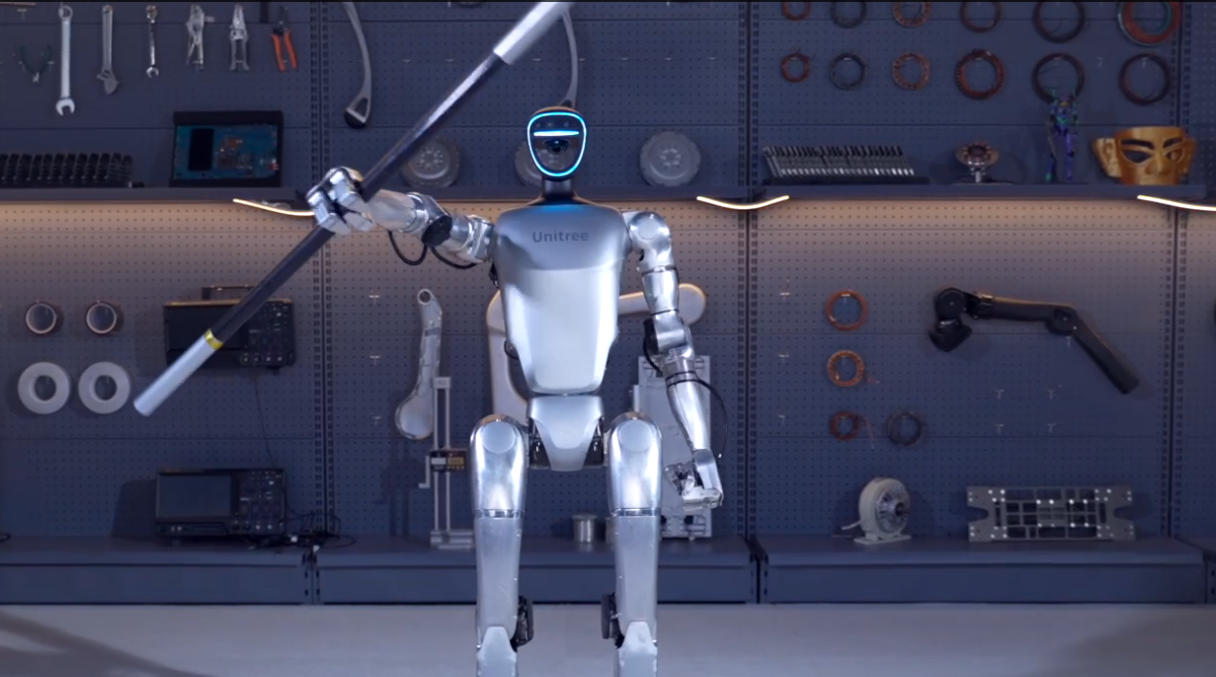
The Unitree G1 is a compact bipedal humanoid robot standing approximately 1.3 meters tall and weighing around 35 kilograms. It boasts an agile mechanical design powered by 23 to 43 motors, enabling a broad range of dynamic movements such as running, balancing, and complex postures. Its sensory suite includes 3D LiDAR, depth cameras, and real-time navigation systems, providing robust environmental perception.
Central to the G1’s capabilities is its integration of artificial intelligence. Utilizing imitation learning and reinforcement learning frameworks, the robot continuously refines its movement skills. Additionally, its force-controlled dexterous arms allow it to interact effectively with objects in its surroundings.
Unitree offers the G1 at a competitive price range of approximately RMB 85,000 to RMB 99,000 (roughly $12,000 to $16,000 USD), positioning it as one of the most affordable humanoid robots with advanced sensing and locomotion features on the market.
Looking Ahead: Commercial and Industrial Potential
With such rapid advancements, the Unitree G1 is poised to expand beyond entertainment into various commercial sectors, including logistics, customer service, and research. Its combination of affordability, agility, and AI-driven adaptability makes it a promising candidate for widespread adoption in the near future.