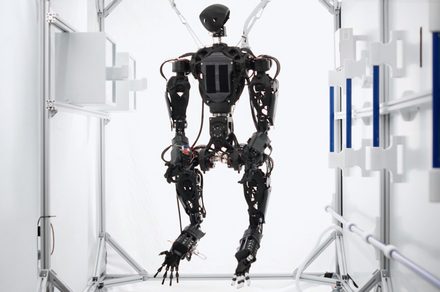
The field of humanoid robotics has experienced remarkable advancements this year, particularly in the realm of physical agility and movement. While artificial intelligence remains a critical focus, the strides made in replicating human-like locomotion and dexterity are truly impressive and set the stage for even more sophisticated developments in the near future.
Unitree H1: Redefining Robotic Mobility

Unlike many humanoid robots that struggle with basic walking, Unitree’s H1 model exhibits remarkably natural human gait and running capabilities. Showcased at the World Humanoid Robot Olympics, the H1 secured an impressive haul of four gold, three silver, and four bronze medals across various track disciplines.
Notably, the H1 set a new benchmark by completing the 1,500-meter race in 6 minutes and 34 seconds, reaching a peak velocity of 4.78 meters per second. Its fluid arm and leg coordination ensures optimal balance and momentum, closely mimicking human biomechanics. Although the world record for this distance stands at 3 minutes and 26 seconds, the H1’s performance marks a significant leap forward in robotic locomotion.
AheadForm’s “Only Head”: The Pinnacle of Facial Realism
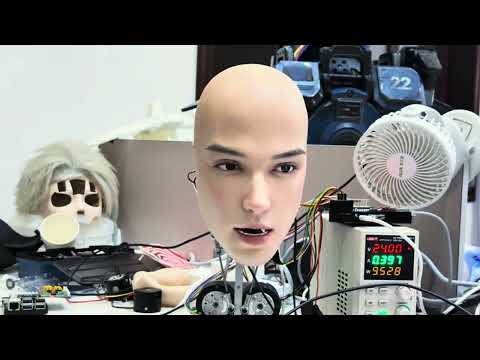
At first glance, the “Only Head” by Chinese innovator AheadForm might be mistaken for a hyper-realistic AI-generated image. However, this sophisticated face-robot is engineered for research, interactive applications, and premium display purposes. Its lifelike expressions are powered by a complex system of 25 micro motors, enabling it to convey a wide spectrum of human emotions with uncanny precision.
Equipped with cameras embedded in its pupils, the robot perceives its surroundings visually, while integrated microphones and speakers facilitate seamless, real-time communication. This combination of sensory and expressive capabilities positions the “Only Head” as a leading example of humanoid robotics focused on human interaction.
WIRobotics’ ALLEX: Mastering Human-Level Finger Dexterity
![[WIRobotics] ALLEX | Human-Level Dexterity, First Look](https://i.ytimg.com/vi/qT2UZ3oN4xI/hqdefault.jpg)
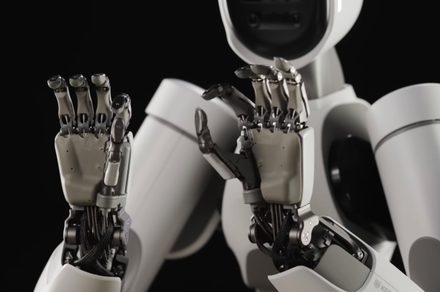
Replicating the intricate sensitivity and fine motor skills of human fingers remains one of the most formidable challenges in humanoid robotics. South Korea’s WIRobotics is making significant progress with its ALLEX system, which showcases extraordinary finger articulation and versatility.
Once fully developed, ALLEX has the potential to revolutionize manufacturing processes and prosthetic technology by offering unprecedented precision and adaptability. Furthermore, WIRobotics is collaborating with an AI startup to integrate advanced cognitive functions, aiming to create a robotic system that combines dexterity with intelligent decision-making.
Unitree G1: Exceptional Balance and Resilience
Unitree G1 is a master of more quirky skills.
Unitree G1 can now perform in “Anti-Gravity mode”: its stability is greatly enhanced under any action sequence and it can even quickly get up if it falls.
pic.twitter.com/gDR0n0eIXl– Unitree (@UnitreeRobotics) May 2023
Smaller than the H1, Unitree’s G1 robot has garnered attention for its remarkable equilibrium and ability to recover swiftly from falls. The developers describe its enhanced stability as “anti-gravity mode,” enabling the robot to maintain composure during complex maneuvers and regain footing rapidly after being toppled.
Imagining a scenario where G1 units operate in unison highlights their potential for coordinated tasks requiring resilience and agility. While the idea of a robotic uprising remains firmly in the realm of science fiction, the G1’s capabilities underscore the rapid progress in robotic stability and control.
AIDOL: A Cautionary Tale from Russia’s Robotics Scene

The Russian humanoid robot AIDOL made headlines during its debut event in November when it dramatically lost balance and fell moments after stepping onto the stage. Despite the setback, the incident highlights the ongoing challenges in achieving reliable bipedal stability in humanoid robots.
Efforts to shield the robot from embarrassment were unsuccessful, as assistants struggled to cover it with a sheet before it was removed from the stage. This episode serves as a reminder that while progress is rapid, the path to flawless humanoid robotics remains fraught with obstacles.