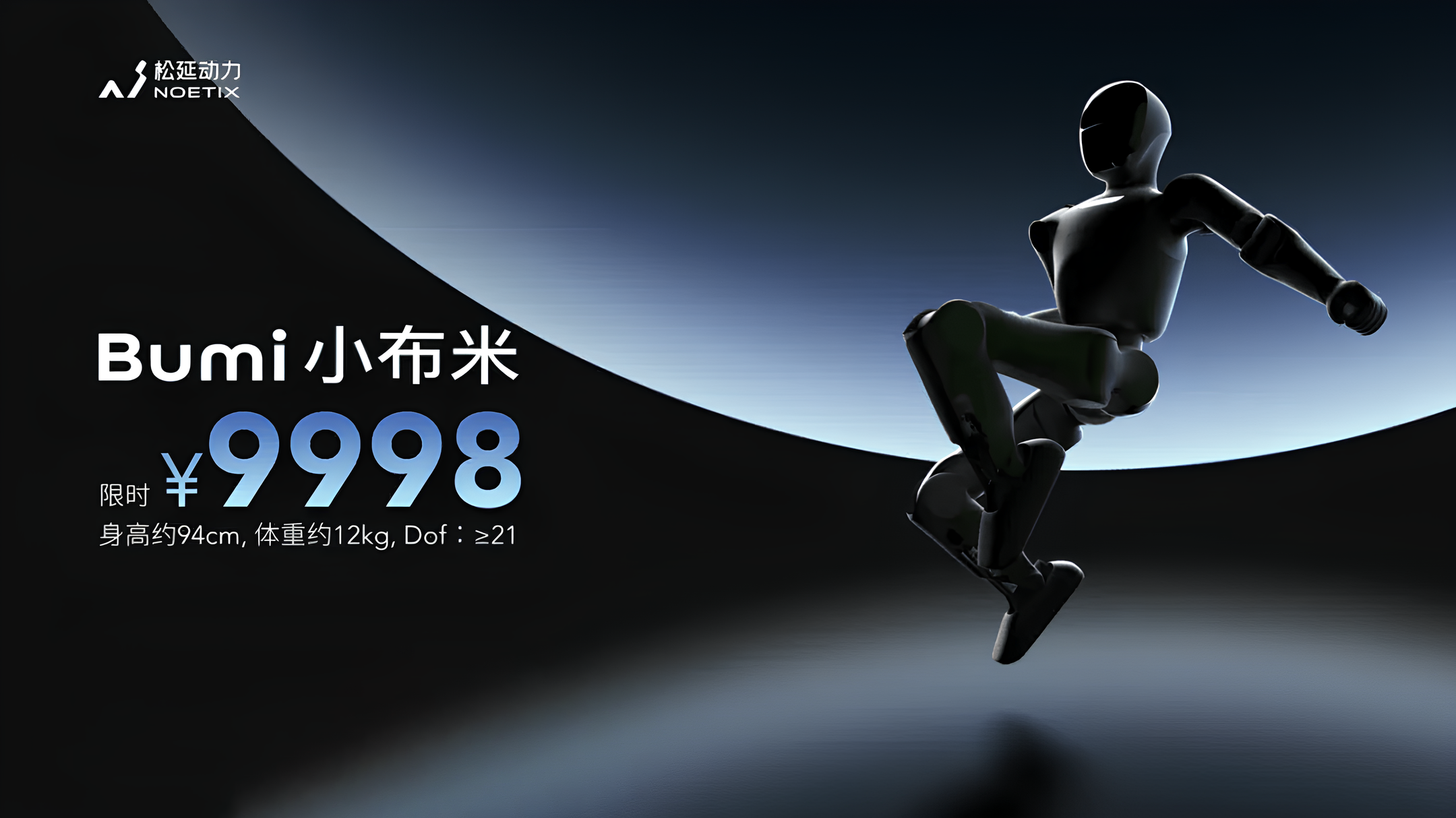
What it means:Most humanoid robotics are still too expensive for consumers, but Bumi has set the bar high in terms of price-performance. The combination of mass-market prices, rapid sell-through and venture backing in the model signals a change in how Chinese startups design humanoids to be adopted on a large scale, rather than for showcase value.
DetailsNoetix reported that over 100 units had been sold in the first half-hour, and the first 500 were gone within two days. Jiang Zheyuan, the founder of Noetix, said that the record-low prices were achieved by reengineering 3 key cost pillars.
- vertical integration: Noetix designs their own control boards and drivers instead of purchasing standard modules. This eliminates supplier markups and aligns hardware-software performance in-house.
- Structural Rework: By using composite materials and metal reinforcement only when necessary, the team reduced total weight to 12 kg — a reduction which enabled smaller motors, heavier batteries, and cascading savings.
- Localized Supply Chain: Nearly 100 percent of components are sourced locally, from motors to sensors to Rockchip processors. This allows for faster iterations and lower logistics costs.
Noetix positions Bumi to be a robot that is more suited for family entertainment and education than household work. The company focuses on engagement and accessibility first before humanoids become general-purpose assistants.
- By late 2025 the company plans to increase production to 1,000 units a month, with factories in Beijing, Changzhou and another site planned.
- This 94 cm form is designed to avoid “uncanny Valley” among children, and to fit in classrooms and living room. Bumi is integrated with JD.com’s Joy Inside 2.0 ecosystem, and offers open programming APIs. This reflects Noetix’s push towards a participatory platform for developers.
As the humanoid robots enter a new era of cost reduction, Noetix’s approach — grounded on engineering pragmatism and not hype — could speed up the transition from prototypes into products that ordinary consumers will be able to own.